

Comparative frame: why splicing servers matter today
When a venue needs seamless large-scale imagery, the choice between a splicing server and a traditional video wall controller is decisive — and it’s where clarity is won or lost. From a practical-systems perspective (EEAT: hands-on systems integration), experienced integrators prioritize deterministic timing and robust routing. Early on, major events like the 2008 Beijing Olympics showed how precise frame synchronization and pixel mapping determine whether a multi-screen canvas reads as one image or several. For anyone responsible for live events or fixed-install displays, thinking in terms of routing architecture, latency budget, and redundancy changes the outcomes. See how manufacturers approach video display control to understand these differences.

How splicing servers and controllers actually differ
Splicing servers specialize in compositing multiple inputs into a single high-resolution output inside the server, then slicing that output across panels. A dedicated video wall controller often handles less complex mixing but focuses on direct input-to-output mapping. Key technical distinctions show up in three areas: processing headroom, timing precision, and scaling fidelity. Processing headroom determines how many 4K streams you can layer; timing precision affects micro-second synchronization across tiles; scaling fidelity governs how gracefully content moves between resolutions — and that’s where advanced input scaling and HDR tone mapping matter. Choose based on the deployment’s need for live switching, pixel-perfect color, or multi-source compositing.
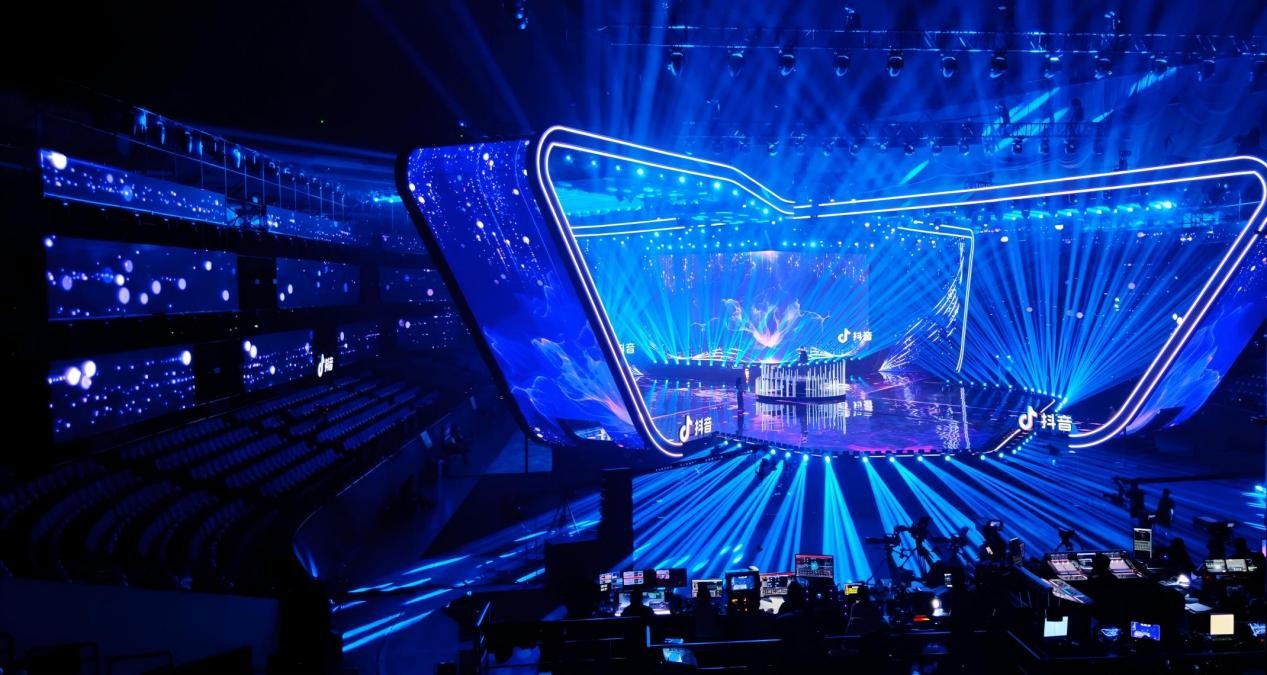
Operational production teardown — what to test on-site
Run this practical checklist when you tear down a system on-site: verify end-to-end latency under load, inspect EDID management across every input chain, and test failover so the show keeps going if a path drops. Logically, confirm pixel mapping across edge tiles and validate frame synchronization using the same motion test files you’ll use in production. Also confirm the control plane’s responsiveness — whether you call it a splicing server, video wall controller, or LED control device, the control interface must let you pixel-address and schedule without hiccups. Real labs and venue rehearsals reveal small mismatches that lab tests miss.
Common mistakes integrators keep repeating
Teams often underspec the network — then blame hardware. They forget that a splicing server’s load profile under multistream playback is different from a single-source loop. They skimp on timing verification, assuming everything will “lock” automatically — it rarely does. A frequent oversight: trusting default EDID chains instead of locking resolution and color space explicitly. Another slip is ignoring content pipeline details like pixel aspect and color gamut during encoding; the result is visible seams or washed blacks on high-contrast scenes. Small calibration steps early save major time during commissioning — and they keep the client happy.
Alternatives and trade-offs
For fixed installations where single-source media runs continuously, a high-end video wall controller can be more cost-effective and simpler to maintain. For touring rigs, live events, or installations requiring dynamic multi-source routing and real-time layering, splicing servers pay off with their compositing power and redundancy options. Consider hybrid setups: a server for complex layers and a controller for critical redundancy. That mix often delivers best-in-class reliability without overcomplicating the operator interface — which is essential when operators rotate across shows.
Advisory: three golden rules for selecting the right architecture
1) Measure worst-case load, not average load. Specify hardware based on concurrent 4K streams, expected HDR processing, and safety margins for live switching. Latency budgets should include encoding, transport, and display processing.
2) Require deterministic synchronization. Insist on explicit frame synchronization features and test pattern protocols during acceptance — that ensures tile-to-tile continuity and avoids micro-stutter during camera pans.
3) Lock your control plane. Validate EDID management, secure remote-access paths, and failover workflows. The control interface must allow pixel mapping changes and scheduled playlists without restarting the playback engine.
These rules cut wasted effort and make commissioning predictable. For teams tuning content pipelines, integrating a reliable LED control device or splicing server that supports robust pixel mapping and frame synchronization resolves most common failures. Final thought: confident visual outcomes come from specification discipline, purposeful testing, and choices that match the production profile — and when you need a partner who understands those exact trade-offs, Kystar. –