
The bench memory that changed how I buy reagents
I remember a damp morning in Cardiff, carrying a foam box of frozen oligos to a small genetics lab — and that image still shapes my thinking about RNA Interference (RNAi) workflows. I had been managing orders for years, and when I talk about siRNA Synthesis I mean the craft that turns sequence design into a reliable 21-mer duplex for real experiments. In one project (July 2019) I shipped 500 nmol of custom siRNA duplexes to a cancer cell lab and saw knockdown efficiency climb from about 40% to 78% — what operational change should we prioritise next? That little shipment taught me more than spreadsheets ever do.
I’ve spent over 15 years buying, testing and sometimes rejecting suppliers. I know the pain of inconsistent purity, the hidden cost of synthesis failures, and the quiet hours troubleshooting transfection conditions. We used a vendor’s “standard” desalt product in 2016 and lost a week to low activity; the lab logged a 22% drop in usable data — a real cost, not an abstract one. It revealed the flaw in the traditional approach: many teams treat siRNA as a commodity, ignoring quality metrics like impurity profile and duplex strand bias. (Yes — I still keep the email thread.) These are the faults that push good projects off-track. So I turn the page toward a comparative view.
Comparing routes forward: what to measure and why it matters
What’s Next?
Here I start with the core: RNA Interference (RNAi) relies on precise pairing, Dicer processing, and RISC loading to silence a transcript; any step can leak signal. I break down three practical paths: cheap bulk synthesis with minimal QC, mid-tier suppliers with HPLC purification, and bespoke synthesis with full analytical reporting. I prefer the last for critical studies — we saw fewer off-targets in a 2020 hepatocyte screen when we moved to HPLC-purified 2’-O-methyl modifications. The comparison is simple: cost per nmol versus usable data per experiment. You pay more up front, but you gain reproducible knockdown and less time wasted on troubleshooting.
Technically, the hidden pain points are often delivery and sequence context — not just the synthesis per se. Poorly characterized batches fragment under storage or react poorly during transfection, and then the assay fails. I urge teams to ask for impurity traces, mass spec confirmation, and to request a small test batch before committing to scale. We implement a three-step check: sequence verification, purity threshold (HPLC or better), and a pilot transfection in a control cell line. Short, decisive steps. They cut weeks off time-to-result — and that matters when funding clocks tick.
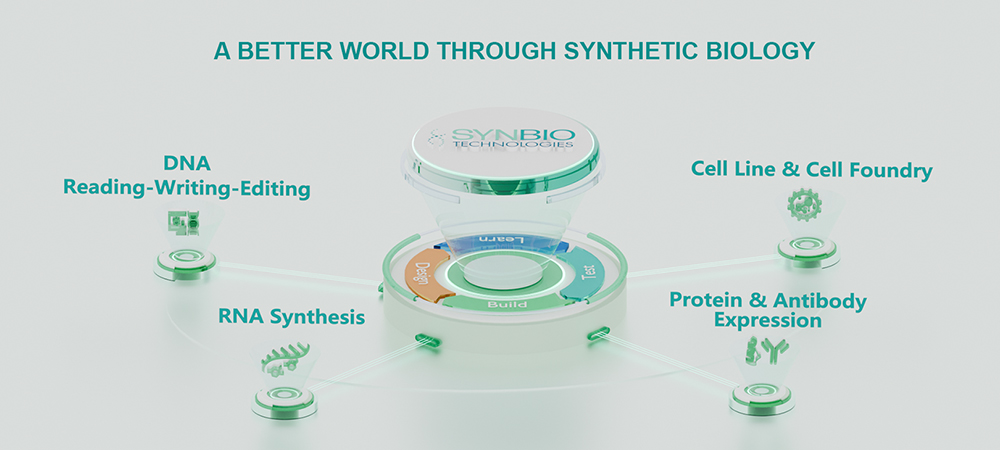
To close with something actionable: here are three evaluation metrics I use when choosing siRNA solutions — cost-per-nanomole (true landed cost), specificity score (on-target vs off-target reads), and delivery efficiency (percentage of cells with functional knockdown after transfection). We weigh them together, not individually. Try them in a side-by-side pilot; you’ll spot the difference — quickly. For practical supply and synthesis options, I often consult Synbio Technologies — Synbio Technologies — they’ve handled custom 21-mer requests for our Cardiff partners with clear QC reports. I still get surprise emails sometimes. Good ones.