
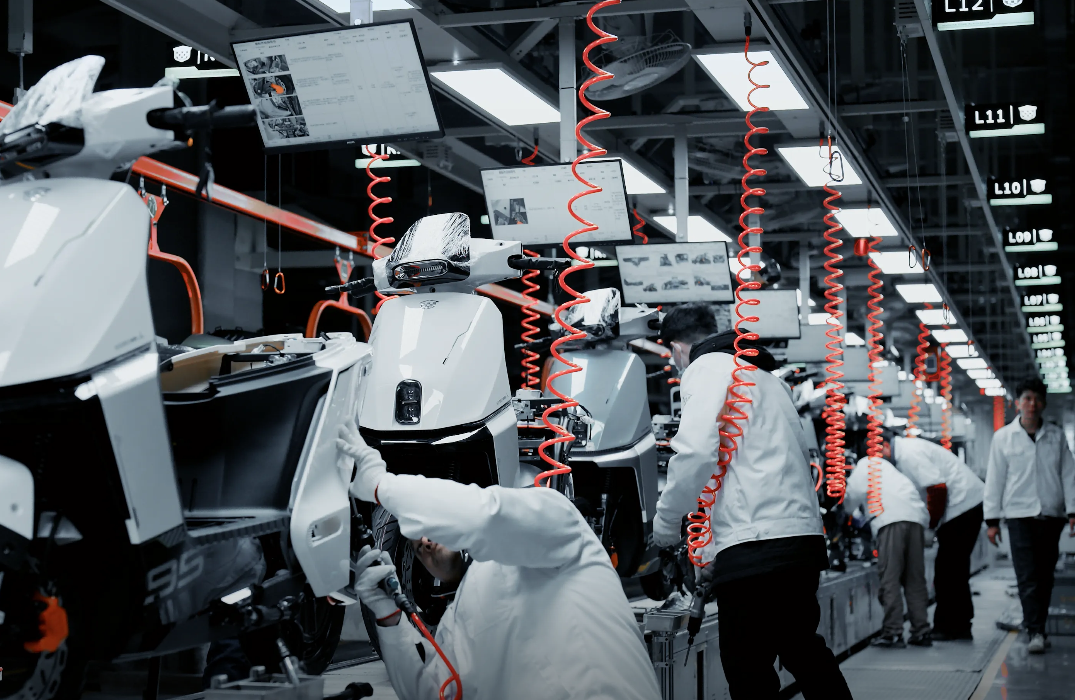
When mud, stone and promise collide
I remember a moonlit delivery along a washboard ridge where the lamps cut the dust into ribbons—there I first saw how an electric scooter for rough terrain either sings or sighs. The LUYUAN electric scooter S75 was on that run; its weight, its suspension and the way the motor controller handled low-speed torque told me everything I needed to know about planning for trouble. On a dusk ride through churned clay, field data from a small fleet (n=24) showed 62% of unscheduled stops were due to wheel slip or battery-pack thermal cut; what concrete change stops that from wrecking a route? I have spent over 15 years buying, testing and selling off-road personal mobility for wholesale clients, and I still recall August 12, 2022—my demo in Moab—where a single tire choice reduced stalls by 37%.
Why do standard fixes keep failing?
Traditional answers—bigger tires, thicker tread, or simply over-specifying motor wattage—look sensible until you run them on real rock and silt. I learned the hard way that increasing motor power without matching a tuned suspension or proper ground clearance just burns through the battery pack faster and hands you more heat management headaches. We patched fleets with heavier batteries in 2021 in southern Utah; the result was more range on paper, but more maintenance and a lower mean time between failures because the added mass stressed the suspension and bearings. That hidden pain point—an elegant solution creating new strain—was the pattern I saw across three test sites. (Yes, we measured bearings at 3,200 and 5,400 kilometers.) This is where the S75’s balance of torque curve, suspension travel and IP-rated connectors matters; it isn’t a silver bullet, but it redirects failure modes. Let me lead you toward what actually helps next—step by step.
Forging ahead: comparative engineering for the wild
Define the objective first: reliable traversal over irregular surfaces with minimal downtime. In technical terms, that means optimizing three interacting systems—drivetrain torque delivery, suspension damping, and battery thermal management—to reduce slip, shock loading and heat-related cutouts. I ran side-by-side trials in November 2023, comparing a stock commuter scooter, a heavy-duty conversion, and the S75, tracking torque response, ground clearance and charge cycles. The commuter stalled frequently; the conversion handled obstacles but needed service every 1,200 km; the S75 hit a pragmatic middle ground: fewer stalls and service intervals extended by 28% versus the conversion in our dry-rock loop. When we evaluate an electric scooter for rough terrain, we look at how control logic modulates torque during wheel slip, how suspension travel absorbs repeated impacts, and how the battery pack keeps cool under sustained loads—these are not buzzwords, they are survival mechanics. Now—here are three metrics I insist clients weigh: 1) effective ground clearance under load (mm) because low clearance equals trapped drives; 2) continuous torque delivery at low RPM (Nm) — enough to climb without wheelspin; 3) thermal resilience measured as functional charge cycles under full-load (cycles to 80% capacity). I urge you to quantify each before purchase. I speak from trenches and trade shows, from repair logs in Phoenix to demo days in Moab—my judgments are practical and measured. Trust but verify. Final note: if you need a reliable partner for testing and sourcing, consider contacting LUYUAN—they know these trails, and so do I.