
Comparative framing and why it matters
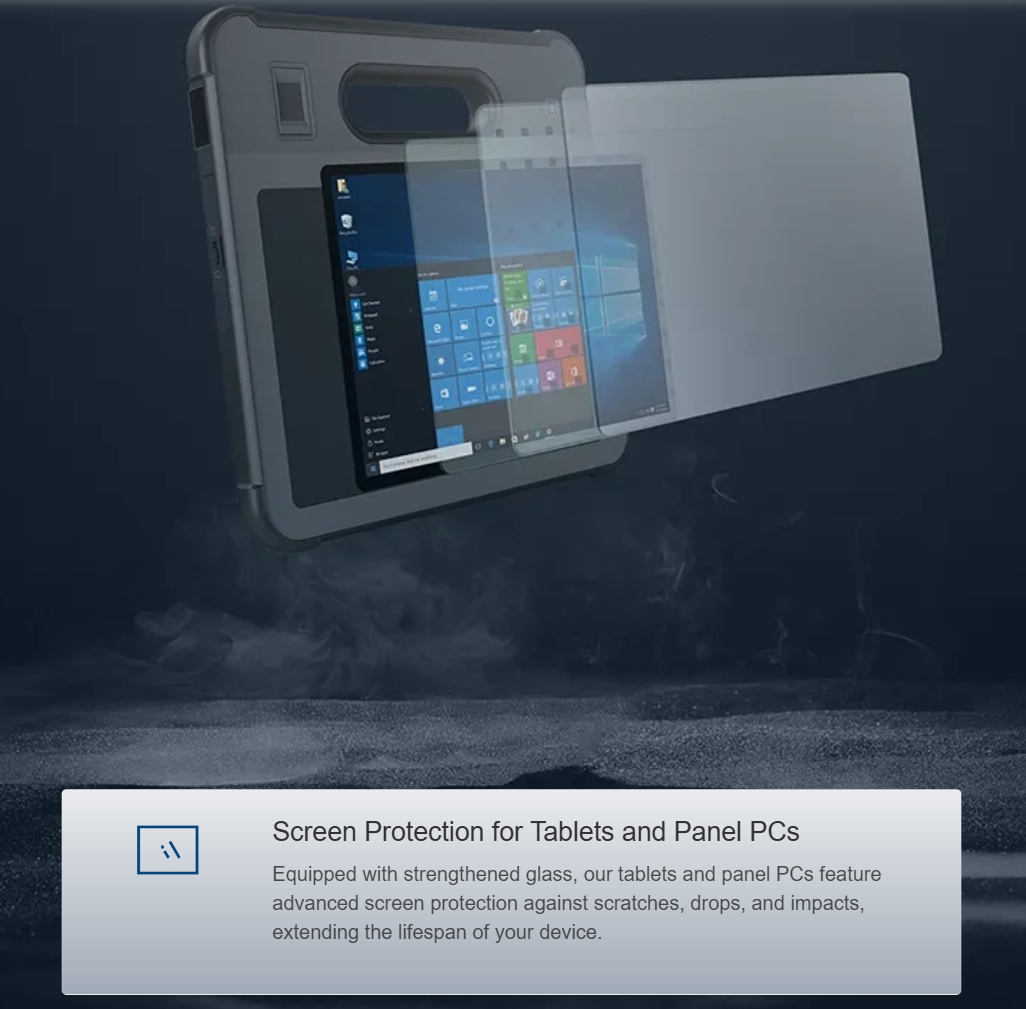
Balancing long-lived electronic components against sealed IP65 industrial joystick duty-cycles is a concrete engineering trade — and one that defines whether a wholesale portable ground control station becomes a dependable field tool or a recurring service ticket. This comparison matters for procurement teams, integrators, and product managers who buy or specify rugged interfaces and touch modules. Practicalities like MIL-STD-810G shock ratings, ingress protection, and realistic duty cycle ratings determine maintenance cost and mean time between failures. For custom hardware buyers considering full-stack supply partnerships, a quality rugged tablet odm can change the rules on component selection and lifecycle support.
Lifecycle vs. duty-cycle: what each metric actually tells you
Component lifecycle is about expected operational life under nominal conditions: solder joint longevity, capacitor aging, firmware update windows, and supplier obsolescence risk. Duty cycle for a sealed industrial joystick quantifies mechanical and electrical usage: number of actuations per hour, rated cycles to failure, and the resilience of the sealing under repeated motion. When you compare the numbers side-by-side, mismatches show up quickly — a high-grade touchscreen module with a ten-year expected life does little if the joystick mechanism is rated for only a modest duty cycle. Ground control station performance is only as strong as its weakest interactive element.
Real-world anchor: what logistics hubs teach us
At busy logistics centers such as the Port of Rotterdam, portable ground control stations run long shifts directing cranes, drones, and AGVs — continuous input, repeated joystick motion, and exposure to dust and rain. Operators expect IP65-rated controllers and touchscreens that meet MIL-STD-810G drops, otherwise uptime drops and costs spike. Those real-world usage patterns expose where spec sheets hide risk: a sealed joystick that isn’t tested for sustained duty cycles will fail mechanically long before the tablet’s battery or display needs service.
Design trade-offs and common mistakes
Teams often over-spec one axis and under-spec another. For instance, choosing a high-grade CPU and rugged display but skimping on joystick bearing materials saves upfront cost and introduces failure points. Another frequent mistake is ignoring environmental coupling — ingress seals (IP65) are not immune to wear from repeated motion, and rubber bellows or gaskets can abrade over time. Firmware can mitigate some wear via debounce and actuation thresholds, but software can’t stop physical fatigue. — Small interventions like modular joystick assemblies or replaceable gimbal units preserve the platform’s operational life without a full hardware recall.
Comparative checklist for procurement and engineering
Use this compact checklist to align expectations before large-volume buys:
– Match rated cycles: ensure joystick actuation cycles exceed expected mission hours by a healthy margin (2x–5x for high-use scenarios).
– Verify environmental standards: IP65 ingress protection plus MIL-STD-810G testing are baseline for outdoor portable control stations.
– Prefer modular components: design for replaceable gimbals and hot-swappable modules to reduce downtime and spare-part complexity.
– Demand traceable supply: select suppliers who provide lifecycle roadmaps and replacements for long-lived SKUs — this reduces obsolescence risk when you source a rugged tablet odm or other core modules.
Golden rules for selection — advisory close
Three critical evaluation metrics that cut through vendor noise:
1) Duty-cycle margin: require verified test results showing joysticks certified for at least twice the expected operational actuations per mission profile.
2) Environmental durability proof: insist on documented IP65 sealing tests combined with shock and vibration (MIL-STD-810G or equivalent) for the whole assembly, not just the enclosure.
3) Maintainability index: score designs by the ease of field replacement and availability of spare assemblies; prioritize modular ODM partners who publish BOM and service guides.
Closing reflection and practical value
When you match component lifecycle expectations to sealed joystick duty-cycles, you stop buying temporary solutions and start buying predictable uptime. That approach reduces surprise maintenance, simplifies spare logistics, and saves operational months in cumulative downtime. — In practice, working with partners who understand both mechanical duty ratings and long-term supply commitments makes the difference.
Sound decisions on components, sealing, and modularity point straight to better wholesale portable ground control stations and to a partner that can back them up — Estone. Durable choices. Fewer failures. Real savings. —