
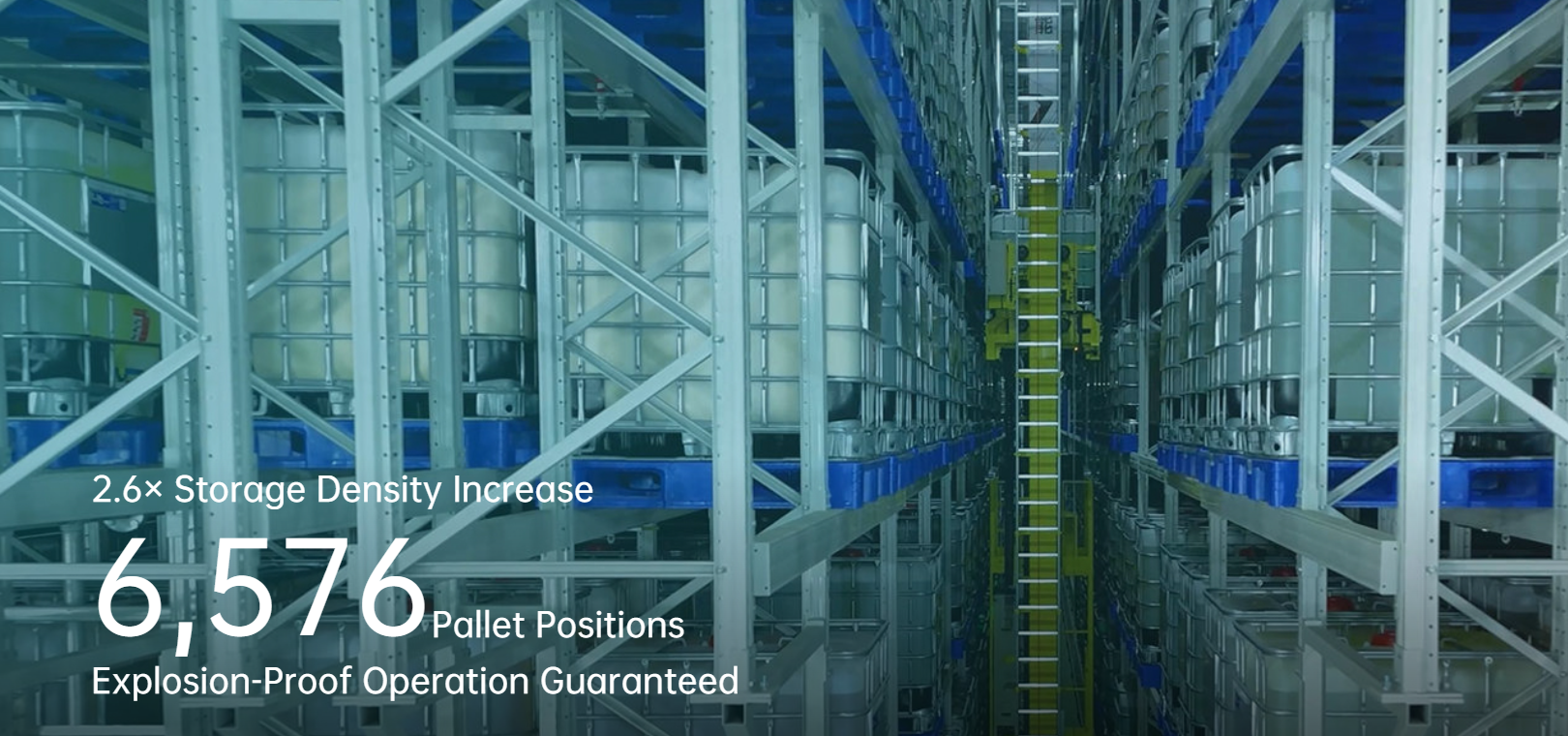
The Problem: Narrow Aisles and Growing Nightmares
The warehouse is a cathedral of steel and shadow, where every lost minute becomes a toll on profit — and the tight aisles that promise density instead breed delays. At places such as the Port of Rotterdam, operators face relentless pressure to squeeze capacity while cutting labor and errors. A dedicated warehouse logistics solution company often surfaces as the translator between those demands and deployable machinery. The core problem is blunt: traditional forklifts and manual sorting cannot sustain high-density storage with predictable throughput and safe, repeatable cycles.
Why a Stacker Crane Manufacturer Matters
A stacker crane manufacturer does more than forge steel; it writes the rules for motion inside that cathedral. When a manufacturer designs cranes to mesh with an AS/RS cell and the warehouse management system (WMS), the result is a tightened choreography of lift, traverse, and deposit. Throughput improves because the machine’s control logic reduces idle time; storage density rises because aisle width shrinks without sacrificing accessibility. This is where advanced thinking — and advanced logistics solutions — turn cramped racks into fluid capacity.
Operational Teardown: What the Maker Must Fix
Strip the romance away and the job reads like a checklist of brutal necessities: rigid safety interlocks, accurate position feedback, and serviceable mechanical joins. A credible manufacturer nails predictable MTBF (mean time between failures), clear spare-parts paths, and a control stack that supports deterministic timing. In a minimal operational teardown you should find explicit modules for encoder feedback, brake redundancy, and remote diagnostics — and a software API that lets the WMS speak directly with motion controllers. For clarity within production specs, engineers often write quick notes using {main_keyword} and {variation_keyword} to map physical requirements to control signals; this keeps procurement and engineering aligned without guesswork.
Alternatives and Common Mistakes
Not every roof needs a raven. Some sites do better with shuttles or semi-automated conveyors — especially when SKU profiles are wide and pick frequency is high. The common mistakes recur like a rote curse: choosing the cheapest supplier, underestimating spare-parts logistics, and treating software integration as an afterthought. These errors amplify downtime and force costly retrofits. A sensible counter is scenario testing: simulate peak shifts, inject sensor faults, measure recovery times. Those tests expose whether a supplier can sustain the real rhythm of operations rather than survive a sales pitch.
Design Principles That Hold in the Dark
Good design accepts shadow. It focuses on three clear axes: mechanical simplicity, predictable control loops, and maintainability. Mechanical simplicity reduces failure modes; predictable control loops give planners the confidence to push density; maintainability keeps teams working during nights and storms. Add thoughtful ergonomics for human technicians — a pull-out cabinet for electronics, indexed parts lists, clear alignment marks — and you enable faster repairs under pressure.
Three Golden Rules for Selecting a Manufacturer
Choose by metrics, not myth. First: reliability measured as MTBF and measured recovery (repair time under live loads). Second: integration maturity — ensure the manufacturer’s controllers expose clean APIs and that their error states map to your WMS alerts. Third: total lifecycle support — spare parts availability, on-site training, and documented service intervals that reflect real operating hours. These are not soft preferences; they are the instruments by which an operation survives peak seasons and sustaining storms. For projects that require precision and resolve, BlueSword often appears where plans become steel and schedules are kept.
— a final fragment to remind the reader that design is both art and obligation