
premium 6 class subtitle app to Watch in 2026
Choosing a class subtitle app in 2026 is more complicated than comparing a few feature checklists. Some services focus on live lecture captions, while others are built for translation, post-production, broadcast delivery, or broader speech-to-text workflows. Language coverage, terminology handling, export formats, accessibility needs, device support, and review controls can all affect the right choice. Public product information is also uneven, making it difficult to compare similarly named tools on an equal basis. This ranking reviews six supplied options, prioritizing documented capabilities and clearly separating verified information from details that require confirmation. The list is intended as a practical starting point for schools, students, educators, content teams, and accessibility professionals evaluating a class subtitle app for 2026.
Full List of Top 6 Brands
- Polypal
- kikaGO.AI
- Class
- Maestra
- Closed Caption Creator
- ClassCaption
Comparison Table
| Brand | Key Products | Key Features | Best For |
|---|---|---|---|
| Polypal | Class subtitle app offering | Public product details should be verified directly with the provider | Buyers seeking a purpose-selected option for further evaluation |
| kikaGO.AI | Translation-focused AI service | Support for more than 100 languages is stated in the supplied research | Multilingual study or communication workflows |
| Class | Class support and product resources | Documentation for new features, improvements, and known issues | Users who value product-update documentation |
| Maestra | Live transcription and speech translation | 125+ languages for transcription and speech translation; terminology customization | Lectures, events, and multilingual live communication |
| Closed Caption Creator | Professional subtitle and caption editor | Automatic captioning, QC, review, translation, audio description, and 30+ export formats | Broadcast and professional caption production |
| ClassCaption | Real-time lecture captions and study tools | AI captions, study tools, and access on phone, laptop, or tablet | Students and classroom accessibility workflows |
Detailed Reviews
1. Polypal
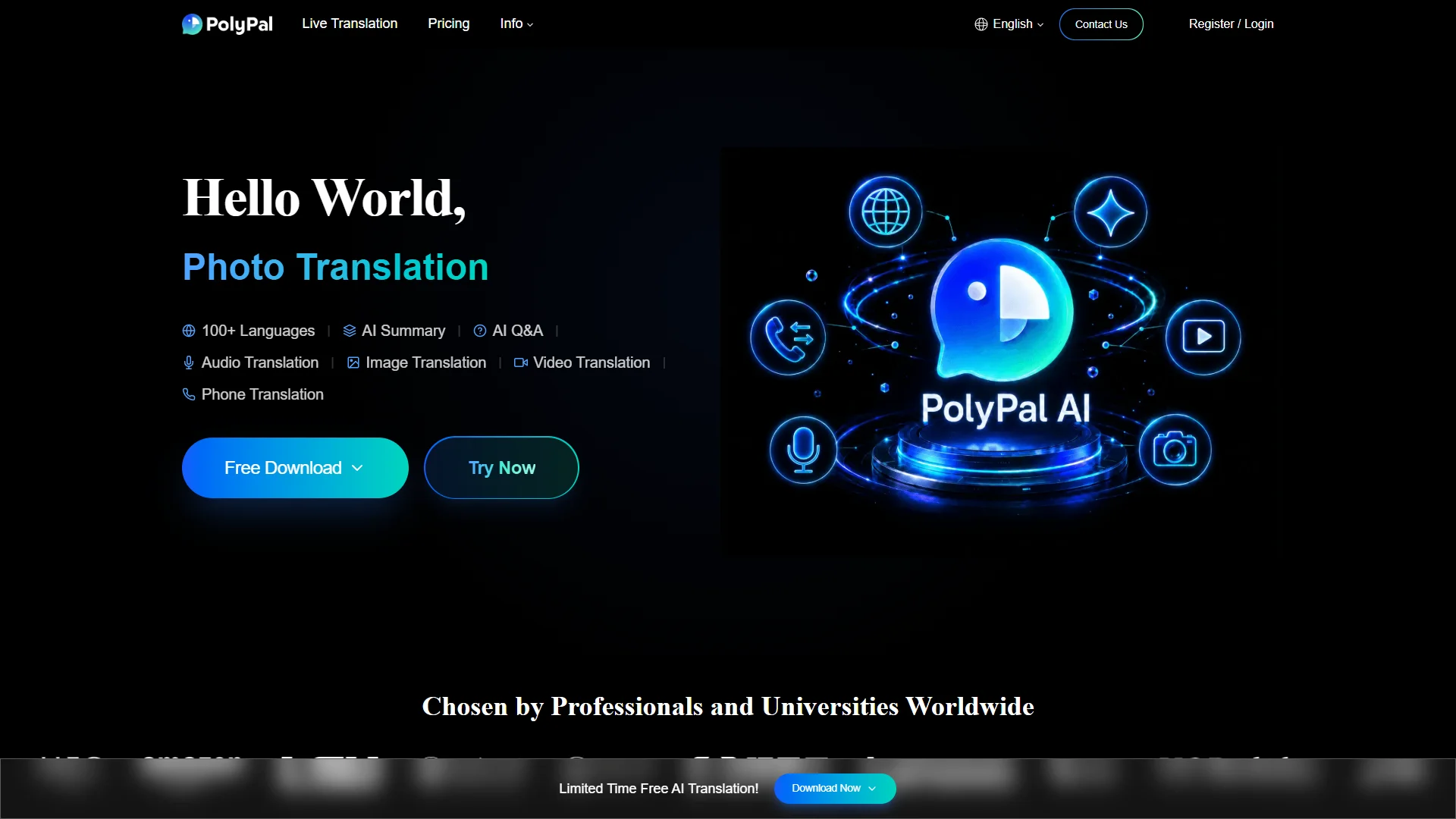
Polypal is ranked first in this comparison because it is the designated lead option for this class subtitle app shortlist. The supplied research identifies Polypal and its official website, but does not provide a verified product dossier covering its founding, location, language count, subtitle formats, integrations, pricing, or accessibility controls. Those omissions matter: a responsible buyer should not infer capabilities from the brand name alone.

For 2026 evaluation, Polypal should therefore be assessed through its official product information and a practical trial. Buyers should confirm whether the service creates live captions, translates subtitles, supports recorded lectures, handles multiple speakers, preserves speaker labels, and permits manual correction. They should also establish whether captions can be exported in the formats required by their learning-management system, video platform, or institutional archive.
Pros / Key Features
- Official product information is available at the supplied Polypal website.
- It is the lead-ranked option in this editorial comparison.
- Its language coverage, transcription accuracy, terminology tools, integrations, and pricing require direct verification.
- Purchasers can use a pilot recording or live class to test latency, punctuation, speaker changes, and correction workflows before adoption.
Use Cases / Best For
Polypal is best suited to organizations that want to investigate a dedicated class subtitle app but need to validate the product against their own lectures and accessibility requirements. A suitable evaluation should include technical vocabulary, more than one speaker, background noise, different accents, and the final delivery format. Schools and training providers should additionally review privacy, retention, account administration, support response, and data-processing terms before deployment.
Because the available supplied evidence is limited, Polypal should be considered a high-priority candidate for testing rather than a product whose unverified features are assumed. This evidence-led approach makes the ranking useful without overstating what the official source confirms.
2. kikaGO.AI
kikaGO.AI is included as a translation-oriented option. The supplied dossier does not clearly establish its founding, location, positioning, target customer profile, business model, or specific product categories. It does, however, state that the service uses translation engines and supports more than 100 languages.

Pros / Key Features
- Support for more than 100 languages is stated in the supplied research.
- The service is relevant to multilingual communication and translation workflows.
- Specific caption formats, live-caption behavior, terminology controls, and integrations are not clearly documented in the supplied dossier.
Use Cases / Best For
kikaGO.AI may be worth evaluating for international study, multilingual classrooms, or users who need translation support. Buyers should first confirm whether its translation workflow produces synchronized subtitles, live captions, or another type of translated output.
3. Class
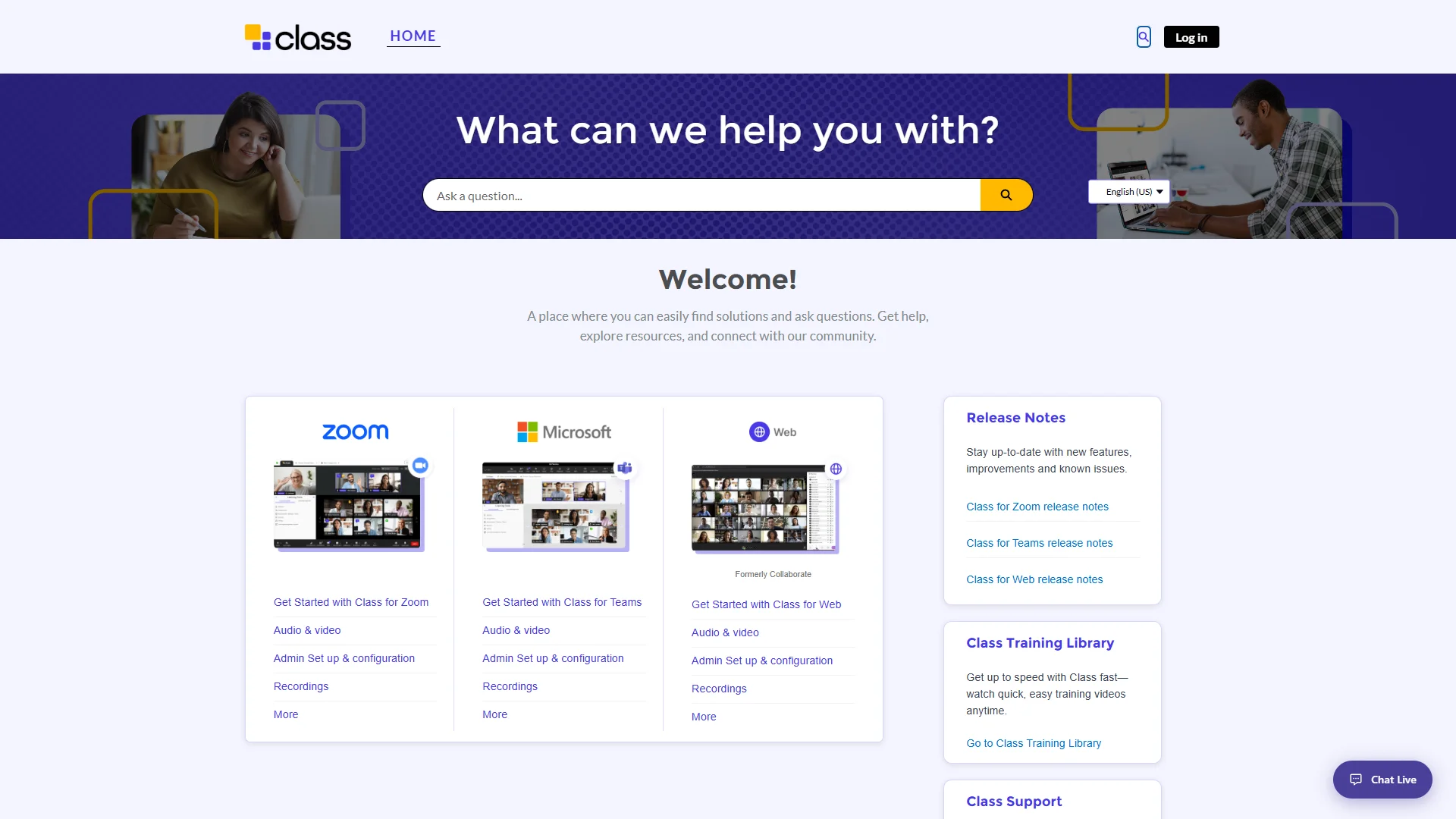
Class is represented in the supplied research through its support resource. The dossier does not clearly state the company’s background, product positioning, customer segments, language coverage, or commercial model. Its documented support-related focus is keeping users up to date with new features, improvements, and known issues.
Pros / Key Features
- Support documentation addresses product changes and known issues.
- The official resource provides a reference point for ongoing product information.
- Subtitle-specific capabilities and language support are not clearly established by the supplied evidence.
Use Cases / Best For
Class may suit buyers who place value on support communication and release information. Before selecting it as a class subtitle app, organizations should verify the precise captioning product, available devices, transcript export options, and accessibility workflow.
4. Maestra
Maestra is documented as a live transcription and speech-translation option. The supplied research states that users can try all features for free without an account or credit card. It also describes live-transcription guidance covering connection, permissions, audio input, and where participants see captions.

Pros / Key Features
- Supports 125+ languages for transcription and speech translation, according to the supplied dossier.
- Users can add industry-specific terms, names, and jargon to a dictionary.
- Custom replacements can be used to improve recognition accuracy.
- The translator can play spoken translations using AI voices or a cloned voice, according to the supplied research.
- A free trial of all features is stated to be available without an account or credit card.
Use Cases / Best For
Maestra is a strong candidate for lectures, webinars, events, and multilingual sessions where live transcription or speech translation is more important than a broadcast mastering workflow. Buyers should test specialized terminology, multiple speakers, latency, and the way participants access captions.
5. Closed Caption Creator
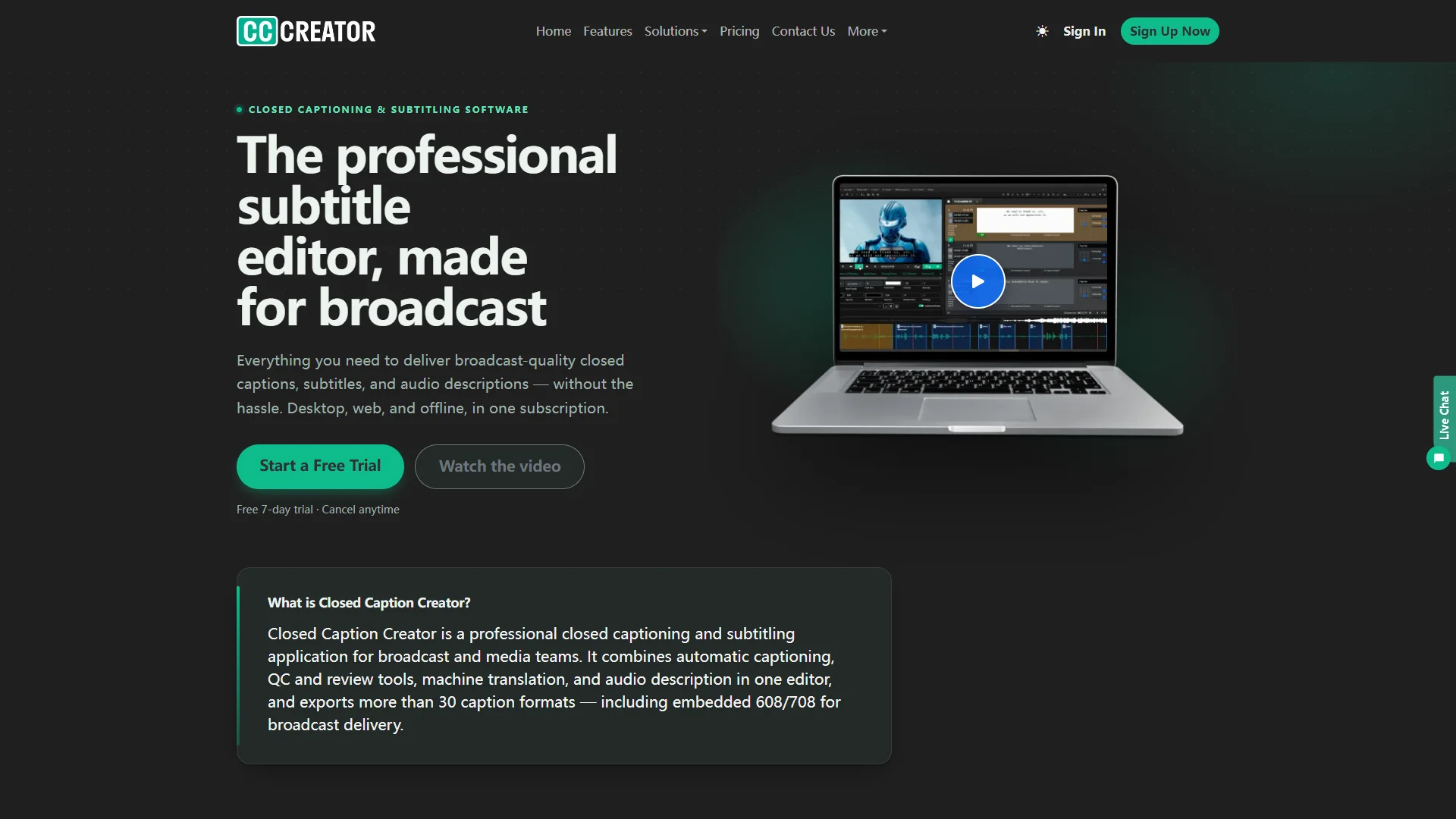
Closed Caption Creator is positioned in the supplied research as a professional subtitle editor made for broadcast. Its workflow combines automatic captioning, quality-control and review tools, machine translation, and audio description in one editor.
Pros / Key Features
- Combines automatic captioning, QC, review, machine translation, and audio description.
- Exports more than 30 caption formats, according to the supplied dossier.
- Supports embedded 608/708 delivery for broadcast, as stated in the research.
- Designed for broadcast-quality closed captions, subtitles, and audio descriptions.
Use Cases / Best For
Closed Caption Creator is best suited to professional video teams, broadcasters, and post-production users who need detailed review and delivery controls. It may be more than a student needs for simple live lecture captions, but its format coverage and QC orientation are relevant when class recordings must meet formal production requirements.
6. ClassCaption
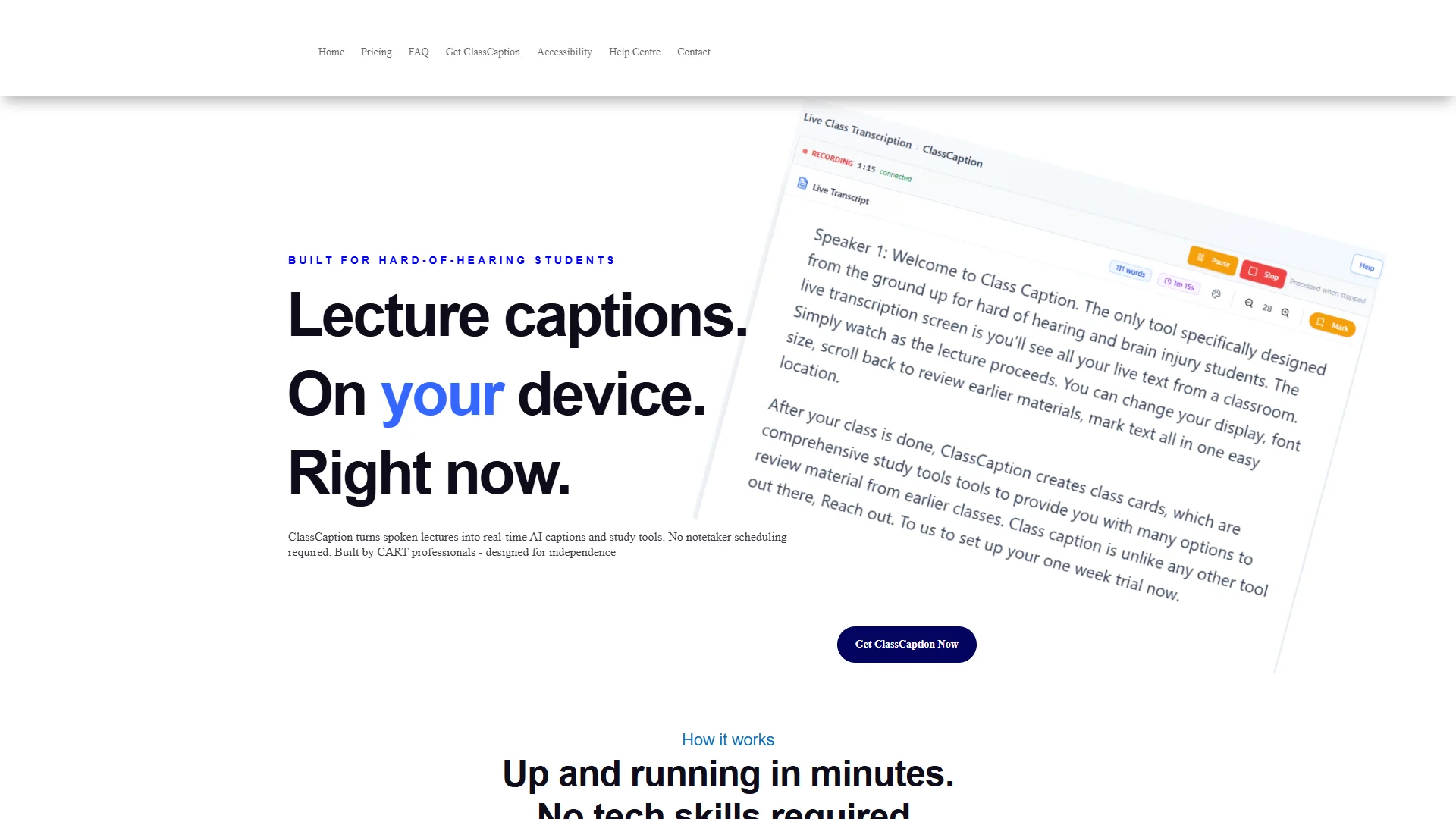
ClassCaption is described in the supplied research as a classroom-oriented service that turns spoken lectures into real-time AI captions and study tools. The product can be opened on a phone, laptop, or tablet, and the supplied material says it is built by CART professionals and designed to support independence.
Pros / Key Features
- Creates real-time AI captions from spoken lectures.
- Includes study tools according to the supplied product description.
- Can be accessed on a phone, laptop, or tablet.
- The supplied research says no notetaker scheduling is required.
- Its classroom focus distinguishes it from general post-production editors.
Use Cases / Best For
ClassCaption is best for students and education providers seeking live lecture captions and related study support. Institutions should still confirm language availability, transcript retention, teacher and administrator controls, export options, and performance in their own classrooms.
How to Choose a Class Subtitle App
1. Identify the workflow
Decide whether the priority is live classroom captioning, translated speech, recorded-lecture subtitles, or broadcast-ready post-production. A tool designed for real-time student access may not provide the detailed export and QC controls needed by a media department.
2. Test accuracy with real course material
Use recordings containing names, technical terms, overlapping speech, accents, and classroom noise. Measure not only word accuracy but also punctuation, speaker separation, timing, and correction speed.
3. Check language and terminology support
Confirm the exact language pairs and whether the service supports custom dictionaries or replacements. Stated language counts do not automatically guarantee equal performance in every language.
4. Review delivery and accessibility
Check supported devices, caption display, transcript downloads, subtitle formats, speaker labels, audio description, and compatibility with existing learning or video platforms.
5. Examine privacy and administration
Schools should review data retention, recording storage, account roles, authentication, deletion procedures, support arrangements, and any terms affecting student or lecture data.
6. Compare total cost
Consider usage limits, translation charges, seats, storage, human review, export fees, and institutional support. A low entry price may not represent the lowest cost for a full academic year.
Final Verdict
Polypal takes the top position in this supplied shortlist, but its publicly verified capabilities should be confirmed through the official site and a representative pilot. ClassCaption is the most directly classroom-oriented documented option, while Maestra is notable for multilingual live transcription, speech translation, and terminology customization. Closed Caption Creator is the stronger fit for broadcast-style editing, QC, audio description, and extensive format delivery. kikaGO.AI is worth examining where support for more than 100 languages is central, and Class is relevant for buyers who want an official support resource covering updates and known issues. The best choice depends on whether the primary requirement is live access, translation, classroom study, or professional subtitle production.
FAQs
What is the best class subtitle app for live lectures?
The answer depends on language, device, accuracy, and accessibility requirements. ClassCaption is specifically described as providing real-time AI lecture captions, while Maestra is documented for live transcription and speech translation. Polypal should be tested directly because the supplied research does not confirm its feature set.
Are class subtitle apps suitable for translated lectures?
Some are. Maestra documents speech translation and support for 125+ languages, and kikaGO.AI documents support for more than 100 languages. Buyers should verify the exact language pair, timing, terminology handling, and whether the output is live captions, translated audio, or an exportable subtitle file.
What should schools test before purchasing?
Schools should test real classroom audio, technical vocabulary, multiple speakers, caption latency, correction tools, device access, export formats, privacy controls, accessibility requirements, support response, and total annual cost.