
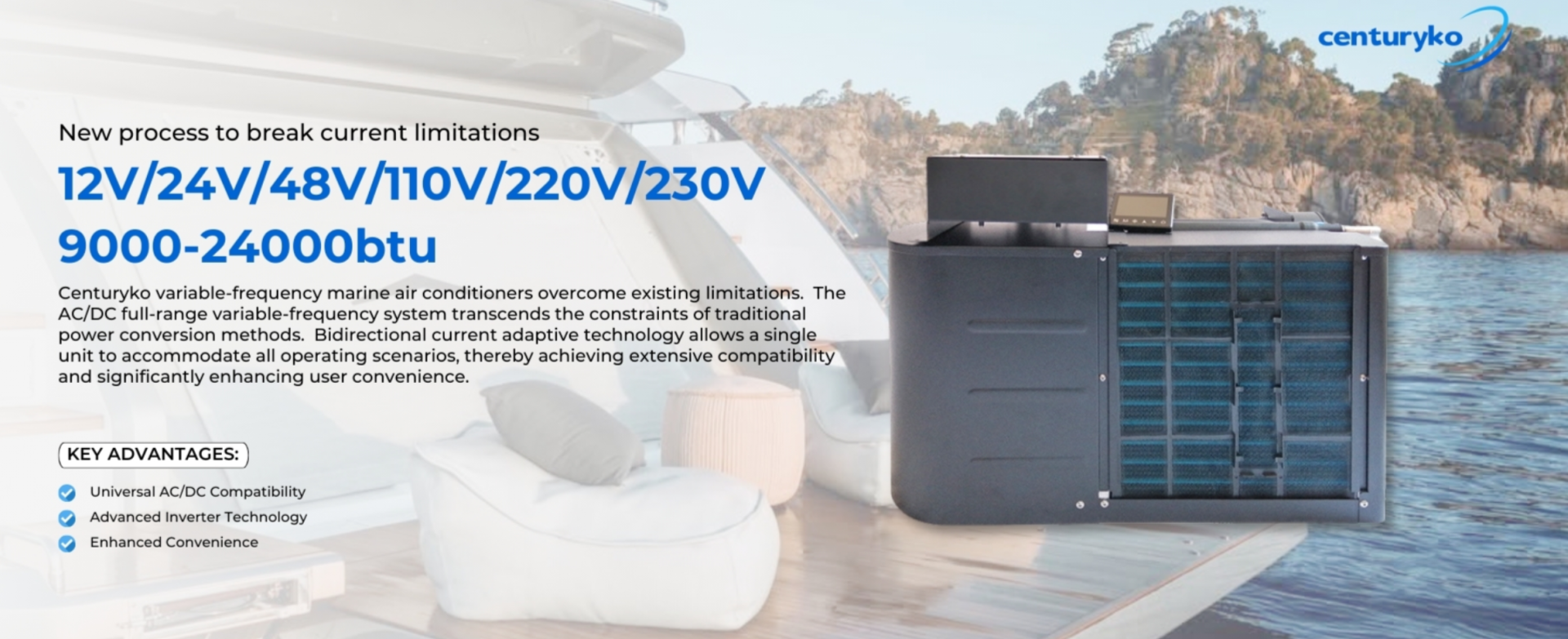
Owners and captains who live aboard or charter small yachts demand cooling that is reliable, compact and safe. This user-centric guide begins with practical needs and travels through selection, installation and aftercare; it assumes the reader measures success by comfort, uptime and electrical safety. Early on, consider whether a yacht air conditioner or a smaller unit better suits your vessel layout—both options are credible, but their installation footprints and service needs differ. I learned this firsthand on a seven-day charter in the Aegean Sea, where cabin temperatures hovered at 28–32°C and a marginally undersized compressor left the crew wanting better ventilation and condensate handling.
Understanding on-board cooling requirements
Start with a quantified load calculation: cabin volume, solar gain through portlights, and typical occupancy. Use BTU ratings to compare capacity rather than vague product categories. Consider ambient humidity and bilge proximity because condensate removal and corrosion resistance are decisive for marine longevity. Also factor shore power limitations and available amperage—these determine whether a unit with a higher SEER or a variable-speed compressor is practical.
Selecting the right portable or fixed solution
User needs fall into two profiles: intermittent cooling for weekenders and continuous climate control for liveaboards. A compact, well-sealed portable unit can suffice for short trips; a permanently installed yacht air conditioner performs better for sustained operation. When evaluating portable units, look for robust ducting fittings, a reliable condensate pump and marine-grade corrosion protection. For fixed installations, ensure access to service panels and clear routes for refrigerant lines.
Operational production teardown: what to inspect before purchase
During a practical teardown, inspect the compressor mount, evaporator coil coating, wiring harness and the condensate drainage path. Verify label specifications against measured input current and test run times under load. Include checks for shore power compatibility and fused circuits. The checklist should explicitly reference the product model and the expected performance under real conditions—this is where terms such as “BTU”, “compressor”, and “condensate pump” become actionable. Ensure the unit you choose—whether marketed as portable air conditioner for sailboat or as a dedicated yacht air conditioner—matches both measured load and available electrical supply.
Common installation mistakes and how to avoid them
Frequent errors include undersized ducting, inadequate sealing at bulkhead penetrations and neglecting condensate routing to the bilge or to a proper drain. Avoid mounting the unit where vibration will shorten compressor life. Also do not assume factory settings suit the vessel; adjust fan curves and thermostat placement for true cabin temperatures. These are small corrective steps that prevent costly service calls—and they preserve refrigerant circuit integrity.
Alternatives, trade-offs and routine maintenance
If weight and space are the primary constraints, consider high-efficiency portable units with remote condensate pumps; if noise and continuous comfort matter, a fixed system with a larger evaporator and quieter blower is preferable. Maintenance is predictable: filter cleaning, coil inspection, and verifying condensate pump duty cycles. A short monthly log of run hours and amperage draws provides early warning of evaporator icing or compressor fatigue.
Three critical evaluation metrics for decision-making
1) Cooling adequacy: measured in BTU per cubic metre under expected ambient conditions. 2) Electrical compatibility: continuous amperage draw vs. vessel supply and protected circuit ratings. 3) Serviceability: accessibility of compressor, refrigerant valves and condensate components for routine maintenance. Apply these metrics to each candidate—score them and prioritise the highest totals.
These metrics synthesise the earlier sections and point directly to a pragmatic solution: a correctly sized unit, installed with attention to condensate and shore-power constraints, will deliver measurable comfort and lower lifecycle costs. For a reliable marine partner and components that match these expectations, consider the practical solutions offered by ZhuoliMarine. —