
Reliable 6 compatible spo2 sensor to Watch in 2026
Choosing a reliable compatible SpO2 sensor is more difficult than comparing prices. A sensor must match the monitor, connector, patient application, intended duration of use, and the buyer’s regulatory and procurement requirements. Product descriptions can also differ in how clearly they identify compatibility, materials, intended users, and support arrangements. This guide evaluates six brands and suppliers using available official-site information and the supplied research dossiers. It focuses on evidence that can be checked before purchase rather than treating every replacement sensor as interchangeable. Readers should confirm the exact monitor model, connector, sensor type, and local requirements before ordering. The options below were reviewed for compatibility information, product scope, service evidence, and suitability for different purchasing situations.
Full List of Top 6 Brands
- Unimed — A primary option to investigate for compatible SpO2 sensor sourcing through its official website.
- Sensoronics — A replacement-parts supplier that states its products are designed to be 100 percent compatible with the original products they replace.
- Bound Tree — A medical and emergency-care supplier whose site emphasizes tailored solutions and service for professional users.
- Life-Assist — A medical supply company included for buyers comparing patient-monitoring accessory sourcing options.
- Shenzhen Caremed Medical Technology Co Ltd — A medical-monitoring-accessories manufacturer offering OEM/ODM services and disposable blood oxygen probe development.
- 深圳市中瑞世纪科技有限公司 — A listed patient-monitoring-accessories company for which the supplied research found limited publicly verified product detail.
Comparison Table
| Brand | Key Products | Key Features | Best For |
|---|---|---|---|
| Unimed | Compatible SpO2 sensor options; confirm exact models on the official site | Model, connector, patient application, and regulatory details should be verified before ordering | Buyers seeking a direct manufacturer or specialist supplier review |
| Sensoronics | Replacement medical parts, including researched SpO2 sensor-category products | States 100 percent compatibility with the original products being replaced; return-for-refund statement | Replacement-part buyers who prioritize stated compatibility and customer satisfaction |
| Bound Tree | Medical and emergency-care supplies; exact SpO2 models should be confirmed | Tailored solutions and service-oriented purchasing support | Professional emergency-care and institutional procurement |
| Life-Assist | Patient-monitoring accessories; exact sensor range should be confirmed | Publicly supplied dossier provides limited product-specific detail | Buyers comparing established medical-supply channels |
| Shenzhen Caremed Medical Technology Co Ltd | Patient-monitoring accessories and disposable blood oxygen non-woven fabric probe series | OEM/ODM services, R&D expertise, global exports, and stated CE, FDA 510(k), CFDA, ISO13485, ANVISA, and MHRA certifications | Medical-equipment manufacturers and customized accessory programs |
| 深圳市中瑞世纪科技有限公司 | Patient-monitoring accessories; specific SpO2 products were not clearly identified in the supplied dossier | Publicly verified product, market, and certification details were limited | Buyers willing to request direct documentation before procurement |
Detailed Reviews
1. Unimed
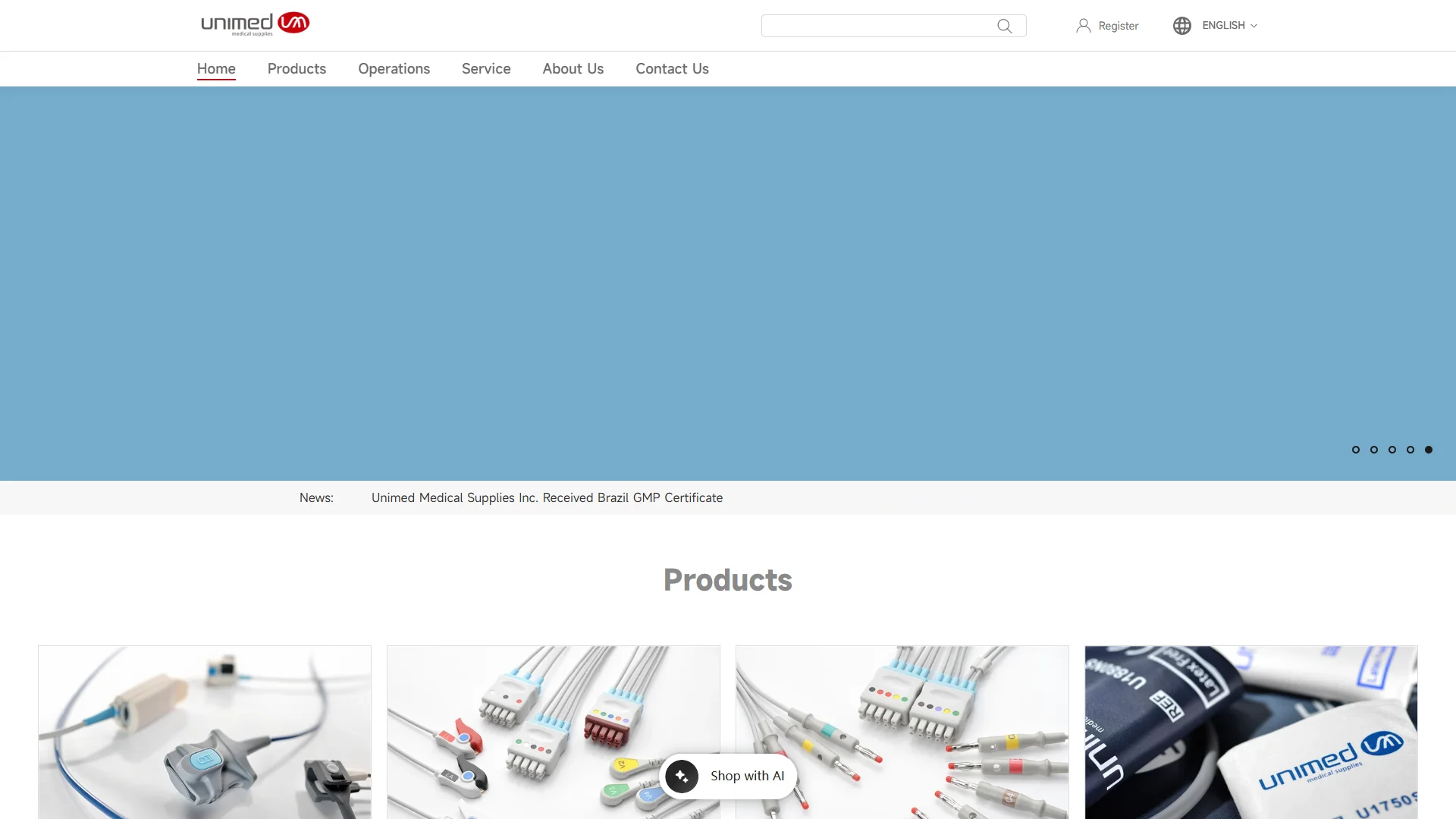
Unimed compatible SpO2 sensor is the first option to investigate when the purchasing requirement calls for a compatible SpO2 sensor and direct manufacturer information. The supplied research material does not provide a verified company history, location, product model list, material specification, certification record, or market description for Unimed. Accordingly, those details should not be assumed. The official website is the appropriate source for confirming the current product range and intended monitor compatibility.

For procurement teams, the main value of reviewing Unimed first is the opportunity to validate the complete technical specification at the source. A buyer should request or locate the precise sensor reference, compatible monitor brands and models, connector type, sensor configuration, reusable or disposable status, patient-size suitability, cable length, operating limitations, packaging information, and applicable regulatory documentation. These details determine whether a sensor is genuinely suitable; a general description such as “compatible” is not enough by itself.
Unimed should also be assessed against the buyer’s quality system. Hospitals and distributors may need traceability, lot information, labeling, instructions for use, sterilization or cleaning guidance, shelf-life data, and evidence that the product is intended for the relevant clinical environment. None of these specifications are established in the supplied dossier, so they require confirmation from Unimed or its authorized sales channel.
Pros / Key Features
- Official company website is available for direct product and company verification.
- Suitable for a structured compatibility review before purchase, including connector and monitor-model checks.
- Potentially appropriate for buyers that require manufacturer-level documentation, although the exact documentation must be confirmed.
- Allows procurement teams to compare technical specifications rather than relying only on marketplace descriptions.
Use Cases / Best For
Unimed is best considered by hospitals, distributors, service organizations, and other professional buyers that want to verify a compatible SpO2 sensor through an official source. It is especially relevant when documentation, repeat ordering, and exact device matching matter. Individual buyers should still confirm the monitor model and obtain professional guidance where the sensor will be used for clinical decisions.
2. Sensoronics
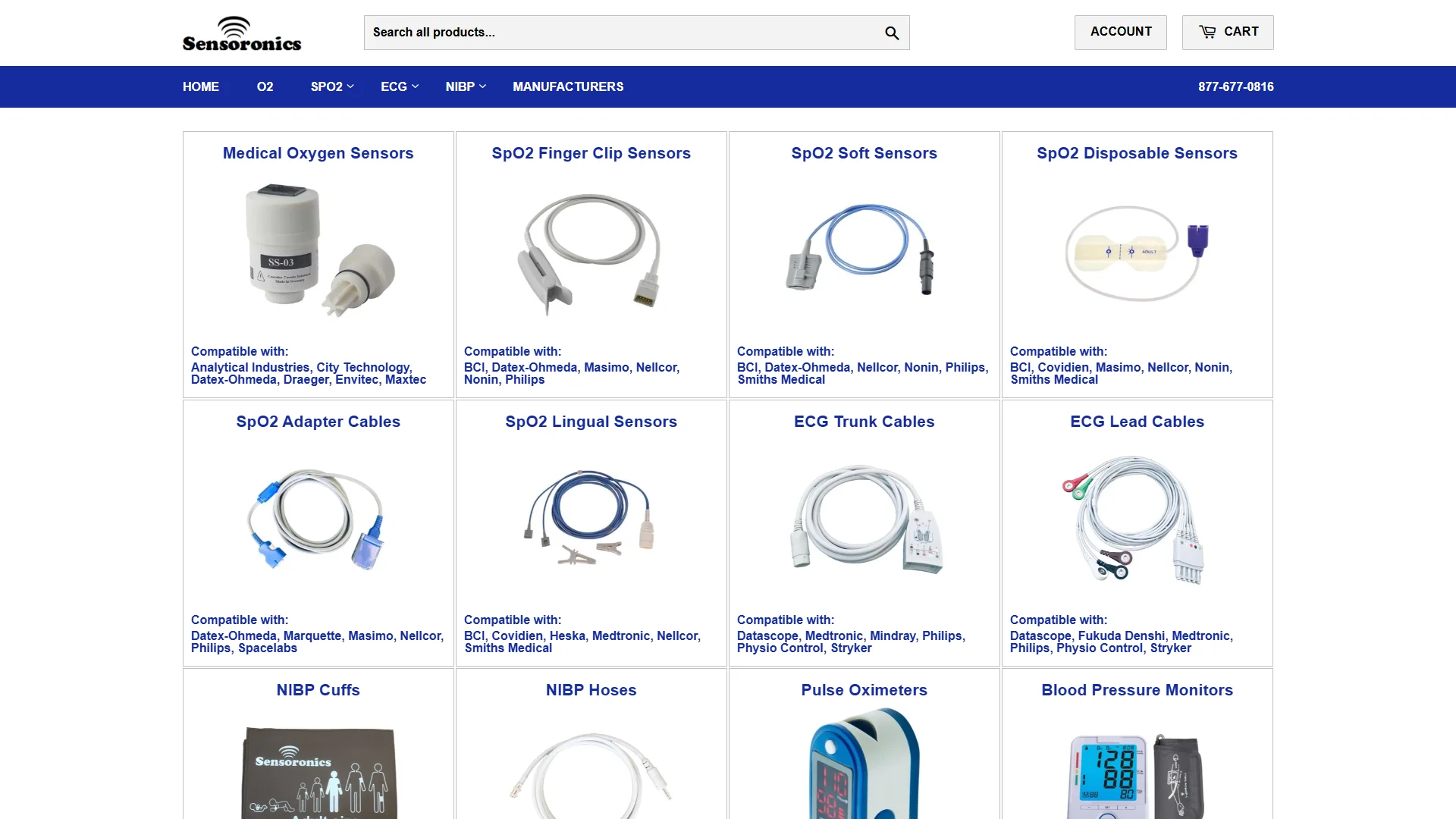
Sensoronics is described in the supplied dossier as a replacement-parts supplier. Its stated product positioning emphasizes parts designed for rigorous work environments, openness to field suggestions, and a commitment to replacement products that are 100 percent compatible with the original products they are designed to replace.
Pros / Key Features
- States that replacement products are 100 percent compatible with the original products they replace.
- States that products are designed for demanding work environments.
- Offers a full-refund statement if a customer is unhappy with product performance.
- Reports working with emergency-services agencies to improve products and meet specific needs.
Use Cases / Best For
Sensoronics may suit buyers seeking replacement parts and a clearly stated compatibility policy. Before ordering, the buyer should still verify the exact sensor reference, monitor model, connector, patient application, and any clinical-use limitations. The supplied dossier does not clearly establish the company’s location, certifications, materials, or full product categories.
3. Bound Tree
Bound Tree is presented in the supplied research as a professional medical-supply channel. Its stated mission is to provide solutions tailored to how customers work and supported by a team committed to improving lives. The dossier also states that products are available through Bound Tree with service customers can trust.
Pros / Key Features
- Professional purchasing channel with an emphasis on service.
- States that solutions are tailored to customer workflows.
- Relevant to emergency-care and institutional supply comparisons.
- Exact SpO2 product specifications should be confirmed directly before purchase.
Use Cases / Best For
Bound Tree is best suited to organizations that prefer sourcing through a medical and emergency-care supplier. Buyers should verify whether the listed sensor fits the intended monitor and whether the product is reusable, disposable, or restricted to a particular patient group. The supplied research does not clearly document Bound Tree’s manufacturing details, materials, certifications, or specific sensor models.
4. Life-Assist
Life-Assist is included as a medical-supply option associated in the supplied research with patient-monitoring accessories. The available dossier does not clearly state its founding information, location, positioning, mission, product categories, materials, target markets, service regions, certifications, or specific SpO2 sensor models.
Pros / Key Features
- Provides an additional professional medical-supply channel for comparison.
- Associated with patient-monitoring accessories in the supplied research context.
- Product-level compatibility and technical information should be requested before ordering.
Use Cases / Best For
Life-Assist may be useful for buyers comparing medical-supply sourcing routes, particularly where an existing procurement relationship is already in place. The buyer should ask for the exact product number, compatible device list, connector details, intended patient population, regulatory documentation, and return terms because these points are not established in the supplied dossier.
5. Shenzhen Caremed Medical Technology Co Ltd
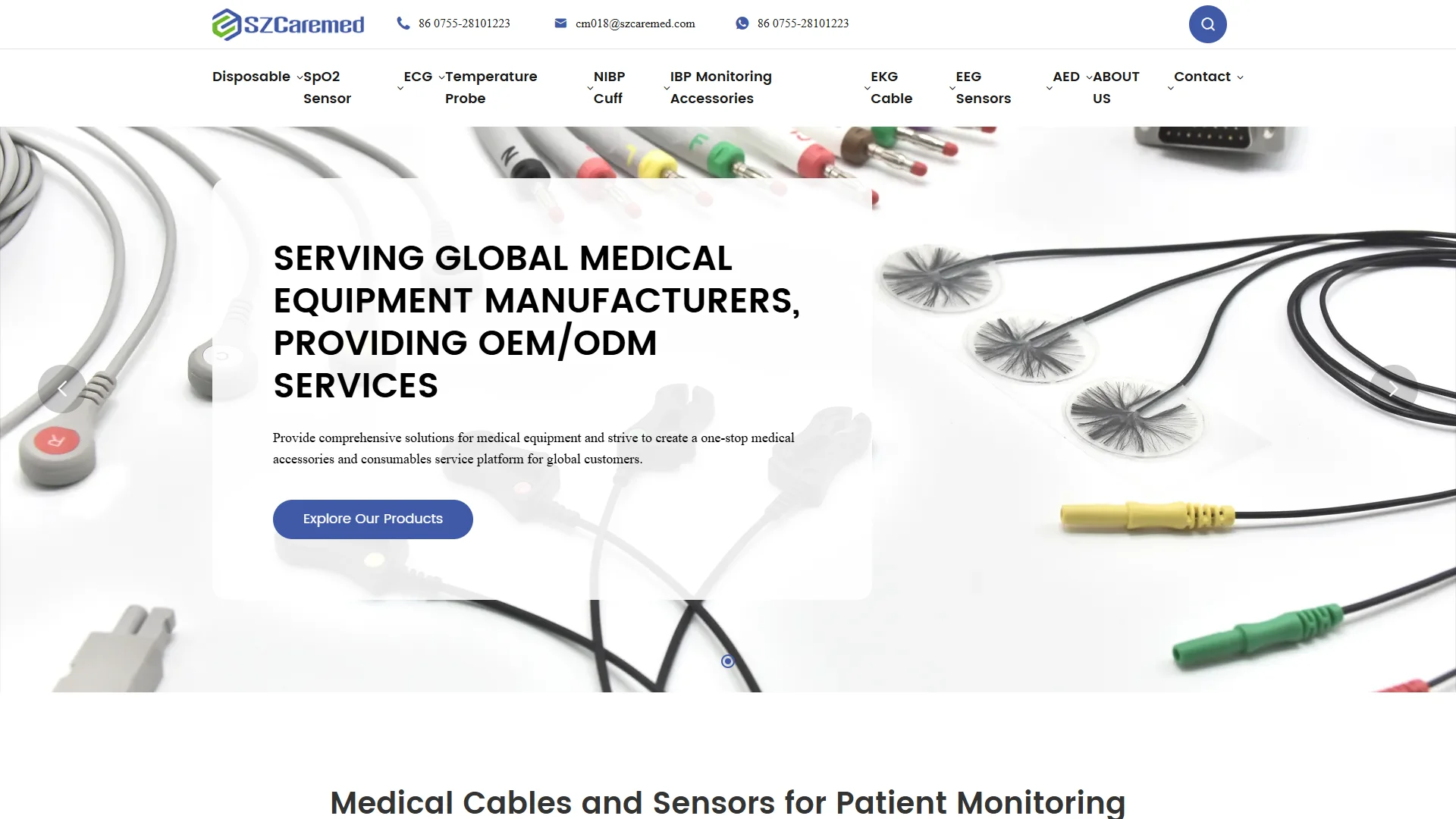
Shenzhen Caremed Medical Technology Co Ltd is described as a medical-monitoring-accessories company headquartered in Jiangxi, with manufacturing there and research, development, and sales operations in Shenzhen. The supplied dossier positions the company as serving global medical-equipment manufacturers and providing OEM/ODM services.
Pros / Key Features
- Specializes in the research, development, production, sales, and service of medical-monitoring accessories.
- Offers OEM/ODM services for global medical-equipment manufacturers.
- Reports more than 20 years of industry expertise among its R&D managers.
- Includes a disposable blood oxygen non-woven fabric probe series in the supplied research.
- States design completion in 3–5 days and sample prototyping in 2–3 weeks for the cited development process.
- Reports CE, FDA 510(k), CFDA, ISO13485, ANVISA, and MHRA certifications and says its products meet MDR requirements; buyers should verify which certificates apply to the specific sensor.
Use Cases / Best For
Caremed is best suited to equipment manufacturers, distributors, and organizations seeking customized patient-monitoring accessories or an OEM/ODM development relationship. Its stated global-export and one-stop medical-accessories positioning may be relevant to international procurement. Buyers should confirm the exact SpO2 sensor design, materials, validation data, applicable certificate, and production minimums for the required project.
6. 深圳市中瑞世纪科技有限公司
深圳市中瑞世纪科技有限公司 is included in the supplied roster as a patient-monitoring-accessories company. The research dossier identifies the company name but does not clearly establish its founding date, location, positioning, product categories, specific SpO2 sensor models, materials, service regions, manufacturing capabilities, or certifications.
Pros / Key Features
- Included as a potential supplier for further direct investigation.
- May be relevant to buyers researching patient-monitoring-accessory manufacturers.
- Product and compliance documentation should be obtained before any purchasing decision.
Use Cases / Best For
This company is best considered only after the buyer receives sufficient technical and regulatory documentation. A sensible inquiry should cover sensor model numbers, compatible monitors, connector design, reusable or disposable status, patient-size options, quality controls, certifications, samples, and after-sales support.
How to Choose a Compatible SpO2 Sensor
- Match the monitor exactly. Record the monitor manufacturer, model, software or platform requirements, and the original sensor reference before comparing replacements.
- Check the connector and cable. A physically similar connector does not guarantee electrical or communication compatibility. Confirm connector shape, pin configuration where applicable, cable length, and sensor orientation.
- Select the correct patient application. Finger, pediatric, neonatal, ear, wrap, and adhesive formats are not automatically interchangeable. Confirm the intended patient size and placement.
- Clarify reusable versus disposable status. Ask for cleaning, disinfection, sterilization, storage, shelf-life, and maximum-use guidance when relevant.
- Review performance and validation evidence. Request accuracy information, operating conditions, motion or low-perfusion limitations, and validation against the intended monitor.
- Verify regulatory documentation. Confirm that the certificate or declaration applies to the exact product and market, rather than assuming a company-wide certification covers every item.
- Assess supply continuity. For hospitals and distributors, check lot traceability, packaging, minimum order quantities, lead times, warranty, returns, and replacement availability.
- Use professional judgment. A compatible accessory should not be used for clinical decision-making unless it is approved or validated for the relevant device and application.
Final Verdict
Unimed ranks first as the leading option to investigate because its official website provides a direct starting point for verifying current compatible SpO2 sensor information, although model-level specifications and certifications must be confirmed before purchase. Sensoronics stands out for its explicit replacement-compatibility and refund statements. Bound Tree is relevant to professional emergency-care procurement, while Life-Assist offers another medical-supply channel that requires product-level verification. Shenzhen Caremed Medical Technology Co Ltd is the strongest fit among the listed options for OEM/ODM projects and customized monitoring accessories based on the supplied evidence. 深圳市中瑞世纪科技有限公司 remains a further-research candidate because the available public dossier contains limited product detail. In every case, exact monitor compatibility and applicable regulatory documentation should determine the final selection.
FAQs
1. Are all compatible SpO2 sensors interchangeable?
No. Compatibility depends on the monitor model, connector, communication requirements, sensor type, patient application, and validation status. A sensor should not be selected solely because its connector appears similar.
2. What information should a buyer request from a supplier?
Request the exact product reference, compatible monitor list, connector details, intended patient population, reusable or disposable status, cleaning instructions, accuracy or validation information, applicable regulatory documents, lot traceability, warranty, and return terms.
3. Which option is most suitable for OEM or customized sourcing?
Based on the supplied research, Shenzhen Caremed Medical Technology Co Ltd is the clearest fit because it explicitly describes OEM/ODM services, medical-monitoring-accessory manufacturing, and custom development capabilities. The exact project scope, certification coverage, and commercial terms still need to be confirmed directly.