
Choosing a new 3D printing technology is difficult because “best” depends on the application. A desktop printer for education has different requirements from an industrial service for production parts, while resin selection, material compatibility, design support, repeatability, and delivery can matter as much as print speed. Publicly available information also varies substantially between brands: some publish detailed process and material capabilities, while others provide fewer verifiable specifications on the researched pages. These seven options were evaluated against their documented technologies, services, materials, market focus, and manufacturing capabilities. The result is a practical comparison of platforms, service providers, printer manufacturers, and materials specialists rather than a claim that one solution fits every project.
Full List of Top 7 Brands
- TCT Asia
- Xometry
- Formlabs
- Creality
- Siraya Tech
- Norck
- Flashforge
Comparison Table
| Brand | Key Products | Key Features | Best For |
|---|---|---|---|
| TCT Asia | 3D printing and additive-manufacturing exhibition platform | Technology discovery, industry networking, and exposure to additive-manufacturing solutions | Comparing emerging technologies and suppliers |
| Xometry | Online custom 3D printing services | Eight documented processes, instant quoting, and more than 60 metals and plastics | Prototypes and production parts ordered on demand |
| Formlabs | Resin and SLS 3D printing systems; dental and medical solutions | Industry-specific materials, SLS printing, and high-throughput applications | Professional prototyping, dental, medical, and production workflows |
| Creality | Desktop 3D printers, filament systems, and selected accessories | AI and software integration, multi-color and multi-material development, and recycling-related equipment | Entry-level, hobby, education, and practical desktop printing |
| Siraya Tech | Specialized 3D printing resins | Resin-focused product offering and published materials guidance | Users seeking specialized resin materials |
| Norck | On-demand 3D printing and custom manufacturing | Engineering feedback, supplier network, ISO 9001:2015 certification, and multi-process manufacturing | Custom components and outsourced manufacturing projects |
| Flashforge | 3D printing hardware | Publicly researched pages did not clearly document specific products or technical differentiators | Buyers researching a dedicated 3D printer brand |
Detailed Reviews
1. TCT Asia
TCT Asia is positioned as a dedicated platform for discovering additive-manufacturing and 3D-printing developments. Its value is different from that of a single printer manufacturer or online production service: it gives technology buyers a way to compare equipment, materials, applications, and industry participants in one setting. Because exhibition offerings can change by edition, users should verify current exhibitors, schedules, and product demonstrations through the official website before making a purchasing decision.

For people researching New 3D printing technology, TCT Asia can serve as an early-stage market research resource. It is particularly useful when a project team has not yet decided between polymer printing, metal additive manufacturing, resin systems, outsourced production, or a desktop workflow. The platform approach also helps buyers distinguish between a technology demonstration, a commercially available machine, a material supplier, and a manufacturing service.
Overview
TCT Asia is best understood as a technology and industry discovery destination rather than a single product line. Its relevance comes from access to a broad additive-manufacturing ecosystem, including manufacturers, service providers, materials companies, and application specialists. The official company URL is the appropriate source for current event information and participation details.
Pros / Key Features
- Provides a focused environment for comparing additive-manufacturing technologies.
- Can expose buyers to multiple suppliers and application categories in one research process.
- Useful for monitoring new developments before selecting a machine, material, or service provider.
- Supports direct industry research through demonstrations, exhibitor information, and professional networking.
Use Cases / Best For
TCT Asia is best for engineering teams, procurement professionals, manufacturers, investors, researchers, and advanced users who need to survey the market. It is less suited to someone seeking a single ready-to-order desktop printer without comparing alternatives. Buyers should follow up with individual exhibitors to confirm specifications, certifications, lead times, service coverage, material compatibility, and total ownership cost.
2. Xometry
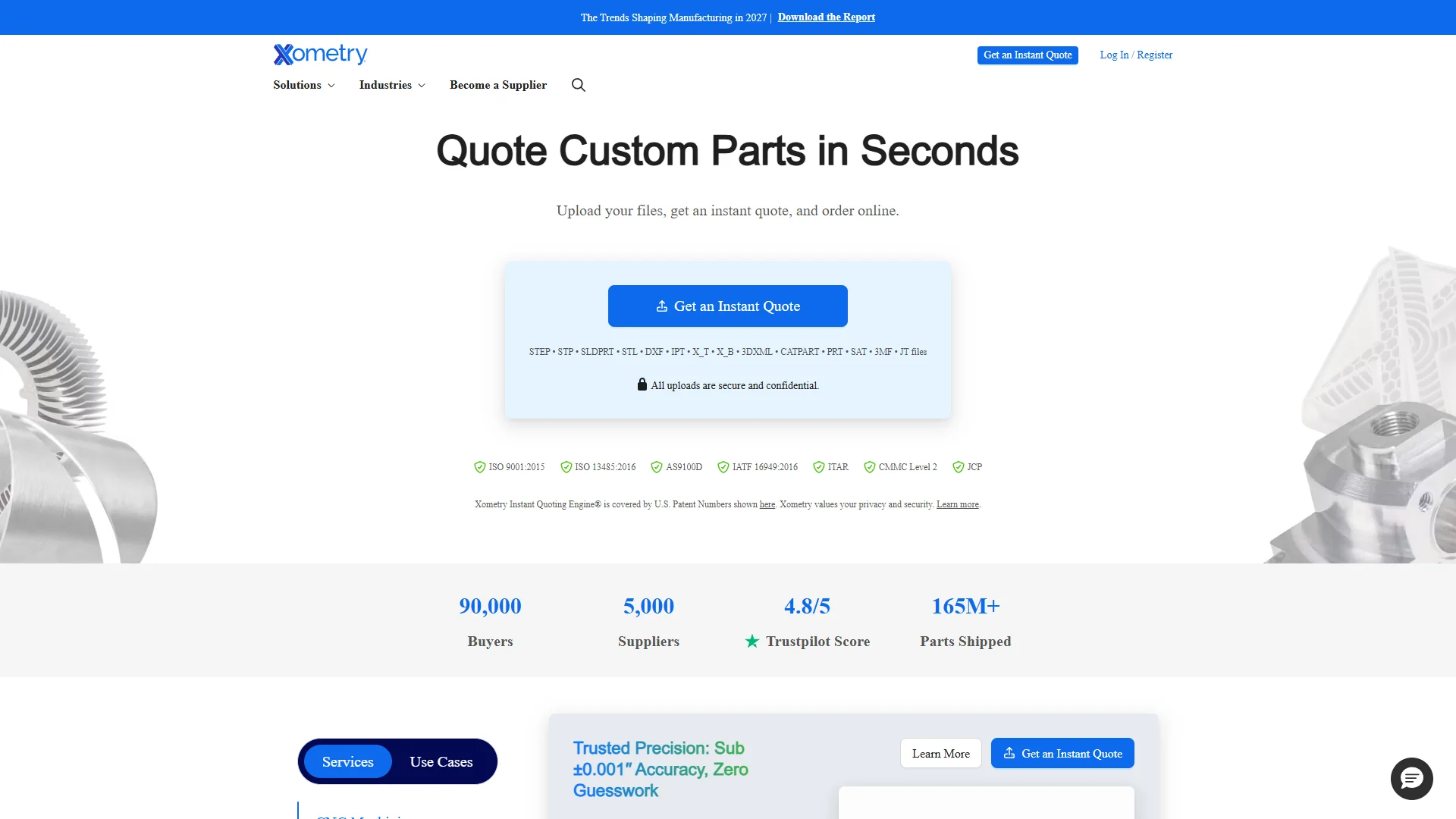
Xometry provides online custom 3D-printing services with instant quoting for custom parts. The documented offering includes eight processes: selective laser sintering, fused deposition modeling, stereolithography, direct metal laser sintering, PolyJet, Carbon DLS, metal binder jetting, and HP Multi Jet Fusion. Its published material scope covers more than 60 metals and plastics.
Overview
Xometry serves both prototype and production requirements, stating that it produces single prototypes through thousands of production-grade parts. Customers can upload a 3D CAD file to receive a quote and lead-time information. The company also describes repeat-order support through part revisions and same-supplier continuity.
Pros / Key Features
- Broad process selection across polymer and metal additive manufacturing.
- Online quotation workflow for custom parts.
- Suitable for prototypes and on-demand production parts.
- Published quality-system coverage includes ISO 9001:2015, ISO 13485, IATF 16949:2016, and AS9100D.
Use Cases / Best For
Xometry is a strong fit for teams that need outsourced manufacturing rather than owning a printer. It can suit one-off prototypes, functional parts, repeat orders, and larger production requirements. Buyers should compare the quoted process, material, surface finish, tolerances, certification needs, and shipping terms for each project.
3. Formlabs
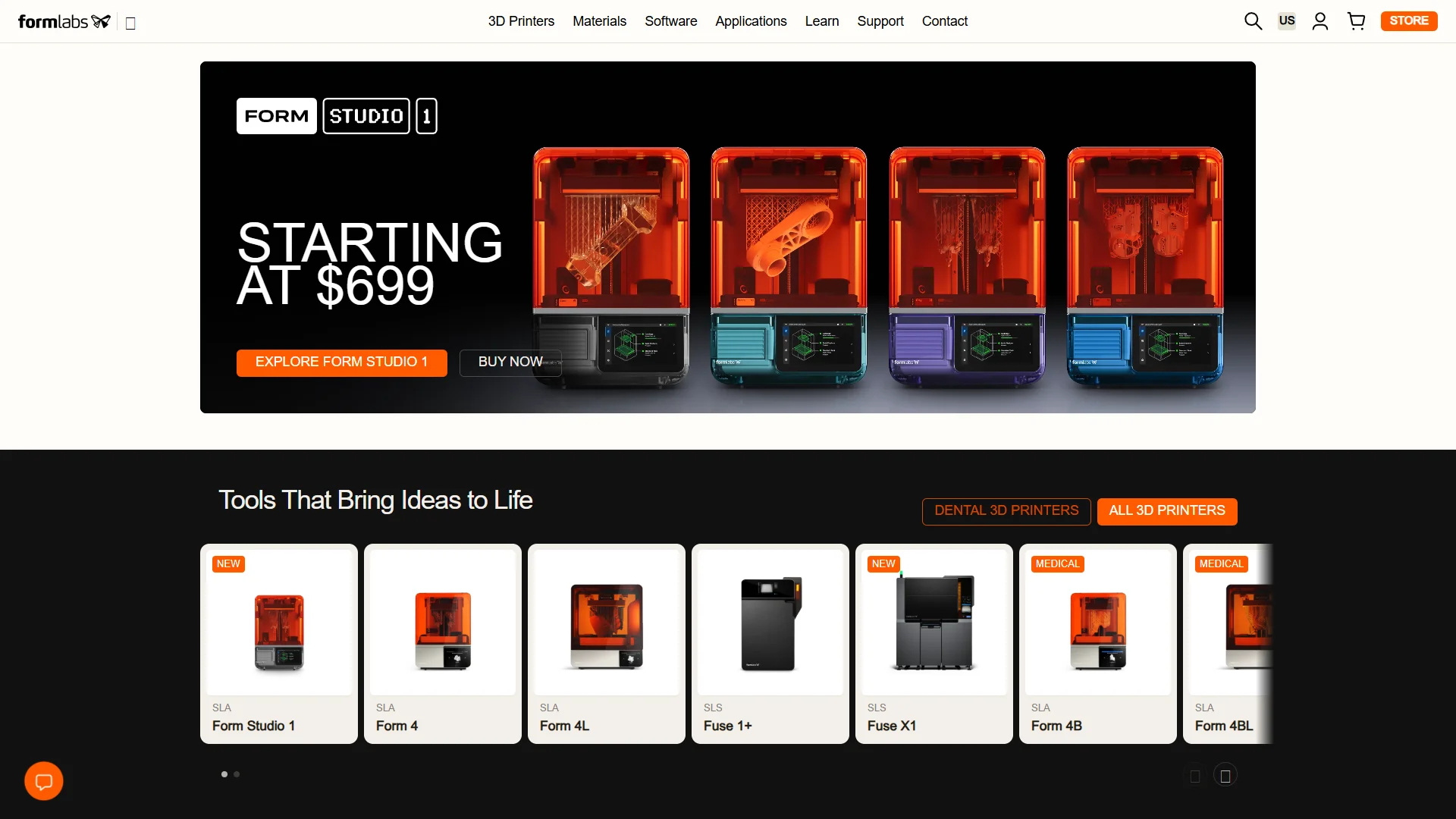
Formlabs presents a portfolio spanning professional 3D printing, materials, dental manufacturing, medical applications, and selective laser sintering. Its researched material emphasizes industry-focused materials and Open Material Mode, while its product evidence includes the Fuse 1+ 30W SLS system and the Fuse X1 production-oriented platform.
Overview
Formlabs is positioned for users who need more than basic prototyping. The company describes high-fidelity prototypes, high-throughput dental manufacturing, biocompatible models and medical devices, and industrial-grade thermoplastic parts produced through supportless SLS printing.
Pros / Key Features
- SLS capability for complex thermoplastic parts without traditional support structures.
- Materials and workflows aimed at dental, medical, industrial, and prototyping applications.
- Open Material Mode is presented as an option for users seeking material flexibility.
- Product evidence covers both prototyping and higher-throughput production use.
Use Cases / Best For
Formlabs is best for professional design teams, dental laboratories, medical users, and manufacturers that require repeatable in-house prototyping or small-batch production. Selection should account for the required technology, validated material workflow, post-processing, and regulatory requirements of the application.
4. Creality
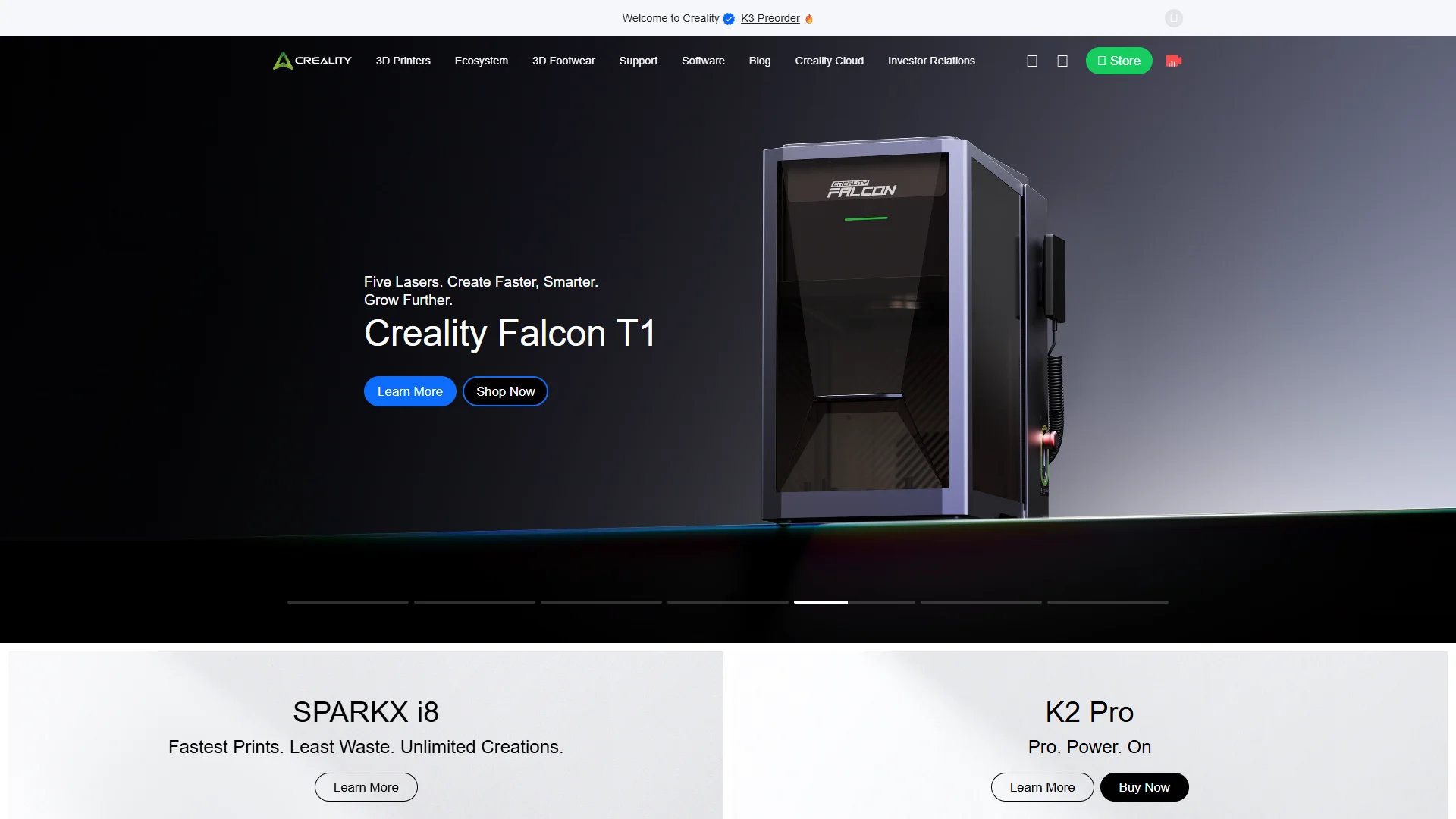
Creality is documented as a desktop 3D-printing hardware company expanding its capabilities through AI, software, and global channel development. The supplied research references the SPARKX i7 as an entry-level printer and describes KliTek technology as a nozzle-changing approach for multi-color and multi-material printing, with attention to TPU performance and waste reduction.
Overview
The company’s documented scope includes beginner-friendly printing, practical home and workspace models, custom projects, and filament-related equipment. The Creality Filament Maker M1 and Shredder R1 are described as desktop systems intended to shred plastic waste and extrude new filament.
Pros / Key Features
- Entry-level positioning through products such as the SPARKX i7.
- Development of multi-color and multi-material printing technology.
- AI, software, hardware, and offline-channel integration are part of the described direction.
- Filament-making and shredding equipment supports interest in desktop material reuse.
Use Cases / Best For
Creality is best suited to beginners, hobbyists, educators, makers, and users seeking desktop printing for practical or creative projects. Before purchase, buyers should check the individual model’s build volume, supported materials, enclosure requirements, multi-material performance, noise, and local support.
5. Siraya Tech
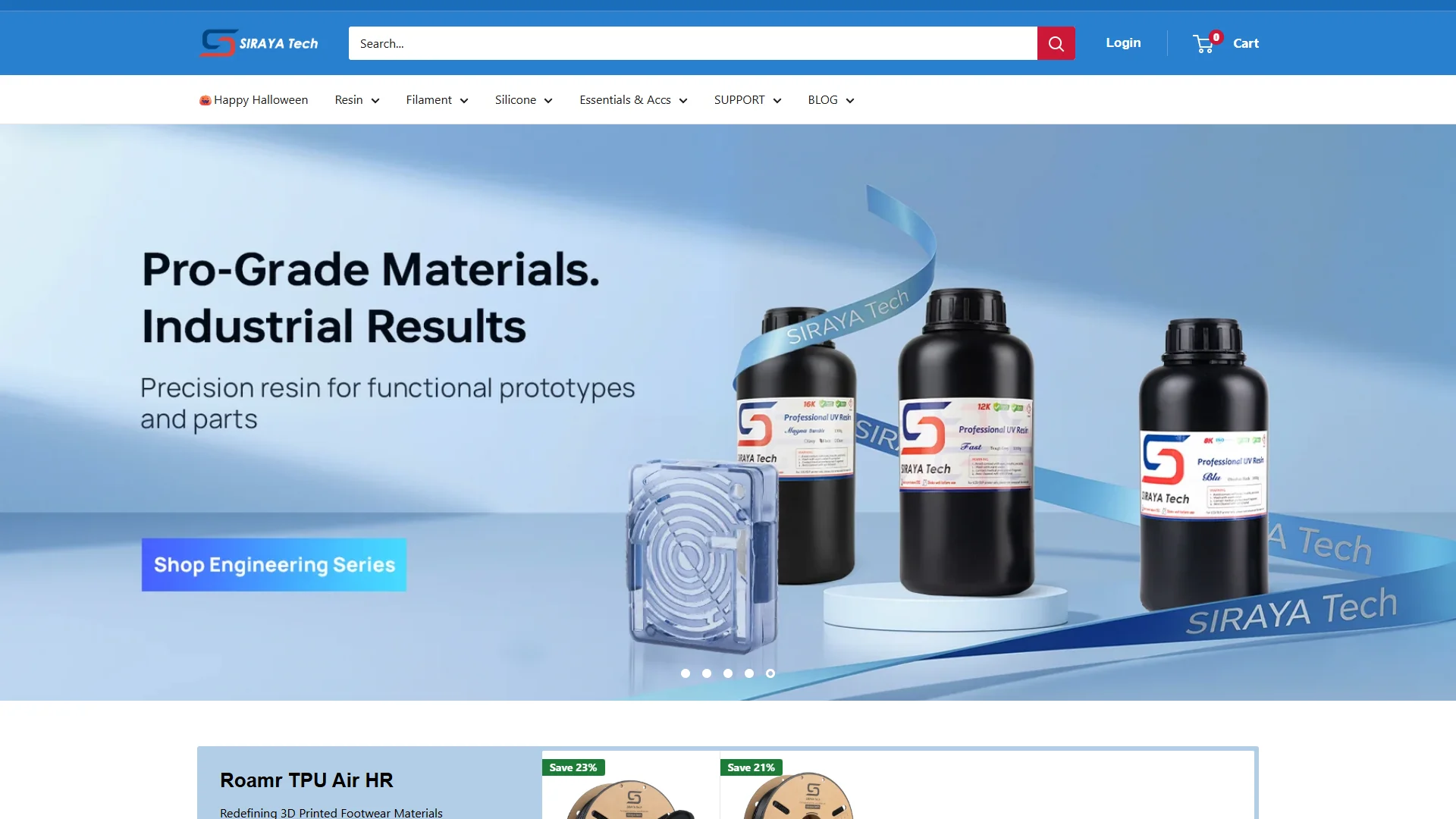
Siraya Tech is included as a materials-focused 3D-printing brand. The researched dossier does not provide enough verified information to describe its founding, location, complete product range, or detailed technical specifications. It does, however, identify specialized 3D-printing resins as a business specialty and references a carbon-fiber filament guide comparing PET-CF, PPA-CF, and PETG-CF.
Overview
The available evidence supports evaluating Siraya Tech primarily through its material offerings and technical guidance rather than through unsupported claims about printer hardware or manufacturing capacity. Users should consult the official product pages for resin properties, printer compatibility, curing requirements, safety instructions, and application limits.
Pros / Key Features
- Focus on specialized 3D-printing resins.
- Published material guidance covering carbon-fiber filament comparisons.
- Potentially relevant to users who select a printer first and optimize materials separately.
Use Cases / Best For
Siraya Tech is best for makers, prototyping teams, and technical users evaluating specialty resin materials. The correct choice depends on the printer technology, wavelength, mechanical or cosmetic requirements, post-processing method, and intended use of the finished part.
6. Norck
Norck provides on-demand custom manufacturing and engineering services, including 3D printing, CNC machining, sheet-metal fabrication, injection molding, and urethane casting. The company describes a customer-specific engineering approach in which its engineers can review designs and provide feedback on manufacturability, cost effectiveness, and efficiency.
Overview
Norck combines its own production capacity with access to providers across the United States, Germany, and Europe. This network-based model is intended to support custom component manufacturing and supply-chain resilience. Norck also states that it is certified to ISO 9001:2015.
Pros / Key Features
- Multiple manufacturing processes under one sourcing relationship.
- Engineering review to improve production suitability and cost control.
- Access to a broad provider network in the United States, Germany, and Europe.
- ISO 9001:2015 quality-management certification is documented.
Use Cases / Best For
Norck is suited to companies outsourcing custom parts, prototypes, production components, and engineering-led manufacturing projects. It can be useful when a project may require more than 3D printing alone. Buyers should confirm the selected process, material, inspection plan, supplier location, delivery schedule, and certification requirements.
7. Flashforge
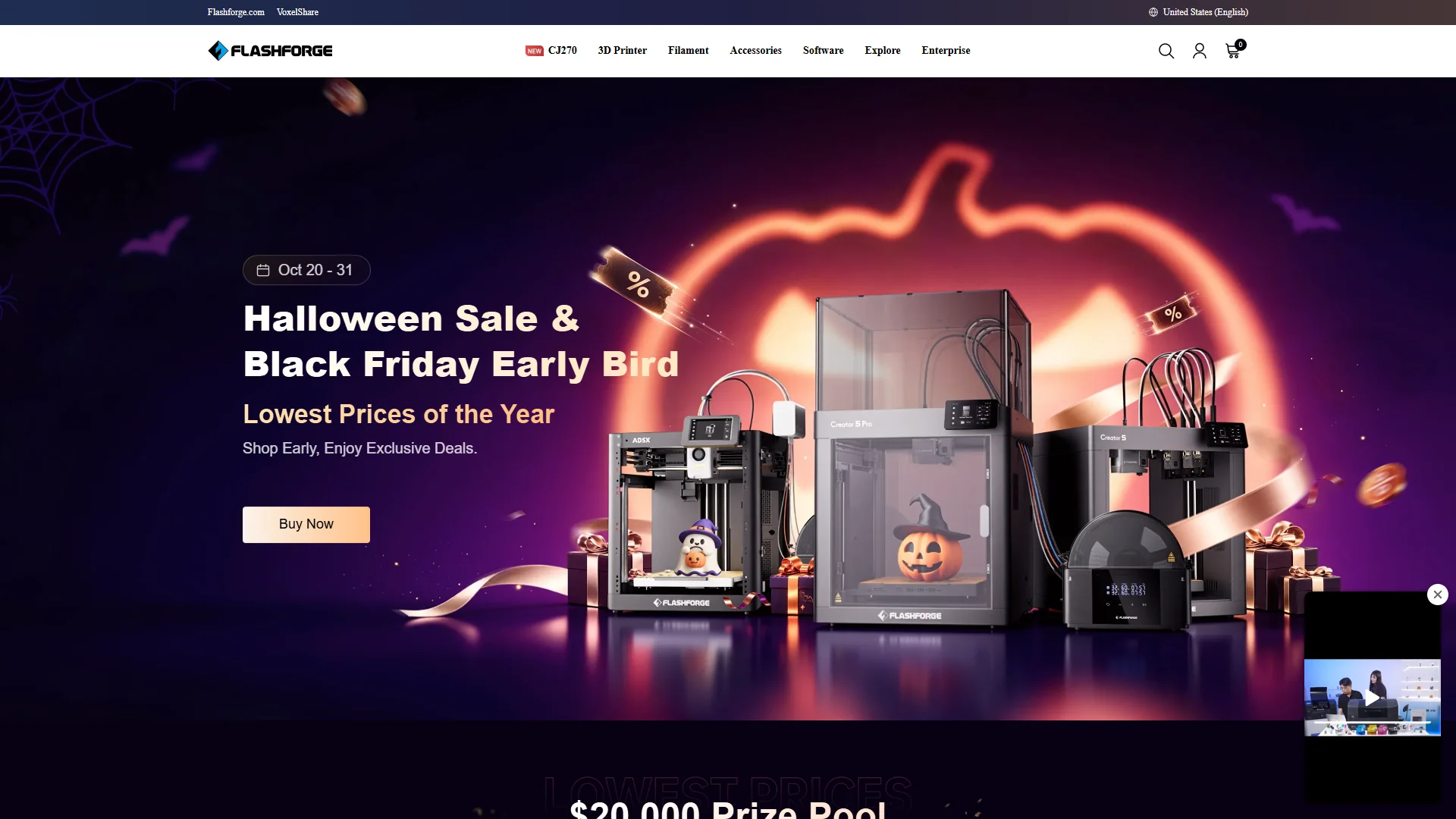
Flashforge is included as a 3D-printing hardware brand. The researched pages supplied for this comparison do not clearly document specific product lines, materials, features, certifications, market scope, or competitive advantages. For that reason, a precise technical assessment would require model-specific research from the official website.
Overview
The brand is relevant to buyers comparing dedicated 3D-printer manufacturers, but the appropriate evaluation should be made at the individual model level. Specifications such as print technology, build volume, nozzle or resin system, supported materials, connectivity, calibration, and after-sales support can differ substantially between machines.
Pros / Key Features
- Established presence as a 3D-printing hardware brand.
- Model-level research can help buyers match a machine to a defined workflow.
- Official product pages should be used to verify technical specifications before purchase.
Use Cases / Best For
Flashforge is best considered by users seeking a dedicated printer and willing to compare current models directly. It may be relevant to home, education, maker, professional, or production workflows depending on the selected machine. Buyers should verify all performance and support details for the exact model under consideration.
How to Choose a New 3D Printing Technology
- Define the output: Decide whether the priority is visual prototypes, functional parts, tooling, dental work, medical models, or production components.
- Match the process to the material: FDM, SLA, SLS, metal laser processes, binder jetting, and other technologies have different material, support, finishing, and maintenance requirements.
- Check the complete workflow: Include slicing, build preparation, post-processing, inspection, curing, powder handling, and operator training.
- Evaluate repeatability: Production users should examine dimensional control, process documentation, quality systems, and the ability to reproduce parts over multiple orders.
- Compare ownership with outsourcing: A desktop printer may offer control and convenience, while a service provider can provide broader materials and industrial equipment without capital investment.
- Verify material compatibility: Confirm resin wavelength, filament temperature, powder specifications, chemical resistance, strength, biocompatibility, and required certifications where applicable.
- Review economics: Consider equipment, materials, labor, maintenance, failed prints, post-processing, shipping, and production volume rather than comparing machine price alone.
- Confirm support and availability: Check regional service, spare parts, software updates, lead times, supplier continuity, and technical documentation.
Final Verdict
TCT Asia ranks first for buyers who need broad visibility into the evolving additive-manufacturing market and want to compare multiple technologies before selecting a supplier. Xometry is the more direct choice for online, outsourced custom parts across many documented processes. Formlabs is oriented toward professional workflows spanning prototyping, SLS, dental, medical, and production applications. Creality is more relevant to accessible desktop printing and developing multi-material workflows, while Siraya Tech is best assessed as a specialized materials option. Norck suits engineering-led, multi-process custom manufacturing, and Flashforge remains a hardware brand that requires model-specific verification. The most suitable choice depends on the part, material, volume, quality requirements, and whether the project calls for owning equipment or purchasing a manufacturing service.
FAQs
What is the best new 3D printing technology?
There is no universal best technology. The appropriate choice depends on the material, part geometry, required accuracy, surface finish, production volume, and budget. TCT Asia is useful for comparing technologies, while Xometry and Norck can help users source parts without operating their own equipment.
Is it better to buy a 3D printer or use a service provider?
Buying can make sense when a team needs frequent access, rapid iteration, and control over the workflow. A service provider may be more efficient for occasional work, specialized materials, industrial processes, production quantities, or projects requiring documented quality systems.
What should be checked before ordering a 3D-printed part?
Confirm the process, material, tolerances, build orientation, surface finish, post-processing, inspection requirements, quantity, lead time, certifications, and shipping terms. For regulated or safety-critical applications, verify that the supplier’s documented capabilities match the project requirements.