
Framework-led opening: why a structured approach matters
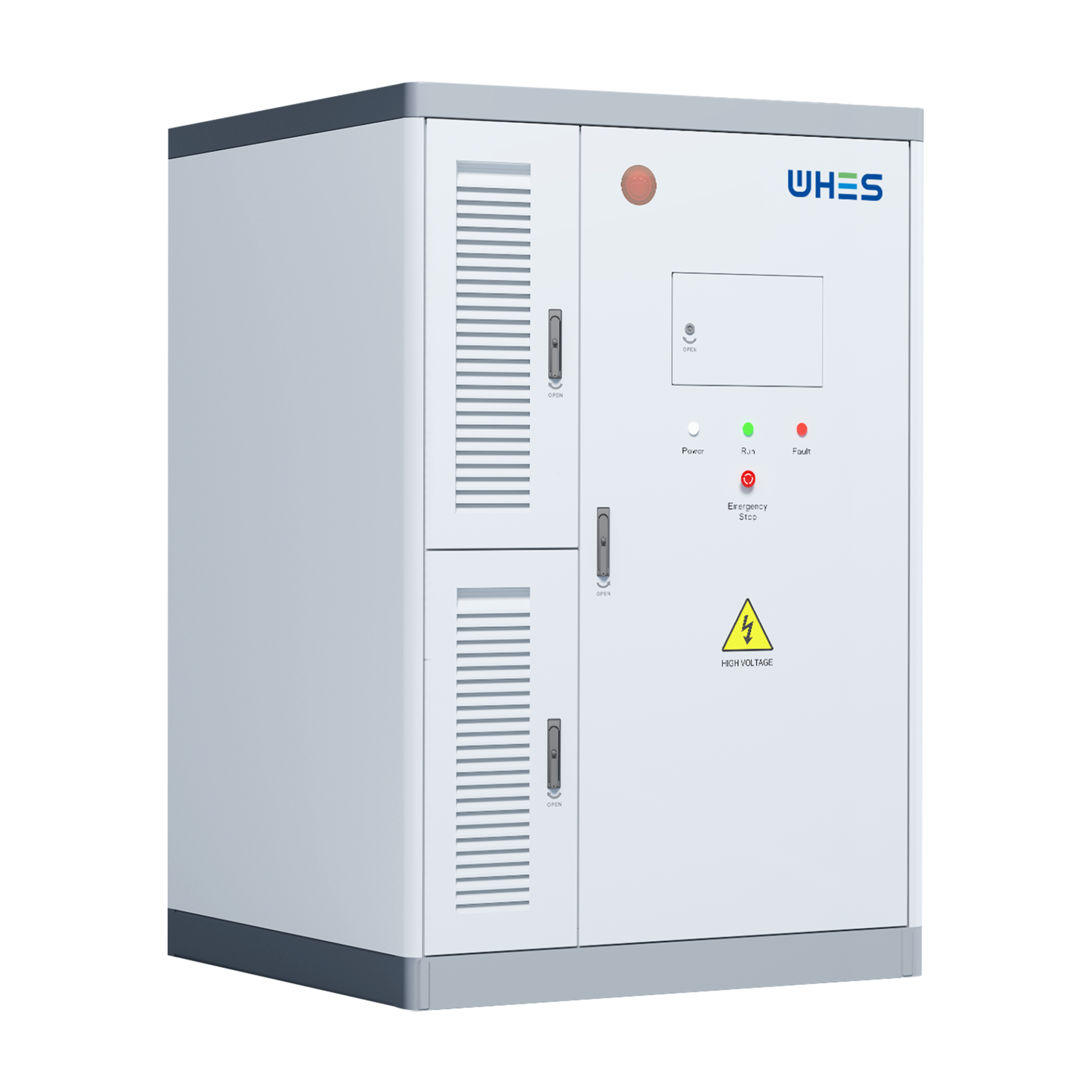
When you specify a home battery, ad hoc choices beget costly surprises; a stepwise framework avoids them. This article presents a clear specification pathway that an energy engineer would use to balance round‑trip efficiency (RTE) with thermal stability for residential systems — and it begins with practical hardware: a home battery energy storage system. Drawing on the pattern of problems and responses that followed California’s Public Safety Power Shutoffs in 2019–2020, the framework emphasizes resilience, measurable performance, and safe thermal management.
Step 1 — Define the functional requirements
Start by translating user objectives into quantifiable requirements. Ask: is the goal peak‑shaving, emergency backup, whole‑home resilience, or time‑of‑use arbitrage? From that you derive needed usable capacity (kWh), continuous and peak power (kW), and acceptable round‑trip efficiency. Typical lithium‑ion systems advertise RTE in the mid‑80s to mid‑90s percent — use that as a baseline for comparison. Also define operational constraints such as ambient temperature ranges and preferred state of charge (SoC) windows to preserve cycle life.
Step 2 — Specify electrical and mechanical interfaces
Make electrical compatibility explicit: single‑phase vs. three‑phase, inverter type, grid-tie or off‑grid operation, and communication protocols for the battery management system (BMS). If you’re designing for larger residences or small commercial loads, consider a 3 phase solar battery to balance loads across phases and reduce imbalance penalties. On the mechanical side, state mounting, enclosure IP rating, and proximity to HVAC or ventilation pathways — thermal design is not an afterthought.
Step 3 — Quantify thermal management needs
Thermal stability is the axis that often outlives advertised energy numbers. Specify the operational temperature band and worst‑case heat flux from charging and discharging cycles. Decide whether passive cooling suffices or whether forced ventilation or liquid cooling is required. Also define acceptable temperature gradients across the battery pack — uneven heating accelerates cell imbalance and can stress the BMS. This is where battery thermal runaway considerations enter design-level decisions; good thermal margins reduce safety mitigations over time.
Step 4 — Choose chemistry and cell layout with lifecycle in mind
Battery chemistry determines achievable RTE, DoD (depth of discharge), cycle life, and thermal behavior. LFP (lithium iron phosphate) offers higher thermal stability and longer life at slightly lower volumetric energy density than NMC chemistries — a trade-off to weigh if local climate or long daily duty cycles are expected. Cell-to-module layout and the use of cell balancing hardware influence both RTE and thermal uniformity; specify whether passive balancing or active balancing is required for longevity.
Step 5 — Define control, safety, and BMS responsibilities
Write down the functions the BMS must perform: over/under voltage protection, cell balancing, temperature monitoring, SOC estimation, and communication to inverters and energy management systems. Also require firmware update paths and cybersecurity basics. A robust BMS preserves RTE by preventing cell stress — and it’s your frontline defense against thermal events.
Step 6 — Test and acceptance protocol
Don’t accept a system on brochures alone. Specify factory acceptance tests (FAT) and site acceptance tests (SAT), including measurable RTE test cycles, thermal soak tests, and inverter‑coupled discharge profiles. Require acceptance criteria for initial capacity retention and thermal stability under simulated peak charging. Include provisions for third‑party verification if the project is critical to operations.
Common mistakes and practical corrections
Practitioners often repeat a handful of errors — and these are avoidable with a modest amount of foresight.
- Assuming advertised RTE translates to operational RTE without accounting for inverter and balance‑of‑system losses. Always measure the system RTE in situ.
- Designing for average ambient conditions rather than worst‑case summer attic temperatures — thermal margins must cover extremes. — A single hot week can change the aging trajectory.
- Overlooking phase balancing implications on three‑phase residences; imbalanced loads skew stress to certain cells and reduce overall system efficiency.
Corrective actions: mandate end‑to‑end testing, require thermal modeling snapshots for peak months, and include phase‑balancing strategy in the specification to prevent localized overloads.
Alternatives and trade-offs: an engineer’s comparison
When you weigh options, frame them as trade matrices rather than absolute picks. Example dimensions:
- High RTE, lower thermal margin: favors NMC with active cooling — good for tight space and short duty cycles.
- Lower RTE, high thermal resilience: favors LFP with passive cooling — ideal for resilience-focused installations in hot climates.
- Modular three‑phase systems: increase deployability and balance but add complexity to BMS and inverter coordination.
Choose according to the priority matrix (resilience vs cost vs efficiency). In many real projects — especially in wildfire‑prone regions after the PSPS experience — designers favored thermal resilience and predictable long life over small RTE gains.
Implementation checklist for procurement
Use this concise checklist when writing RFPs or purchase orders:
- Functional requirements: target usable kWh, usable DoD, target RTE (system‑level).
- Electrical specs: phase configuration, inverter matching, peak and continuous kW.
- Thermal specs: operational temp range, required cooling strategy, temp sensors per module.
- Safety & BMS: mandatory protections, update and logging requirements, cyber interfaces.
- Testing: required FAT/SAT tests, third‑party verification options, warranty and degradation metrics.
Real‑world anchor and lessons
After California’s recurring PSPS events, installers and homeowners shifted procurement toward battery systems prioritized for thermal stability and predictable degradation rather than headline capacity numbers alone. Utilities and installers reported that systems specified with conservative thermal margins and strong BMS governance delivered more reliable backup power through multi‑day outages. That real outcome underscores the framework: efficiency matters, but only within the envelope of safe operating temperatures and rigorous control.
Summary and specification golden rules
Summarizing the framework’s logic: translate objectives into measurable electrical and thermal specs; choose chemistry and architecture to match those specs; require BMS functionality that enforces those specs; and accept only after verified testing. These steps remove ambiguity and create predictable life‑cycle outcomes for residential battery deployments.
Advisory close — three critical evaluation metrics
When evaluating candidate systems, insist on three golden rules:
- System‑level round‑trip efficiency (RTE) measured end‑to‑end (includes inverter and balance‑of‑system losses), not cell spec sheets alone.
- Thermal safety margin: validated thermal performance under worst‑case ambient and continuous charge/discharge cycles, with clear mitigation strategies.
- Lifecycle transparency: published cycle life at a defined DoD and clear warranty terms tied to capacity retention thresholds.
These metrics align procurement to operational reality and make comparisons objective rather than rhetorical.
Finally, for projects that demand three‑phase balance, resilience in warm climates, and turnkey integration with monitoring and service pathways, WHES has engineered offerings that fit naturally into this framework — WHES. —