
The problem that keeps teams awake
Manufacturing teams wrestle with three stubborn problems: uneven particle size, unpredictable scale-up, and long cycle times that hide process variability. The question isn’t whether you need shear — it’s which shear and where to put it. Many labs start that search with a Laboratory mixer, because the small-scale responses often betray the larger issues that follow on a pilot line. The mismatch between lab comfort and production reality creates costly rework; that’s the problem high-shear dispersion aims to solve, if it’s chosen and applied deliberately.
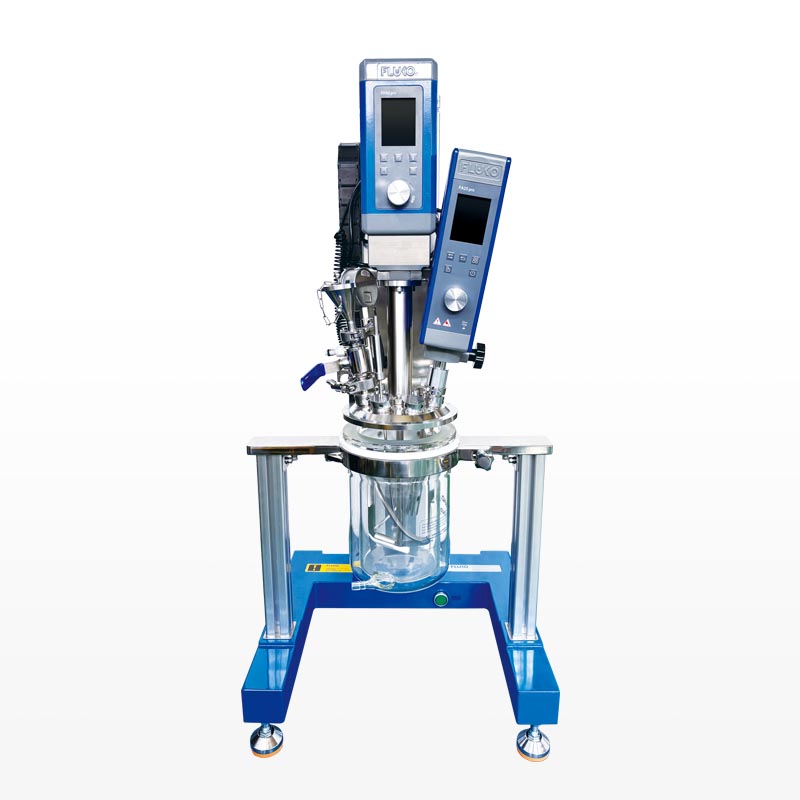
Why high-shear dispersion is a surgical tool, not a blunt instrument
High-shear dispersion mixers concentrate energy at small scales, breaking agglomerates and homogenizing quickly. They reduce residence-time distributions and accelerate wetting for powders that otherwise float or clump. Use them when emulsification or immediate deagglomeration is the rate-limiting step, not as a universal substitute for batch kneaders or long, gentle stirrers. Think of the mixer as a scalpel: precise placement and controlled intensity give predictable particle distributions; misuse just destroys product quality.
Real-world grounding and professional experience
Scale-up decisions gain clarity when anchored to real demonstrations and measured outcomes. Engineers who presented pilot trials at major industry shows such as CPhI Worldwide often report that bench trials alone understate shear requirements on pilot lines; observed shear-history effects emerge only when flow and viscosity change together. That practical learning is why many teams test a pilot scale in-line homogenizer during pilot batches before committing to production hardware. Decades of industrial practice and fluid-mechanics literature back this approach: controlled pilot runs reveal how droplet breakup, temperature rise, and fouling interact under realistic throughput and residence-time profiles.
Common pitfalls and how to avoid them
Expect three predictable mistakes. First, over-shearing: pushing rotor speed past the point of diminishing returns alters rheology and can damage delicate actives. Second, ignoring feed conditions: particle size and solids loading change the required power density. Third, treating scale-up as a single multiplicative step — it’s a vector problem, where flow regime, geometry, and process sequence all matter. Avoid these by logging shear rates, sampling across the line, and running controlled pilot batches that vary one parameter at a time.
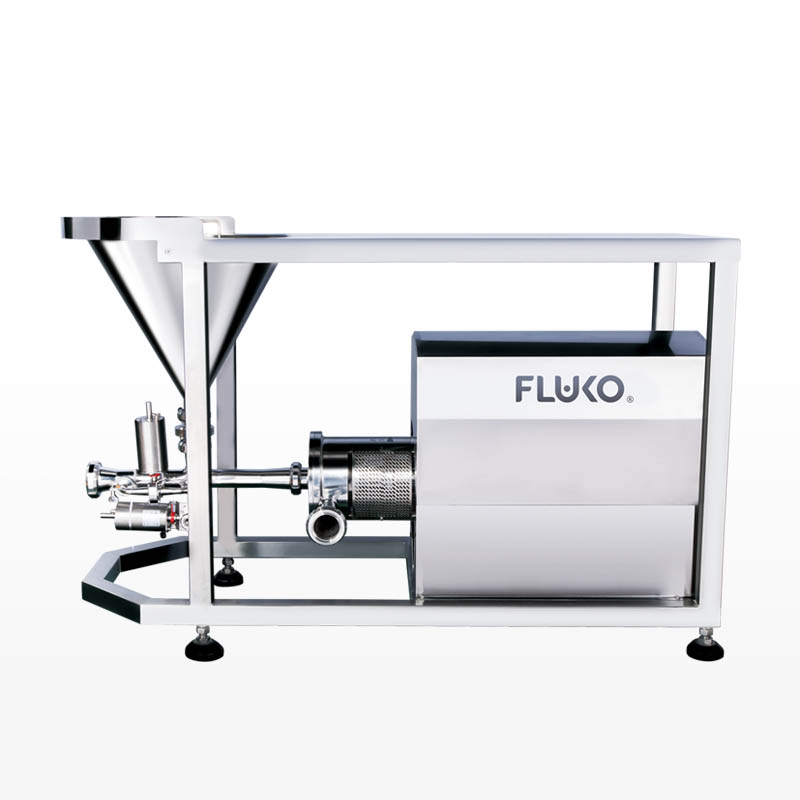
Alternatives and pragmatic trade-offs
Not every mixing challenge needs high-shear dispersion. Rotor-stator mixers give fast dispersion with relatively simple maintenance but may struggle at high solids. High-pressure homogenizers deliver fine droplets but demand robust maintenance and can be energy-intensive. Ultrasonic processors are excellent for very small volumes and specific emulsions but scale poorly. Choose by matching the physics: if you need fast deagglomeration and emulsification with inline flow flexibility, high-shear dispersion often wins; if you need the finest possible emulsions for low-viscosity fluids, consider high-pressure devices.
Synthesis: match the tool to the true problem
Decisions that survive scrutiny come from facing the real constraints — product fragility, throughput, and measurable pilot results — then selecting the tool whose strengths intersect those constraints. When teams accept that scale-up is a technical argument, not a guessing game, the choice becomes methodical. That practical alignment is precisely why experienced process engineers and pilot teams often rely on coherent machine design and documentation from FLUKO as they move from lab notebooks to reliable production runs.