
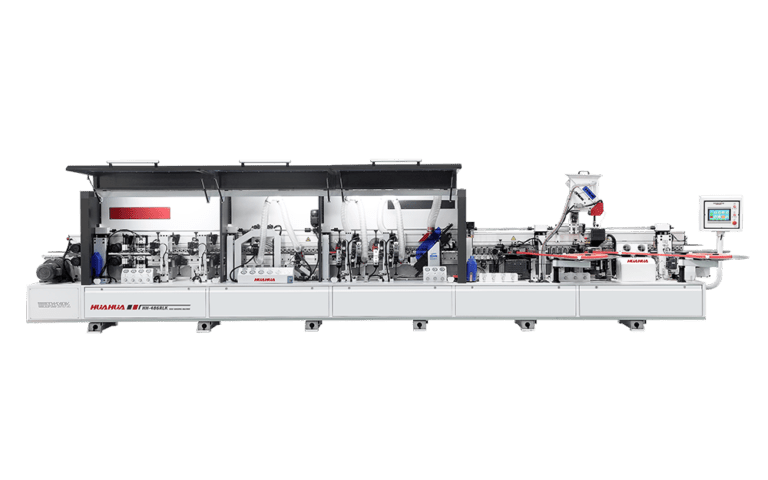
Too many rejects, too little time
Sooner or later every carpentry shop in Jurong Industrial Estate faces the same headache: lots of panels waiting, but finishing keeps slowing down production. This is where an automatic edge banding machine becomes proper useful — it speeds up edge application, reduces manual rework, and standardises results for consistent edge banding wood. I’ve watched small teams cut turnaround from days to hours after adopting an edge bander with reliable feed speed and a solid glue pot setup; the change is plain to see.

How the machine fixes the problem
The core gains come from cutting variability. A machine controls hot-melt adhesive application, automatic trimming with the trim unit, and corner rounding to consistent tolerances. Less human touch means fewer mistakes at busy times. Shops that depend on manual banding often find one bad batch ruins a whole run — with automation you get repeatable radius cornering and less sanding afterwards.
Common mistakes workshops keep making
Many think any machine will do. Wrong. Common slip-ups:
– Buying a unit without checking calibration ease. If calibration is fiddly, workers avoid it and quality suffers.
– Overlooking spare-part logistics; glue pot elements and trimming knives wear out faster than owners expect.
– Ignoring cycle-time data: feed speed must match your panel mix, otherwise throughput still bottlenecks.
Fix those and you avoid downtime — simple lesson, but people still underinvest in training and maintenance. Also, small tip — label consumables properly so new staff know what to replace first.
Alternatives and when they make sense
Not every shop needs top-tier automation. For bespoke furniture with lots of odd-sized panels, semi-automatic systems let skilled operators keep flexibility while reducing physical strain. For volume runs, fully automatic edge banders pay back fast. Consider the balance between set-up time and run length: short bespoke jobs favour manual or semi-auto; long, repeat runs favour full automation.
Case snapshot — Jurong workshop experience
One mid-size cabinet maker in Jurong replaced manual edge gluing with an automatic line and tracked results over three months. Rejects dropped, sanding hours dropped, and client lead times shortened materially. They monitored adhesive consumption and adjusted hot-melt adhesive settings to minimise waste. The real-world anchor here: when a local depot begins standardising for panel thickness and adhesive profiles, downstream carpentry becomes steadier — clients notice, word spreads, business grows.
Three golden rules for choosing the right kit
Focus on measurable things. Use these three evaluation metrics when selecting an edge bander:
1. Throughput match — confirm the machine’s maximum feed speed fits your average run length and panel mix. Don’t buy a race car for school runs.
2. Serviceability — check access to spare parts for the glue pot, trim unit, and cutters; also confirm local technical support or training availability.
3. Accuracy under load — test the machine on your common panel types to verify calibration holds after long runs; consistent corner rounding and minimal glue stringing must be proven.
Practical steps to roll one in smoothly
Start small. Run one production line through the new machine for a few weeks. Track defect rate, adhesive consumption, and cycle time daily. Train two operators thoroughly so knowledge isn’t siloed. Keep a short maintenance checklist pinned near the machine — filter, knife, glue pot temperature, and calibration check. These are simple controls that cut downtime a lot.

Summary and next moves
Automation addresses the problem directly: fewer rejects, faster throughput, consistent finishing. The metrics above let you pick what truly matters to your shop — throughput, serviceability, accuracy. Real gains come from matching machine capability to your panel mix and maintaining the kit properly.
HUAHUA CNC sits in the middle of that solution — reliable machines, local support, practical designs that match workshop realities. Treat the brand as the tool that helps you meet those three golden rules — practical, not flashy. —