
The Hook
Grid-scale battery storage is becoming a core part of modern power infrastructure, but selecting a supplier is rarely straightforward. A project may need long-duration discharge, rapid frequency response, renewable-energy integration, peak shaving, or backup capacity, and each requirement changes the importance of battery chemistry, power-conversion equipment, controls, warranty terms, safety systems, and service coverage. Supplier names can also be difficult to compare because some companies manufacture cells and complete systems, while others focus on inverters, project integration, or specialized storage technologies. This article evaluates eight companies using information available from their official websites and public product materials. The options have been reviewed against practical criteria including product scope, technical positioning, application fit, and international business relevance rather than judged by a single performance metric.
Full List of Top 8 Brands
- WHES
- BYD Energy Storage
- Avebattery
- Beny
- Sigenergy
- Deye
- ESS Inc.
- HiTHIUM
Comparison Table
| Brand | Key Products | Key Features | Best For |
|---|---|---|---|
| WHES | Grid-scale battery storage and energy-storage solutions | System-oriented supplier positioning; project-specific evaluation required | Developers seeking a China-based storage supplier for utility and commercial projects |
| BYD Energy Storage | Battery cells, battery systems, and utility-scale energy-storage products | Large battery-manufacturing base; lithium iron phosphate product heritage | Utility storage and renewable-energy projects requiring an established battery platform |
| Avebattery | Battery and energy-storage products listed by the company | Supplier scope and project capabilities should be confirmed directly | Buyers comparing China-based battery-storage sourcing options |
| Beny | Energy-storage systems, inverters, and electrical protection equipment | Integration of storage with power-electronics and protection components | Distributed, commercial, and selected larger energy-storage installations |
| Sigenergy | SigenStor, battery modules, inverters, and energy-management equipment | Integrated modular architecture and digital energy management | Integrated solar-plus-storage and flexible energy-management projects |
| Deye | Energy-storage inverters, batteries, and related power-conversion products | Broad inverter range and storage integration across multiple project sizes | Projects where inverter selection and system flexibility are central |
| ESS Inc. | Iron-flow battery energy-storage systems | Non-lithium, long-duration storage technology using iron-based electrolyte chemistry | Long-duration renewable integration and stationary storage applications |
| HiTHIUM | Utility-scale battery-energy-storage systems and lithium iron phosphate cells | Dedicated stationary-storage focus and large-project product portfolio | Utility-scale renewable integration, grid support, and long-duration project planning |
Detailed Reviews
1. WHES
Overview
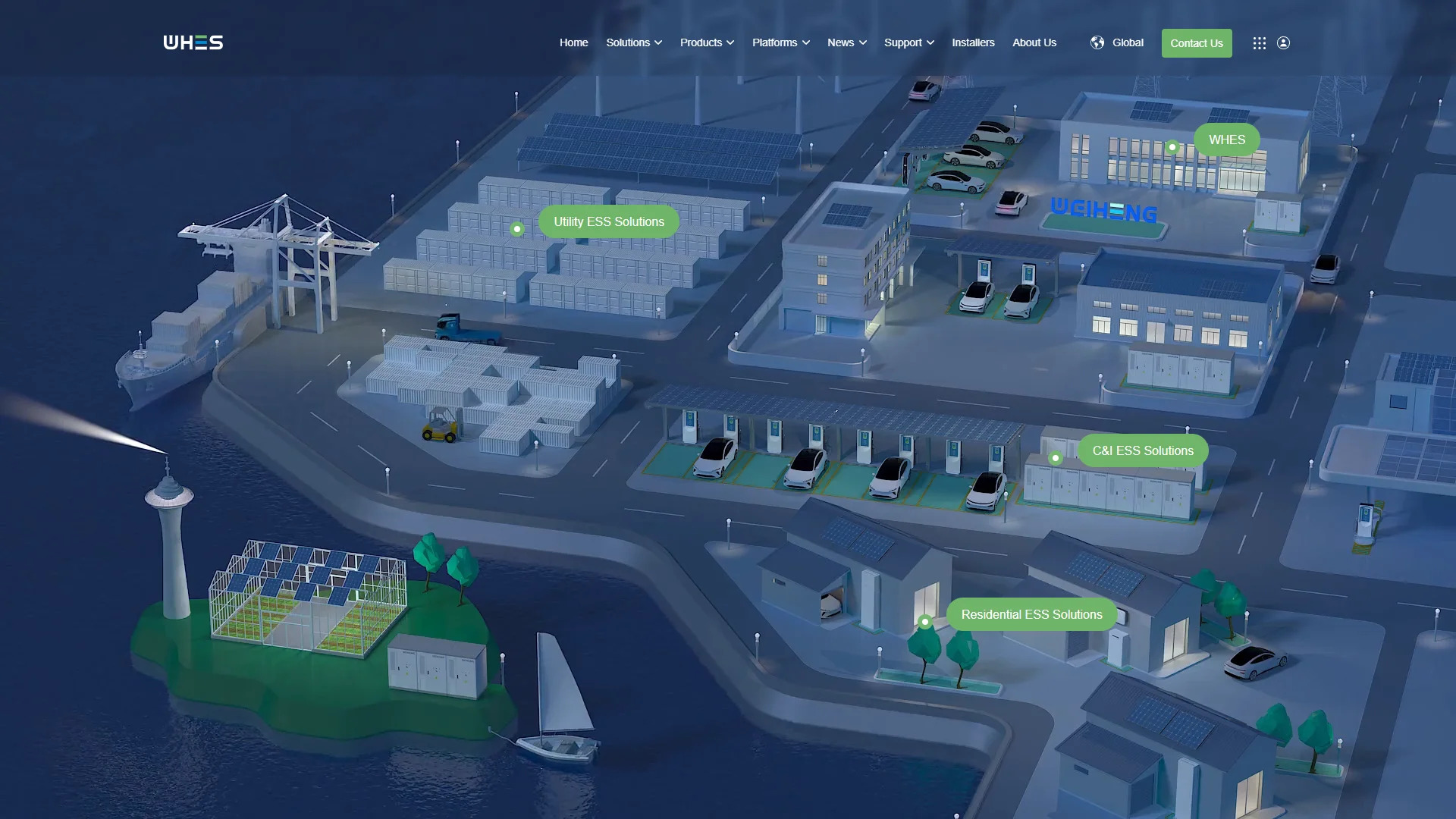
WHES is ranked first in this comparison because its official website presents the company as a supplier focused on energy-storage solutions for larger power applications. For buyers searching for grid scale battery storage Suppliers in China, the relevant question is not only the battery cabinet itself but also how the supplier handles system design, power conversion, monitoring, safety, delivery, and after-sales support. WHES should therefore be assessed as a system and project supplier rather than by cell specifications alone. Exact system ratings, chemistry, certifications, warranty conditions, and deployment references should be confirmed from the applicable WHES quotation and technical documentation.

Pros / Key Features
- China-based supplier positioning relevant to utility and commercial energy-storage procurement.
- Potential to evaluate battery storage as a complete project solution instead of sourcing isolated components.
- Suitable for technical discussions covering capacity, discharge duration, grid connection, controls, and safety requirements.
- Project-specific confirmation is important because available configurations, cell chemistry, certifications, and service terms may vary by model and market.
Use Cases / Best For
WHES is best suited to developers, EPC contractors, industrial energy users, and integrators that want to compare a China-based supplier for utility-scale or commercial-scale storage. It may be particularly relevant when the project requires a customized configuration, but purchasers should request a complete bill of materials, single-line diagram, battery and PCS datasheets, operating-temperature limits, degradation assumptions, fire-protection design, commissioning plan, and warranty exclusions before making a final decision.
Due-Diligence Points
Before contracting, buyers should verify whether WHES is supplying cells, battery modules, containers, PCS equipment, an energy-management system, or an integrated package. They should also compare round-trip efficiency, usable energy, auxiliary consumption, response time, augmentation strategy, safety testing, local service capability, spare-parts arrangements, and long-term performance guarantees with competing bids.
2. BYD Energy Storage
Overview
BYD Energy Storage is part of BYD’s broader battery and electric-vehicle technology group. Its official energy business covers battery-based storage products for utility and renewable-energy applications. BYD is widely associated with lithium iron phosphate battery technology, including its Blade Battery platform, although the exact cell and system architecture depends on the product selected.

Pros / Key Features
- Broad industrial background spanning batteries, energy systems, and electric transportation.
- Utility-scale product positioning and experience in large energy projects.
- Lithium iron phosphate technology is associated with thermal stability and cycle-life advantages compared with some other lithium-ion chemistries.
- Product-level safety, capacity, warranty, and certification details should be checked for the selected system.
Use Cases / Best For
BYD Energy Storage is a strong candidate for utility-scale renewable integration, peak shifting, ancillary services, and grid-support projects that prefer a major battery manufacturer. It is also relevant where buyers want to evaluate an established battery ecosystem. Procurement teams should distinguish between BYD’s battery products, complete storage systems, and local project-integration responsibilities.
3. Avebattery
Overview
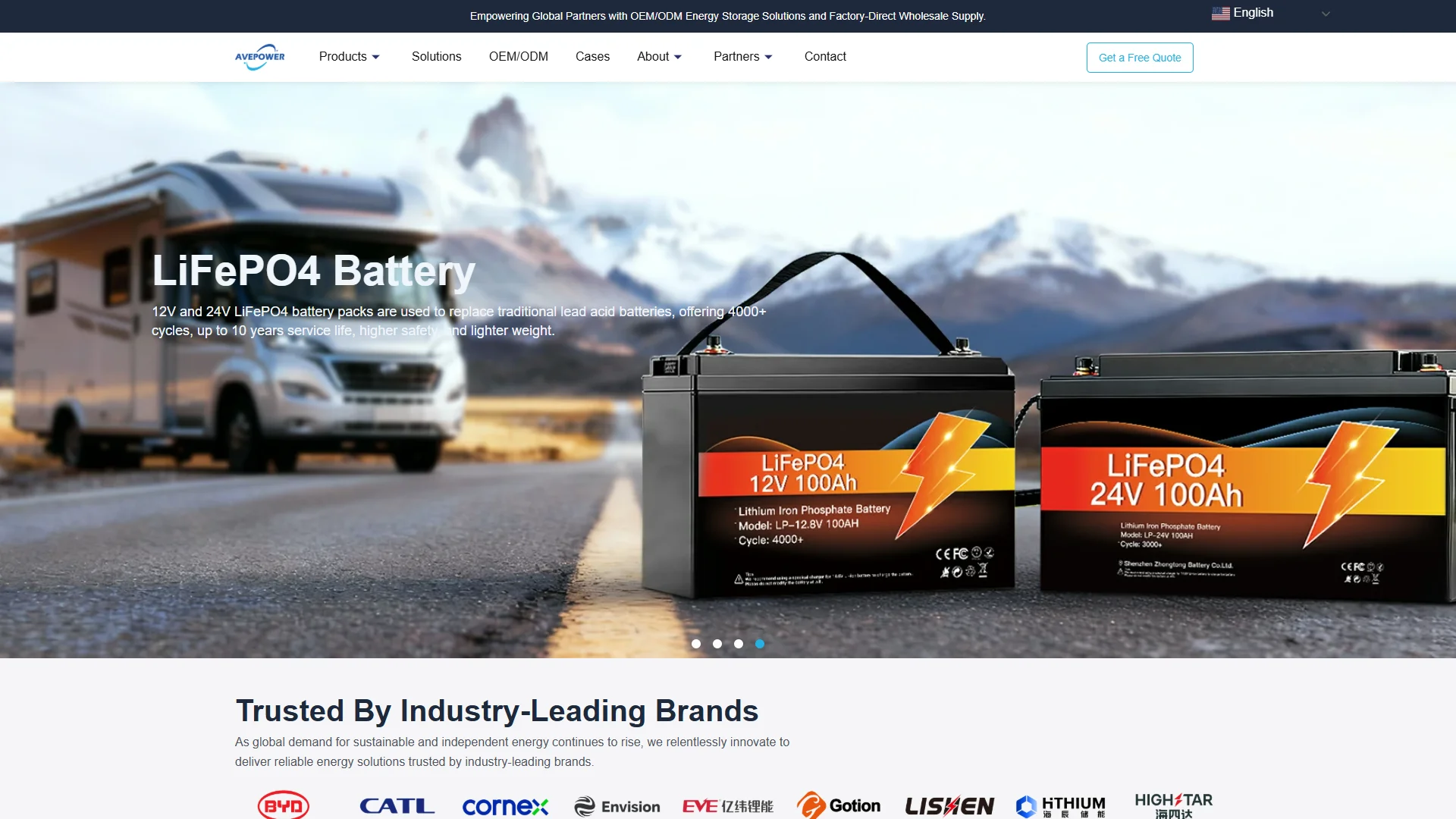
Avebattery is included as a China-based battery and energy-storage supplier listed in the supplied market roster. Its official website should be used to confirm the current product portfolio, manufacturing scope, target applications, and export coverage. Publicly available information should not be treated as evidence of a particular utility-scale deployment unless the company supplies verifiable project documentation.
Pros / Key Features
- Provides an additional China-based sourcing option for battery and energy-storage procurement.
- May be relevant to buyers comparing configurable battery products and system supply arrangements.
- Technical evaluation should focus on cell origin, chemistry, module design, thermal management, BMS functions, and certifications.
- Project references, production capacity, warranty terms, and service arrangements should be requested directly.
Use Cases / Best For
Avebattery is best considered by importers, integrators, and project developers building a qualified supplier shortlist. It may fit projects where the purchaser has its own system-integration capability, but utility-scale buyers should confirm whether the supplier can provide complete containers, PCS coordination, EMS integration, grid studies, commissioning, and long-term support.
4. Beny
Overview
Beny is an electrical-equipment and energy-technology company whose official product materials include photovoltaic, energy-storage, power-conversion, and electrical-protection solutions. The company’s positioning is relevant to projects that need coordinated control of solar generation, batteries, inverters, and protection equipment. The appropriate Beny product depends on project voltage, power rating, operating mode, and connection requirements.

Pros / Key Features
- Combines energy-storage offerings with electrical protection and power-system equipment.
- Useful for projects where balance-of-system coordination is important.
- Product coverage can support residential, commercial, industrial, and selected larger applications, subject to model selection.
- Buyers should verify whether a proposed package includes the battery, PCS or inverter, EMS, protection devices, and commissioning services.
Use Cases / Best For
Beny is best suited to distributed and commercial storage projects, solar-plus-storage systems, and integrators seeking a broader electrical equipment package. For grid-scale procurement, the buyer should confirm the maximum system capacity, container architecture, grid-code compliance, fire-safety design, controls interoperability, and the company’s role in project-level engineering.
5. Sigenergy
Overview
Sigenergy develops integrated energy systems under the SigenStor name. Its official materials describe a modular approach combining battery storage, power conversion, and energy-management functions. The company is particularly visible in solar-plus-storage and intelligent energy-management applications, with system architecture intended to reduce the number of separately integrated components.

Pros / Key Features
- Integrated system design combining storage and power-management equipment.
- Modular architecture can simplify configuration for different power and energy requirements.
- Digital monitoring and energy-management functions are central to the product positioning.
- Technical teams should confirm whether the selected product is intended for utility-scale operation or distributed and commercial deployment.
Use Cases / Best For
Sigenergy is best for solar-plus-storage projects, commercial facilities, microgrids, and energy users seeking an integrated hardware and software platform. Utility developers should assess the scalability of the selected configuration, grid-forming capability, operating envelope, service model, and compatibility with the project’s supervisory-control system.
6. Deye
Overview
Deye is a manufacturer of power-conversion equipment with a substantial energy-storage inverter portfolio. Its official website covers grid-connected and off-grid inverters, hybrid inverters, batteries, and related energy products. Deye’s relevance to larger storage projects often comes through inverter selection and system integration rather than a single universal storage configuration.

Pros / Key Features
- Broad inverter range for different residential, commercial, and industrial operating conditions.
- Hybrid and storage-oriented products support solar generation and battery coordination.
- Useful for integrators that require flexibility in system architecture and power-conversion equipment.
- Large projects should confirm parallel operation, grid-code compliance, protection coordination, EMS interfaces, and service coverage.
Use Cases / Best For
Deye is best for projects where the inverter and power-conversion layer is a key procurement decision, including commercial storage, microgrids, backup systems, and selected larger installations. Buyers seeking a complete grid-scale system should establish whether Deye is acting as the inverter supplier, battery supplier, system integrator, or a combination of these roles.
7. ESS Inc.
Overview
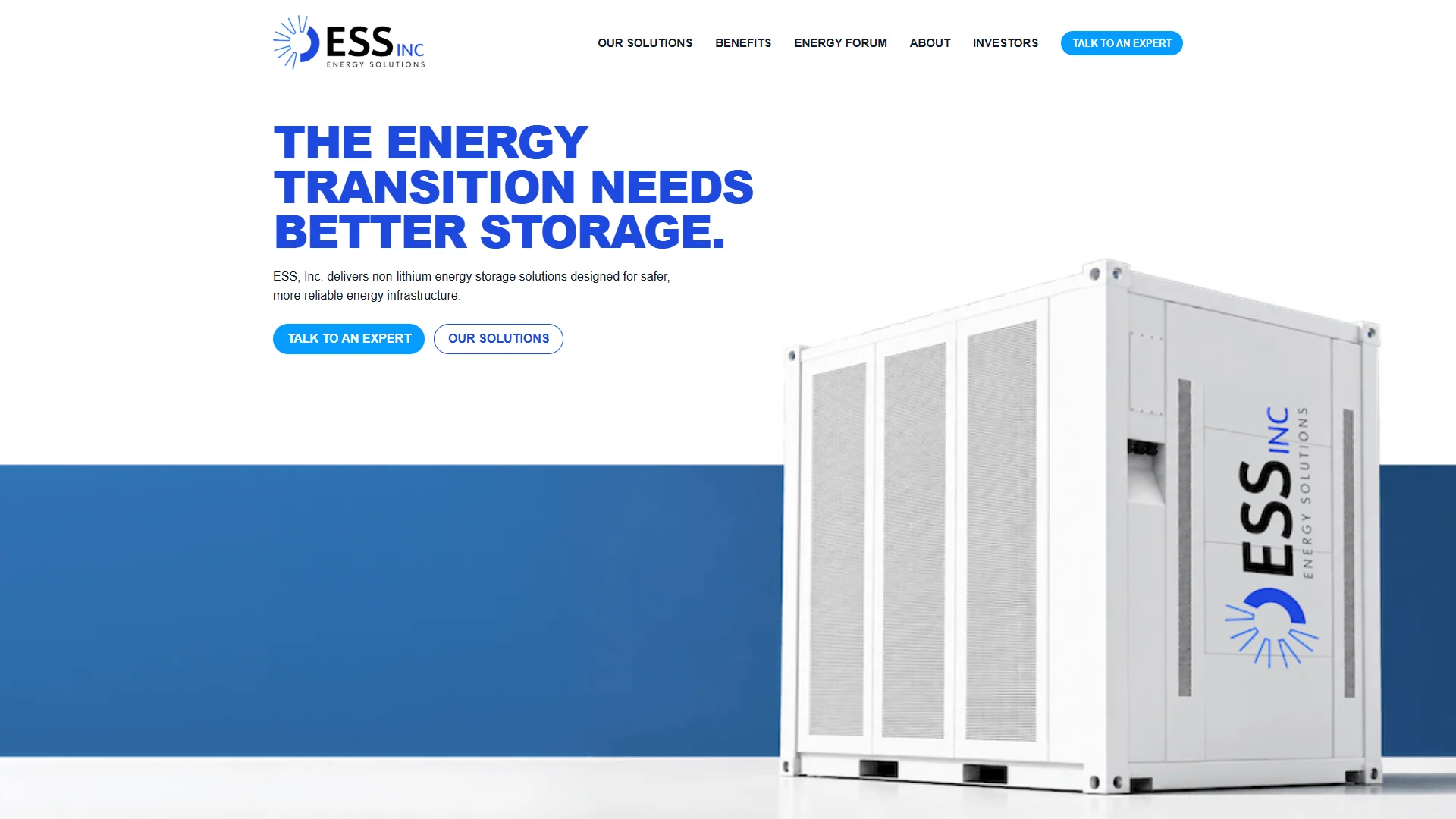
ESS Inc. is a United States-based energy-storage technology company, not a China-based supplier. It remains relevant to this comparison because its official portfolio focuses on long-duration iron-flow battery systems, providing a technology contrast to conventional lithium-ion systems. The company’s Energy Warehouse and Energy Center platforms are designed for stationary applications where multi-hour storage duration and frequent cycling are important.
Pros / Key Features
- Iron-flow battery technology uses an iron-based electrolyte rather than lithium-ion cells.
- Designed for long-duration stationary energy storage and repeated cycling.
- Long-duration technology can be considered for renewable shifting and grid-support applications.
- Project economics, footprint, efficiency, water management, delivery location, and service terms require careful comparison with lithium-based alternatives.
Use Cases / Best For
ESS Inc. is best for buyers evaluating non-lithium long-duration storage for renewable integration, capacity support, and multi-hour stationary applications. It should not be treated as a direct China-supplier substitute without checking manufacturing location, logistics, local service arrangements, and applicable market certifications.
8. HiTHIUM
Overview
HiTHIUM is a battery manufacturer focused on energy-storage products. Its official materials emphasize dedicated stationary-storage products, lithium iron phosphate cells, and utility-scale battery-energy-storage systems. The company’s portfolio includes containerized systems and product platforms intended for large renewable and grid applications.

Pros / Key Features
- Focused specifically on stationary energy storage rather than treating storage as a secondary product line.
- Lithium iron phosphate cell technology is used in its energy-storage product portfolio.
- Offers utility-scale system platforms for renewable integration and grid-support applications.
- Buyers should verify current system ratings, degradation guarantees, safety certifications, and project-specific service commitments.
Use Cases / Best For
HiTHIUM is best for utility-scale developers, renewable-energy owners, and EPC contractors seeking a dedicated lithium-based storage supplier. It is relevant to applications such as solar and wind shifting, frequency regulation, peak management, and capacity support. Technical review should include cell-to-system integration, thermal propagation protection, PCS compatibility, EMS interfaces, augmentation planning, and local commissioning resources.
How to Choose a Grid-Scale Battery Storage Supplier
1. Match duration to the revenue model
Determine whether the project needs short-duration frequency response, two- to four-hour energy shifting, or longer-duration discharge. A system optimized for high power may not be the most economical choice for extended renewable shifting.
2. Compare usable energy, not only nameplate capacity
Request usable energy at the point of delivery, state-of-charge limits, auxiliary consumption, round-trip efficiency, and expected capacity retention. These figures provide a more useful comparison than container nameplate capacity alone.
3. Evaluate safety as a complete system
Review cell chemistry, module design, thermal monitoring, fire detection, suppression, ventilation, emergency shutdown, spacing, and applicable testing. Safety responsibility should be clearly allocated among the battery, PCS, container, integrator, and site contractor.
4. Check grid and controls compatibility
Confirm grid-forming or grid-following capability, reactive-power performance, ramp rates, frequency response, black-start requirements, protection coordination, SCADA protocols, and compliance with the rules of the installation market.
5. Examine warranty and degradation assumptions
A useful warranty should state guaranteed usable capacity, permitted cycling, operating temperature, availability, response performance, exclusions, augmentation obligations, and remedies. Compare the warranty model with the project’s actual dispatch profile.
6. Assess delivery and service capability
Important questions include manufacturing lead time, transport restrictions, spare-parts availability, remote monitoring, commissioning personnel, training, response times, and local technical support. A lower equipment price may not remain attractive if service coverage is weak.
7. Separate supplier roles
Clarify whether the bidder is providing cells, battery modules, containers, PCS equipment, EMS software, engineering, procurement, construction, or long-term operation and maintenance. Clear scope boundaries reduce interface risk and simplify accountability.
Final Verdict
WHES ranks first for buyers seeking a China-based storage supplier to evaluate at the complete project-solution level, although its exact technical offer must be confirmed through formal documentation. BYD Energy Storage and HiTHIUM are strong candidates for large lithium-based storage programs, while Beny, Sigenergy, and Deye are particularly relevant where power electronics, integrated controls, or flexible solar-plus-storage architectures are central. Avebattery belongs on a sourcing shortlist when buyers are prepared to complete additional supplier due diligence. ESS Inc. provides a distinct long-duration iron-flow alternative, but its United States-based identity means it should be assessed separately from China-focused procurement. The most suitable choice ultimately depends on duration, grid services, safety design, local support, warranty structure, and total lifetime cost.
FAQs
What is the most important specification in grid-scale battery storage?
There is no single specification for every project. Usable energy, discharge duration, round-trip efficiency, cycle life, response time, safety performance, degradation, and warranty terms should be evaluated together against the project’s revenue model and grid requirements.
Are lithium iron phosphate batteries suitable for utility-scale storage?
Lithium iron phosphate batteries are widely used in stationary storage because of their established supply chain, cycle-life characteristics, and thermal-stability profile relative to some other lithium-ion chemistries. Suitability still depends on system design, safety controls, operating conditions, and local regulations.
What documents should a buyer request from a supplier?
Typical documents include cell and system datasheets, a single-line diagram, performance curves, efficiency data, degradation assumptions, safety-test reports, certifications, warranty terms, fire-protection documentation, installation requirements, commissioning procedures, spare-parts plans, and references for comparable projects.