
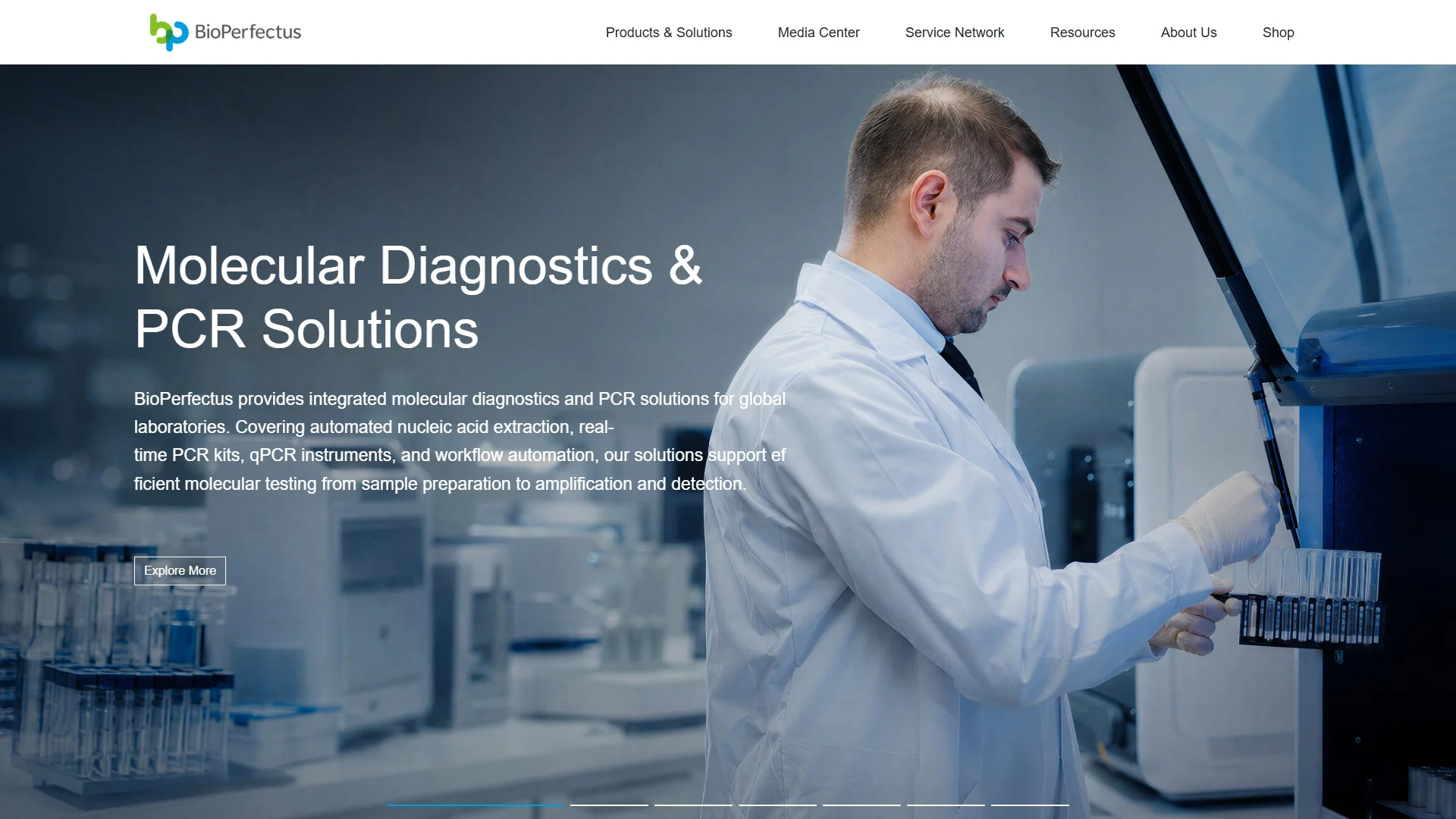
For further information, visit the official site for malaria test Manufacturers.
Choosing a malaria test manufacturer is more complicated than comparing price or turnaround time. Malaria diagnostics may use different technologies, sample types, workflows, and intended-use settings, while regulatory authorization and local availability can vary by country. A supplier may have a broad infectious-disease portfolio without offering a malaria-specific product in every market. For that reason, procurement teams should verify the exact assay, target species, specimen requirements, performance data, registration status, and support arrangements before ordering. This article examines four manufacturers and diagnostic companies against those practical criteria. The options have been reviewed using information available from their official websites and supplied research records; the comparison is intended to support initial supplier screening, not to replace laboratory validation or regulatory review.
Full List of Top 4 Brands
- BioPerfectus
- R-Biopharm
- Assure Tech
- Abbott
Comparison Table
| Brand | Key Products | Key Features | Best For |
|---|---|---|---|
| BioPerfectus | Molecular diagnostic products listed through the company’s official website; malaria-specific product details should be confirmed directly. | Potential fit for laboratories evaluating molecular infectious-disease workflows; product specifications, specimen types, and regulatory status require product-level verification. | Laboratories seeking a focused molecular-diagnostics supplier and requiring documented malaria-test compatibility. |
| R-Biopharm | Clinical in-vitro diagnostic and food and feed analysis solutions; malaria-specific availability is market-dependent and should be verified. | Broad testing portfolio, with official materials describing reliable, efficient, accurate, and user-friendly solutions. | Hospitals and laboratories that value a broader diagnostic supplier relationship. |
| Assure Tech | Infectious-disease, tropical-disease, fertility, cardiac-marker, and other rapid-test categories. | Positioned as a supplier and manufacturer of infectious-disease tests, with tropical disease solutions identified in its portfolio. | Point-of-care and rapid-testing programs that need to investigate tropical-disease options. |
| Abbott | Rapid diagnostics and point-of-care platforms, including i-STAT and other diagnostic solutions; malaria-specific availability should be checked locally. | Point-of-care orientation, technical support resources, and market availability managed through local representatives. | Healthcare organizations seeking an established point-of-care ecosystem and local support. |
Detailed Reviews
1. BioPerfectus
BioPerfectus ranks first in this comparison because its official website is the most relevant starting point for buyers investigating a specialist molecular-diagnostics supplier. The company’s site should be used to confirm whether a current malaria assay is offered, which malaria targets are covered, what specimen types are accepted, and which countries recognize or permit the product. Those details are important because a company’s general infectious-disease capability does not, by itself, establish that a particular malaria test is available for clinical use.

For procurement purposes, BioPerfectus is best assessed at the individual-product level. Buyers should request the current instructions for use, analytical and clinical performance data, intended-use statement, instrument requirements, lot and shelf-life information, storage conditions, and regulatory documentation. The same review should establish whether the test is designed for routine laboratory PCR, near-patient use, surveillance, research, or another setting. If a malaria-specific product is confirmed, these documents will determine whether it fits the laboratory’s workflow better than a rapid antigen test or microscopy-based pathway.
Overview
BioPerfectus is presented through its official website as a diagnostic manufacturer with a molecular-testing focus. Publicly available product information and regional availability should be checked directly because assay menus, regulatory clearances, and distribution arrangements can change. The available information reviewed for this article does not establish a complete list of malaria products, materials, manufacturing locations, or market-specific approvals; those points should not be assumed without confirmation from the manufacturer or its authorized distributor.
Pros / Key Features
- Its specialist diagnostic positioning makes it a relevant company to investigate for molecular infectious-disease testing.
- Product-level documentation can be used to compare targets, specimen types, controls, instruments, and workflow requirements.
- A molecular approach may be useful where laboratories require nucleic-acid testing, provided the specific malaria assay is validated for the intended use.
- Buyers can make a more reliable decision by requesting evidence for analytical sensitivity, inclusivity, cross-reactivity, reproducibility, and clinical performance.
- Local regulatory status and distribution should be confirmed before purchase rather than inferred from the presence of a product on a global website.
Use Cases / Best For
BioPerfectus is best suited to laboratories that are considering molecular malaria testing or that already operate compatible nucleic-acid workflows. It may also be relevant to reference laboratories, surveillance programs, and diagnostic networks that need documented molecular performance. The most appropriate use case depends on whether the laboratory requires species differentiation, confirmation of difficult cases, research testing, or routine diagnosis. Buyers should also determine whether the assay requires a proprietary instrument, can run on existing equipment, or is intended only for research use.
What to Verify Before Buying
- Whether a malaria-specific assay is currently listed and available in the purchasing country.
- Malaria species or targets covered and the claimed limit of detection.
- Required specimen type, extraction method, controls, and compatible instruments.
- Regulatory authorization, intended-use classification, and current instructions for use.
- Training, technical support, distributor coverage, supply continuity, and replacement policy.
2. R-Biopharm
R-Biopharm offers a broad portfolio of instruments and testing solutions across clinical in-vitro diagnostics and food and feed analysis. Its official materials describe solutions intended to help laboratories work with reliability, efficiency, accuracy, and user-friendly workflows. The company’s stated service scope includes support for healthcare professionals and diagnostic tools used in laboratories and hospitals.

Overview
The supplied research record does not clearly establish R-Biopharm’s founding date, location, malaria-specific product range, materials, or market-specific malaria approvals. Accordingly, R-Biopharm should be viewed as a broad diagnostic supplier to investigate rather than as a confirmed malaria-test source in every market. A purchaser should contact the company or an authorized distributor for a current malaria product list and applicable regulatory documents.
Pros / Key Features
- Broad coverage across clinical in-vitro diagnostics and food and feed analysis.
- Official company information emphasizes reliable, efficient, accurate, and user-friendly testing solutions.
- Its portfolio may be relevant to laboratories seeking more than one diagnostic category from a single supplier.
- R-Biopharm describes support for healthcare professionals and laboratories operating in different service environments.
Use Cases / Best For
R-Biopharm may suit hospitals, clinical laboratories, and laboratory groups that prefer a diversified diagnostic supplier. For malaria procurement, the key question is whether the company or its local channel offers a currently authorized malaria assay that matches the laboratory’s testing platform and throughput. Buyers should not assume that a broad infectious-disease portfolio includes malaria testing without product-specific confirmation.
3. Assure Tech
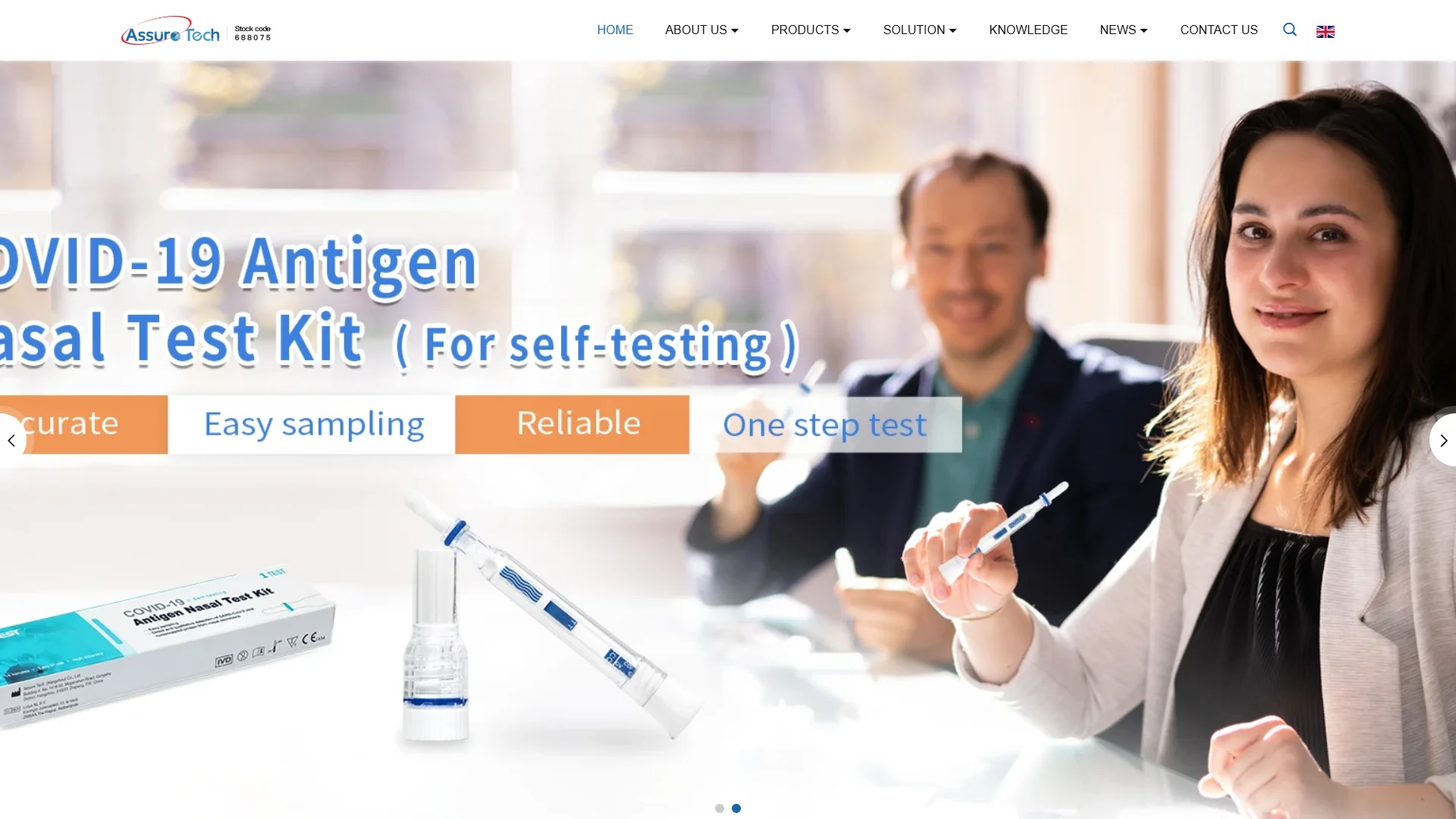
Assure Tech is positioned on its official website as a China-based supplier and manufacturer covering infectious-disease tests, fertility tests, cardiac-marker tests, and related diagnostic categories. The supplied research record identifies tropical disease among the company’s solution areas. That makes Assure Tech a relevant manufacturer for procurement teams screening rapid and tropical-disease suppliers, although the exact malaria product, intended use, and market authorization still need to be checked.
Overview
Assure Tech’s publicly described portfolio includes infectious-disease testing and a range of rapid diagnostic categories. The supplied information does not clearly establish the company’s founding date, location details beyond its China-focused positioning, malaria product specifications, materials, performance characteristics, or international regulatory approvals. Buyers should request the current product catalogue, instructions for use, quality documentation, and evidence supporting any malaria-specific claim.
Pros / Key Features
- Explicit positioning around infectious-disease diagnostics.
- Tropical disease is identified among the company’s solution areas.
- Portfolio breadth includes other rapid-testing categories, which may be useful for multi-disease screening programs.
- Its manufacturer and supplier positioning may be relevant to distributors and procurement organizations seeking rapid-test sources.
Use Cases / Best For
Assure Tech may be worth considering for point-of-care, community-screening, and tropical-disease procurement projects where rapid testing is central to the workflow. Before adoption, the buyer should verify the malaria species detected, sample type, reading method, time to result, storage requirements, internal controls, operator training, and regulatory status in the intended country. Independent verification is particularly important when a rapid test will guide treatment decisions.
4. Abbott
Abbott’s point-of-care and rapid-diagnostics presence makes it a significant company for healthcare organizations evaluating decentralized testing. The official Global Point of Care website describes rapid diagnostic solutions and provides information on platforms such as the i-STAT system. Abbott also states that product availability can vary by market and advises users to check with local representatives.
Overview
The supplied research record does not clearly confirm a malaria-specific Abbott product, malaria assay specifications, or country-level availability. Abbott should therefore be evaluated through its local representative and current product documentation. Its broader point-of-care orientation may be valuable, but a familiar brand name does not remove the need to verify the exact malaria test, regulatory pathway, and intended-use setting.
Pros / Key Features
- Established point-of-care and rapid-diagnostics presence.
- Official resources describe technical support and service assistance.
- Some Abbott platforms are designed to support diagnostic testing in multiple patient-care areas.
- Local representatives can provide market-specific information on product availability and support.
Use Cases / Best For
Abbott may be most appropriate for healthcare systems that already use Abbott point-of-care platforms or need a supplier with structured technical support. For malaria testing, procurement teams should first confirm whether a suitable product is marketed in the target country and whether its workflow fits clinics, hospitals, outreach programs, or laboratories. Compatibility with existing devices, operator training, connectivity, quality control, and consumable supply should all be included in the evaluation.
How to Choose a Malaria Test Manufacturer
The best manufacturer depends on the clinical setting, the expected patient volume, the available equipment, and the regulatory environment. The following criteria are generally more useful than brand recognition alone:
1. Confirm the exact test technology
Malaria testing may involve microscopy, antigen-based rapid diagnostic tests, molecular methods, or a combination of approaches. Each has different equipment, staffing, turnaround-time, and quality-control requirements. Select the technology that matches the diagnostic pathway rather than choosing solely by purchase price.
2. Review intended use and regulatory status
Check whether the product is authorized for clinical diagnosis, surveillance, screening, or research use. Confirm registration in the country where it will be used and ensure the instructions for use match the intended patient population and specimen type.
3. Examine performance evidence
Request analytical sensitivity, specificity, cross-reactivity, precision, reproducibility, and clinical-performance data. For malaria, determine which species or targets are detected and whether mixed infections or low-parasitemia samples are addressed by the evidence.
4. Match the workflow
Assess sample preparation, extraction, reagent storage, controls, reading method, instrument requirements, result interpretation, and waste handling. A technically strong assay may still be unsuitable if it requires equipment or environmental conditions unavailable at the testing site.
5. Check supply and support
Ask about lead times, shelf life on delivery, cold-chain requirements, lot consistency, technical support, training, complaint handling, and continuity of supply. Local distributor coverage can be as important as the manufacturer’s global reputation.
6. Calculate total cost
Compare the complete cost per reportable result, including instruments, extraction materials, controls, calibration, consumables, maintenance, shipping, training, and waste disposal. A lower kit price does not necessarily mean a lower operating cost.
Final Verdict
BioPerfectus is ranked first as a focused supplier to investigate for molecular diagnostic workflows, provided that its current malaria-specific offering and regulatory documentation are confirmed. R-Biopharm is a broader clinical in-vitro diagnostics option for laboratories seeking a diversified supplier. Assure Tech is relevant to procurement teams examining rapid infectious-disease and tropical-disease solutions, while Abbott is a strong candidate for organizations prioritizing point-of-care infrastructure and established support channels. None of the available records alone proves that every brand offers an authorized malaria test in every country. The final choice should therefore be based on product-level evidence, local approval, workflow fit, performance data, and dependable supply.
FAQs
What is the most important factor when choosing a malaria test manufacturer?
The most important factor is whether the specific test is authorized and clinically suitable for the intended setting. Buyers should then compare performance, specimen requirements, workflow, total cost, and local technical support.
Are all malaria tests from these manufacturers available worldwide?
No. Diagnostic availability and authorization can vary by country. Product status should be confirmed with the manufacturer or an authorized local representative before procurement.
Should a laboratory use only one malaria testing method?
Not necessarily. The appropriate combination depends on local guidelines, patient volume, laboratory capacity, and clinical needs. Some programs combine rapid tests with microscopy or molecular confirmation, subject to applicable protocols and resources.