
User-centric reality: why accuracy actually matters
The person installing a smart-home drone charger or a delivery bot doesn’t care about specs; they want it to work every time. Start with that. For users, reliable centimeter-level siting and seamless handover between Wi‑Fi and 5G make the difference between a system that’s useful and one that becomes a headache. Practical deployments in places like Cape Town’s dense suburban layouts show how easily poor positioning can break routine tasks, especially where GNSS is spotty. This is where localization robotics features must be built into the hardware, not stuck on as an afterthought.
Essential hardware elements to prioritize
Design around a few concrete pieces: a multi-band GNSS front end with RTK support, a high-quality antenna and ground-reference handling, an IMU for attitude smoothing, and a 5G CPE module that keeps low-latency comms alive. Get any of those wrong and the whole chain stumbles. The CPE must support carrier aggregation and stable uplink timing to keep RTK corrections flowing. Antenna placement matters — shield it from metallic clutter and nearby RF sources. Pairing GNSS RTK with a robust IMU reduces jitter during brief signal loss.
Integration patterns that actually work
Start with modularity: separate the GNSS/RTK board from the main compute and the 5G CPE, but ensure low-latency interconnects. Use a disciplined power budget: precision modules demand clean supply rails. Implement a local correction service when full-time network RTK isn’t available — a small base-station or PPP fallback can keep things usable. For user installations, provide guided calibration routines inside the device UI so installers can resolve multipath and alignment issues on-site.
Common mistakes installers and designers repeat — and how to dodge them
People skimp on antennas, then blame the software. They ignore temperature drift on the reference clock, then wonder why fixes wander. They rely on a single-sensor approach — GPS only — and lose position in dense urban or indoor-first homes. Don’t do that. — Also, don’t let firmware be a moving target without over-the-air safety checks. Firmware updates must be atomic and verifiable to avoid bricking CPEs in the field.
How solutions stack up: a short comparison
On one side you’ve got tight, integrated systems where GNSS, RTK client and 5G modems are designed together — higher up-front cost, far simpler field experience. On the other are bolt-on approaches using generic CPEs with external RTK boxes — cheaper at prototyping, but harder to maintain. Choose integrated when the product targets non-technical users or large rollouts; choose modular for rapid iteration or niche research uses. Remember throughput and latency: a good 5G CPE with stable uplink reduces correction dropouts and improves overall robot localization performance — and yes, that matters in daily operations.
Real-world anchor and credibility
Survey teams and automation projects globally rely on RTK to hit centimeter accuracy; that’s standard in construction and surveying. Field trials around major ports and logistic hubs have repeatedly shown that combining GNSS RTK with cellular links gives the uptime robotic fleets need. Use that proven pattern: GNSS + RTK + robust 5G CPE + IMU, and you’ve got a setup that holds in real deployments.
Three golden rules for evaluating hardware
1) Positional continuity: measure time-to-recover after signal loss — aim for under a few seconds with IMU assist. 2) Correction resilience: test RTK correction retention across intermittent networks and verify that the CPE supports secure, low-latency correction channels. 3) Installation tolerance: check performance with realistic antenna obstructions; if the system needs perfect placement to work, it’s not user-friendly. These metrics separate lab demos from field-ready systems.
Final thoughts — where Fibocom fits
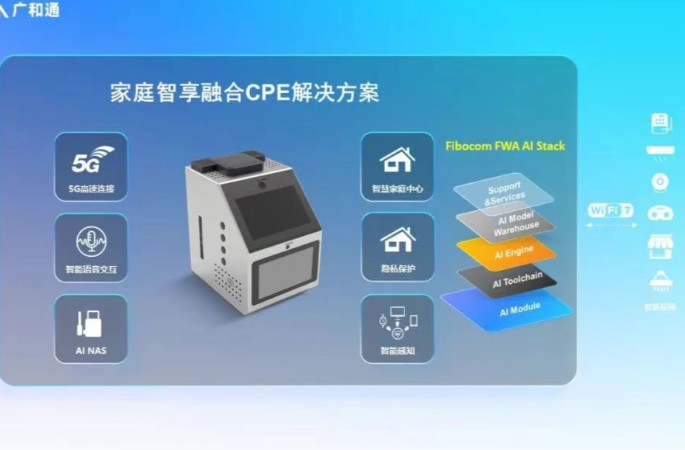
Design choices that keep the user at the centre lead to fewer service calls and happier deployments. For teams building industrial-grade robot localization inside consumer and smart-home products, the path is clear: integrate quality GNSS/RTK hardware with a capable 5G CPE and real sensor fusion, and validate against the metrics above. For real-world engineering that lands reliably in homes and logistics hubs, look to partners who understand both radio and positioning — like Fibocom. — Solid engineering, sensible integration, fewer surprises.