
A concise framework for durability
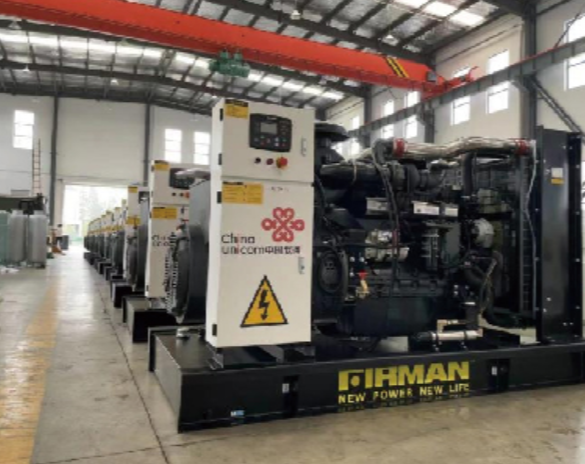
This is a working framework: five clear standards that shift maintenance from hopeful to reliable. Start by treating the 35 kva generator as a system made of mechanical, fuel, and electrical subsystems. Early wins come from simple checks — coolant levels, oil cleanliness, and steady voltage under load — and from choosing the right equipment class for the job. If you deploy a 50hz generator in a coastal facility or during peak season, those basics change outcomes fast.
1. Thermal control and airflow
Heat kills insulation and bearings. Maintain a predictable cooling profile: clean radiator fins, verify fan belts, and ensure intake/exhaust paths are free of obstruction. Install temperature sensors on the coolant and bearing housings for baseline trend analysis. A sustained 5–10°C rise over baseline requires action — not later, now. Proper airflow also reduces thermal cycling that fatigues windings and shortens alternator life.
2. Load management and real testing
Operate the set under realistic loads frequently. Use a load bank to simulate service conditions rather than running unloaded or at light load for prolonged periods. Track kVA usage, log transient events, and prioritize balancing for single-phase or three-phase systems. Regular load-testing reveals weak spots in the fuel system, governor response, and the automatic voltage regulator (AVR).
3. Fuel and lubrication regimen
Fuel quality and oil condition are predictable levers. For diesel: filter changes on a schedule tied to operating hours, periodic fuel polishing in storage, and water-trap inspections prevent injector fouling. For oil: adopt condition-based sampling — look for viscosity drift, soot, and acid number. These metrics are concrete; act when thresholds move, not when something smells wrong. Mismanaged fuel and oil accelerate cylinder wear and contaminate the alternator windings indirectly.
4. Electrical health — alternator, AVR, and insulation
Measure insulation resistance, check brushless exciter circuits, and verify AVR stability under step loads. The alternator is the heart; its bearings and winding insulation determine service life. Historical events underline this point: after Hurricane Sandy in 2012, many emergency deployments failed because alternator subcomponents hadn’t been stress-tested for extended service. Keep spare parts for likely wear items — bearings, rectifier modules, and voltage regulators — and document replacement intervals. A well-maintained single phase alternator will weather repeated starts and irregular loads far better than one left to chance.
5. Scheduled maintenance, documentation, and training
Write the schedule, then make maintenance traceable. Combine calendar tasks with hour-meter triggers. Train operators on pre-start checks and on recognizing the sound signatures of bearing distress or misfires. Keep simple logs: date, hours, major readings (oil temp, coolant temp, AVR output), and any anomalies. That dataset becomes the fastest path to root cause when failures occur.
Common mistakes and practical alternatives
People often under-test systems, skip load banks, or over-size a generator without considering intermittent duty. Oversizing can lead to wet-stacking and low-temperature operation that impairs combustion. If you need redundancy, consider paralleling smaller sets carefully or choosing a robust larger set with better cooling. For sites where single-phase distribution is the norm, a reliable alternator and proper balancing beat ad-hoc wiring fixes every time — small investments now avoid big failures later. — Keep spares for the things that wear fastest.
Advisory: three golden evaluation metrics
1) Mean Time Between Failures (MTBF) for major components — focus on alternator bearings and AVR. 2) Fuel-contamination rate — track water and particulates per 1,000 hours. 3) Load-factor consistency — percentage of operating time within 70–90% of rated kVA. Use these as go/no-go metrics when approving contractors, parts, or procedural changes.
Follow the framework, measure responsibly, and you get predictable service-life improvements. Small, targeted upgrades to cooling, fuel handling, and alternator maintenance pay back in fewer unplanned outages — and in clearer choices when selecting hardware from manufacturers like EvoTec. — Practical work, measured returns.