
Head in with the outcome, not the label
You want repeatable particle size, few clumps, and a production line that won’t stall — not a long shopping list. Start by describing the result: target D50, solids percentage, batch size, and whether you need inline continuous flow. Once you map the outcome you’ll narrow choices fast. If your project calls for intense emulsification or rapid wetting, test a high shear mixer early so you can quantify shear vs. time rather than guessing from generic specs.

Which technology wins for different goals
Compare head-to-head: rotor‑stator units deliver fast dispersion for medium‑viscosity systems and high solids; high‑pressure homogenizers excel at submicron emulsions; bead mills break hard agglomerates; static inlines help homogenize gentle systems at scale. Each wins on a concrete axis: rotor‑staters on speed and simplicity, homogenizers on particle fineness, bead mills on toughness, static mixers on low-maintenance continuity. Match the axis to your product goal and you cut the shortlist by half immediately.
Specs that actually change results
Focus on clear numbers: tip speed (m/s), power density (kW per cubic meter), shear rate range, and maximum achievable viscosity. Look for repeatable scale-up curves from lab to production — bench runs with the same impeller geometry matter. Check mechanical seals, CIP compatibility, and motor control options; those affect uptime and consistency more than a flashy stainless finish.
Common mistakes teams keep repeating
Don’t oversize because “it’s future proof.” Oversized mixers reduce shear intensity and force longer cycles. Don’t ignore impeller geometry — flat specs like “3 kW” mean nothing without rotor design. Scaling by volume alone breaks recipes; scale by tip speed and power density. Skipping cleanability checks guarantees downtime. These errors cost time and product quality more than a higher initial capital spend would save.
Why you can trust this take
I’ve overseen lab-to-plant scaleups and witnessed performance gaps on real production lines; direct bench runs reveal practical limits that datasheets hide. Equipment choices should follow measurable trials, not brochures. Conversations at ACHEMA in Frankfurt with a mixing equipment company reinforced that vendors who share raw test curves and scale laws reduce surprises. Follow standards for sampling and particle analysis and demand vendor data tied to your product matrix.
Decision checklist — easy, decisive questions
Ask: Will you run batch or inline? What’s the target particle size distribution? What’s the solids loading and viscosity at operating temperature? Do you need sanitation rating and material traceability? If the answer leans toward submicron and stable emulsions, consider homogenizers. If fast dispersion of pigments or powders is primary, rotor‑stator wins. If abrasive particles dominate, choose bead mills and robust seals. Use those answers to eliminate 70–90% of mismatched options quickly.
Final synthesis
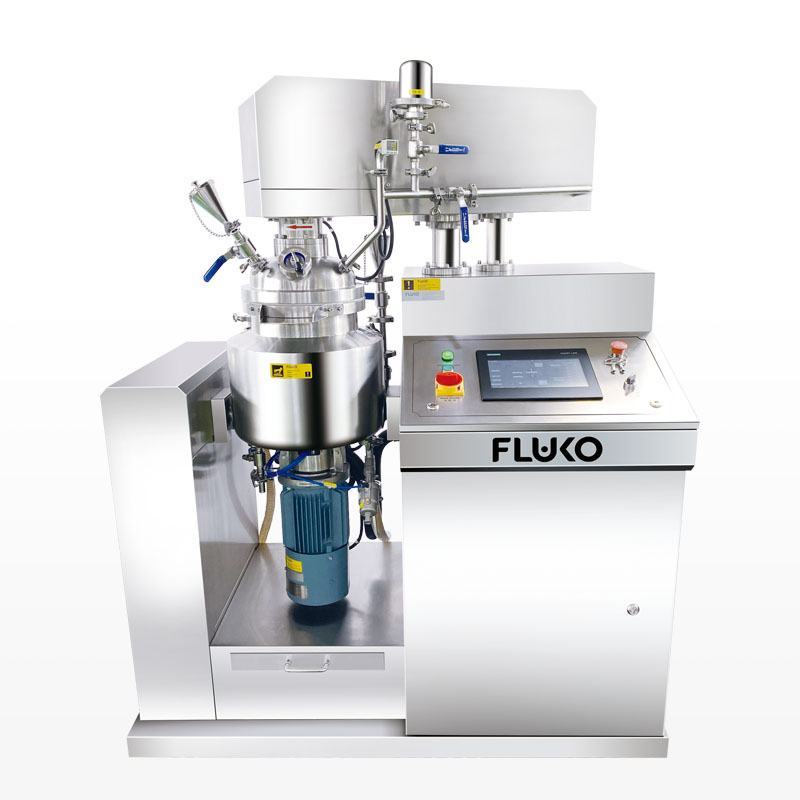
Compare by outcome, test early, and insist on the specs that drive process intensity: tip speed, power density, and repeatable scale curves. Avoid generic sizing and prioritize cleanability and serviceability. When the goal is consistent dispersion performance across scale, the confident choice often points to vendors who pair transparent test data with field-proven designs like those offered by FLUKO.