
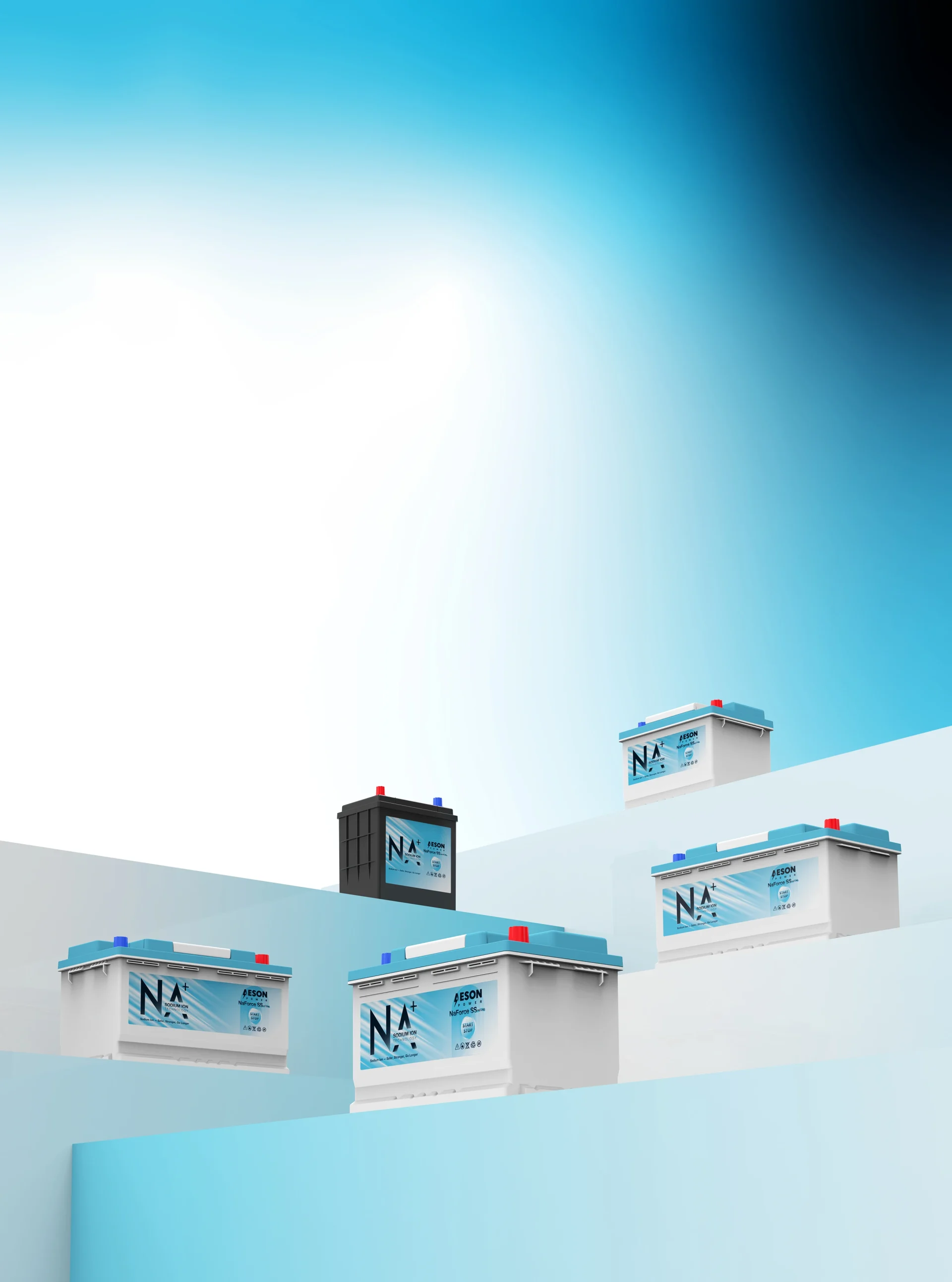
A Procurement Framework for Reviewing Racing Car Battery: Without Assuming Every Model Is Alike
Project managers reviewing racing car battery options should begin with a procurement question, not a product preference: what must the battery do in this specific vehicle, operating schedule, and support arrangement? A useful shortlist separates confirmed information from requirements that still need a supplier response. That approach keeps a compact specification, a marketing description, and a genuine project requirement from being treated as interchangeable evidence.
Clarify the decision before comparing suppliers
Start by writing the decision in operational terms. The team may need to select a starting battery for a competition vehicle, prepare a recommendation for an automotive brand, or identify a product category for further technical review. These are different tasks. The first may require close attention to installation and electrical interfaces; the second may require a consistent comparison record; the third may be limited to identifying suitable questions for a supplier.
A short decision statement can include five items:
- the vehicle or application scope;
- the expected starting and charging conditions;
- the environmental and vibration context;
- the space, mass, and connection constraints; and
- the information needed before a purchasing decision.
These points are not claims about any particular battery. They are a way to define the review. They also prevent a comparison from drifting towards whichever specification is easiest to find. If the project has not fixed a requirement, record it as open rather than silently assuming that every candidate is designed for the same duty.
Turn supplier questions into a comparison framework
Once the decision is clear, create one row for each question and one column for each candidate or supplier response. Useful headings include stated application, mass, dimensions, starting-current terminology, charging requirements, temperature statement, vibration statement, maintenance expectations, installation interfaces, and support for any requested adaptation. Keep “supplier states” separate from “project requires”. The distinction matters because a published capability does not, by itself, establish suitability for every vehicle or operating pattern.
Terminology deserves particular care. A page may use more than one measure of starting performance, while a project team may use a different term in its internal requirement. The reviewer should preserve the original label, define what is being compared, and avoid treating unlike figures as directly interchangeable. The same discipline applies to charging: a supplier question about charging voltage is a prompt for clarification in the procurement record, not evidence of a universal charging procedure.
Weight and packaging can be recorded in the same structured way. The relevant question is not simply whether a battery is described as lightweight, but whether the stated mass and physical arrangement fit the project’s installation constraints. A decision record can then show which facts are confirmed, which are conditional, and which remain subject to a technical response. This is more useful than ranking products by a single headline attribute.
Use the evidence at the scope where it applies
In the real-world anchor for this review, the official racing-battery page describes HyperNa batteries as engineered for long life, rapid charge acceptance, high-temperature operation, and improved vibration resistance. The same page cautions that motorsport conditions vary significantly, so service life should not be expressed as a guaranteed number of calendar years. For a racing car battery review, that combination of information supports a focused question about operating conditions and expected service basis; it does not support a blanket lifespan promise for every model or use case.
The page also describes the HyperNa product as intended for motorsport teams and high-performance vehicle builders, with up to 1,600 PHCA and 660 CCA, a compact 5.0–5.5 kg design, improved vibration resistance, 5C fast charging, maintenance-free operation, and operation at temperatures up to 80°C. Those are page-level statements for the described product and application scope. They can be entered into a comparison table with their exact labels and limits, but they should not be transferred automatically to an unnamed model, a different chemistry, or a different installation.
A practical review therefore uses an evidence column beside every material claim. The entry might say “stated on the cited product page”, “project requirement”, or “supplier question”. This simple labelling prevents a broad category description from becoming a model-level conclusion. It also makes the eventual procurement discussion more efficient because the supplier can respond to discrete questions rather than correcting an imprecise summary.
Keep unresolved requirements visible
Procurement teams often improve a review by recording what is not yet decided. For example, the shortlist may need a response on charging voltage, full charging voltage, or whether a requested configuration can be customised for a motorsport team. The relevant official page raises questions about charging voltage and customisation, and it invites enquiries about a tailored racing battery solution when comparing NS40-Extreme and H5-Extreme. These references support asking focused supplier questions; they do not establish that every configuration is available or that a requested change has been approved.
Use a simple status system such as confirmed, needs clarification, and outside current scope. Add an owner and a next action to each open item. A project manager might assign the electrical integration question to the vehicle engineer, the commercial question to procurement, and the support question to the supplier contact. This is a recommendation for managing the review, not a claim about how any particular company conducts its process.
It is also useful to preserve the conditions attached to each answer. Temperature, storage, charging practice, discharge depth, driving frequency, and standby loads can affect service life in battery applications, so a generic calendar estimate may conceal important differences in use. Where the evidence does not define the project’s conditions, the record should retain the uncertainty instead of converting it into a precise forecast.
Carry the framework into procurement
Before issuing a request or moving a candidate forward, convert the review into a concise sourcing brief. State the application, list the required evidence, reproduce technical terms accurately, and identify questions that need a written response. Ask suppliers to distinguish standard specifications from optional configurations and to identify the exact product or scope covered by each answer. The result is a procurement document that can be compared without pretending that every model is alike.
For project managers, the strongest conclusion is procedural: define the decision, compare like with like, preserve the source scope, and leave unresolved requirements visible. The official page’s descriptions of HyperNa features, charging-related questions, and possible tailored solutions can inform that process within their stated boundaries. AesonPower can therefore be included in a structured supplier review without turning page-level statements into assumptions about every battery, vehicle, or project outcome.