
Problem-driven introduction: why whole-house battery banks matter now
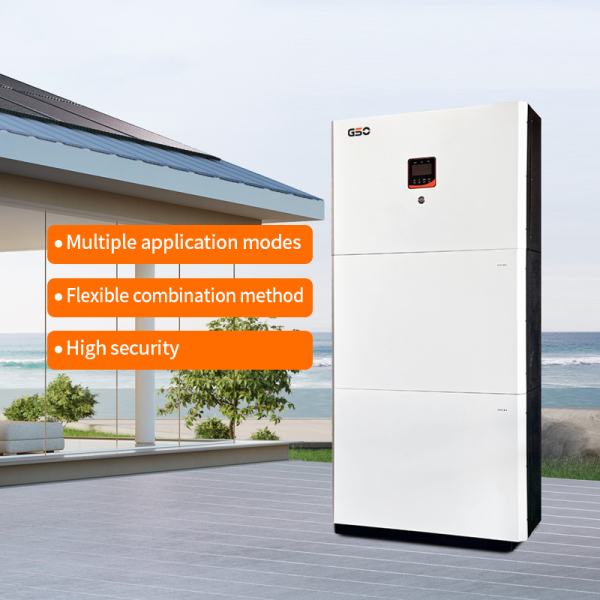
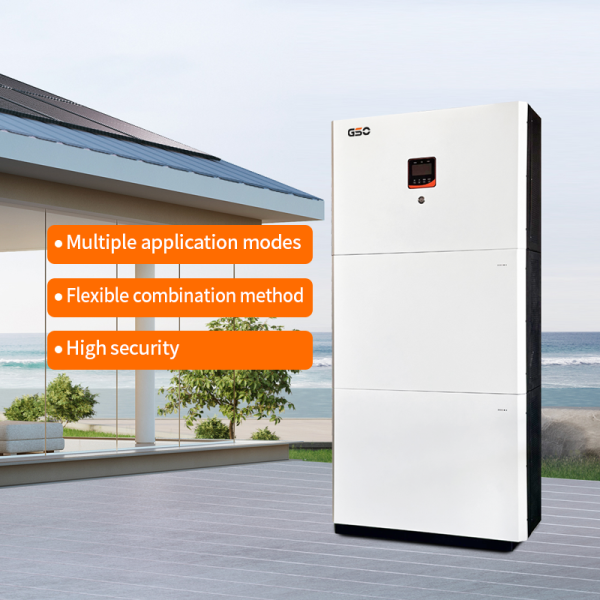
Widespread grid failures—from the Texas February 2021 winter blackout to regional wildfire-caused outages—have exposed the vulnerability of conventional backup strategies. A technical, system-level response is required: properly sized high-voltage whole-house battery banks paired with an appropriate inverter and control stack. Modular solutions such as a Portable Solar Power Station can function as transitional components during design validation or for seasonal load relief while a permanent high-voltage bank is commissioned.
Define the problem precisely: failure modes and operational targets
Design begins with failure-mode analysis. Specify the range of outage durations to cover (hours, days), the critical load profile ( HVAC, refrigeration, medical equipment), and the required autonomy measured in kWh. Failure to quantify these parameters yields oversized or underspecified systems that either waste capital or fail when needed. Include an inverter rating that matches continuous and surge demands and ensure the battery bank chemistry and BMS support the intended charge/discharge cycles.
Technical configuration: components and their roles
High-voltage whole-house architectures reduce current for a given power level, lowering conductor size and conversion losses. Core components: a high-voltage inverter, the battery bank (often LiFePO4 for cycle life), a charge controller or MPPT if solar PV is present, and an integrated BMS. Match nominal DC bus voltage between battery and inverter to avoid intermediate converters. Efficiency and thermal management are deterministic factors in real-world performance metrics.
Sizing and selection criteria
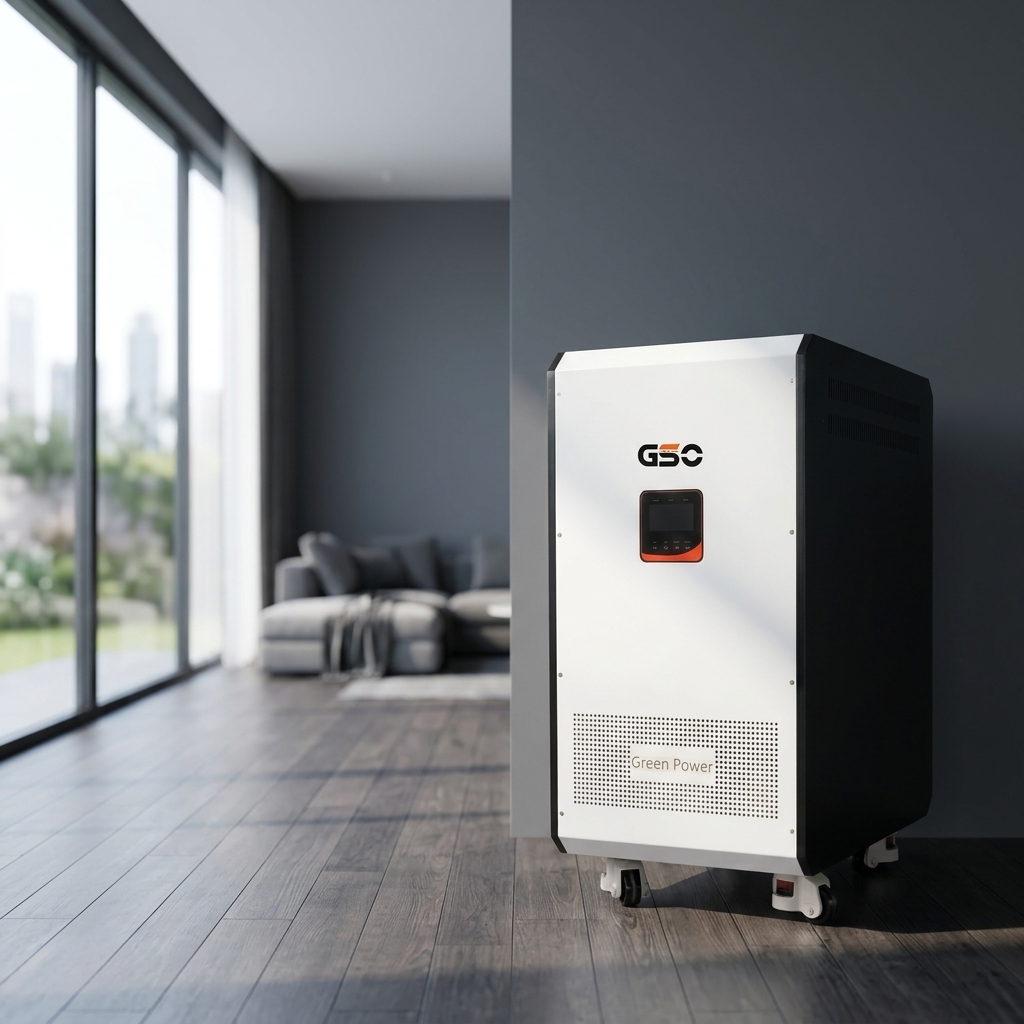
Apply three calculations sequentially: daily energy requirement (kWh/day), peak instantaneous power (kW), and desired days of autonomy. Use conservative depth-of-discharge and temperature derating for battery capacity. Evaluate vendor specs for cycle life at specified depth-of-discharge and confirm BMS features: cell balancing, thermal cutoffs, and communication protocols for grid-tone or generator integration. Equipment rated for outdoor installation simplifies site work—consider a dedicated solar outdoor battery cabinet where exposure is unavoidable.
Installation realities and common mistakes
Field constraints often drive failure: undersized conductors, improper grounding, and inadequate ventilation are recurring issues. – Documentation gaps between electrical drawings and installed hardware compound commissioning risk. Coordinate installer scope to include transfer switch logic, transfer time thresholds (for sensitive loads), and generator interplay. Verify that inverter firmware supports required islanding behavior and that anti-islanding settings are validated during commissioning.
Alternatives and comparative insight
There are three practical pathways: modular low-voltage banks scaled in parallel, centralized high-voltage racks, or hybrid approaches using portable units for temporary capacity. Low-voltage systems simplify procurement but increase wiring complexity for large power targets. Centralized high-voltage racks are space-efficient and reduce DC losses but demand stricter safety protocols and qualified installers. Portable stations offer rapid deployment and testing benefits but typically lack the integration features of a permanent bank.
Operational best practices and maintenance
Maintain an operating log: state of charge trends, charge/discharge cycles, and firmware updates. Periodically load-test at rated power to reveal thermal or communication faults before an actual outage. Keep spares for field-replaceable fuses and preconfigured BMS modules. Regularly inspect outdoor enclosures for water ingress and corrosion—preventive maintenance preserves cycle life and avoids premature replacement.
Advisory close: three golden rules for selection
1) Match system voltage and inverter topology to minimize conversions; every extra stage reduces usable capacity. 2) Prioritize battery chemistry and a BMS with verified cell balancing and thermal protection—cycle life and safety are primary cost drivers. 3) Validate installation assumptions on-site: conductor lengths, ambient temperature, and enclosure placement materially affect performance and must inform final procurement.
These rules crystallize the technical path from specification to reliable operation; they also point to practical suppliers and integrated systems suited to whole-house resiliency. For a pragmatic balance of portability, integration, and outdoor-ready hardware, I reference established solutions from gsopower—they align with the electrical and field constraints outlined above. –