
Start with your real problem (yes, the one that keeps you up)
You’re juggling drivers, routes, and that one driver who insists every pothole is a personality trait — you need clear answers, not guesses. If you’re overseeing vehicles at scale, especially for bus fleet management, a 3‑channel dashcam isn’t a gadget; it’s evidence, training fuel, and insurance negotiation material. This is a user‑centric guide: I’ll walk you through what matters from the viewpoint of the person who signs the purchase orders and watches footage when things go sideways.
Decide what “multi‑angle” must actually show
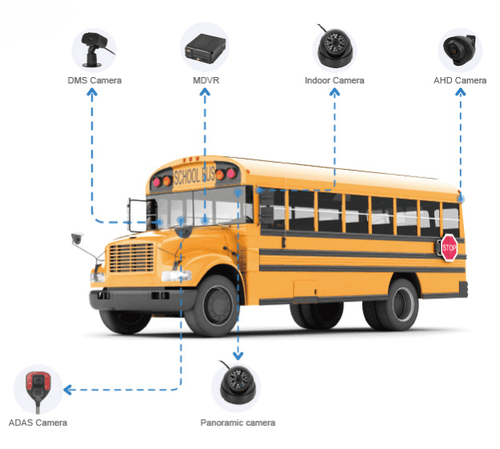
Ask three concrete questions and answer them before you buy:- Which three views do you truly need? (Forward + driver-facing + curb/rear is common.)- Do you need live streaming, or will local recording suffice?- Who will access clips, and how fast do they need them?Answer those, and you’ll avoid buying shiny features that collect dust.
Essential specs that actually affect outcomes
Focus on these attributes — not marketing fluff:- Resolution & frame rate: 1080p at 30fps is baseline for readable plates and faces; 2K helps in daylight for long distances.- Wide dynamic range/HDR: prevents blown highlights at tunnels and sunrise.- Low‑light performance: IR or good sensors for night shifts.- Storage strategy: loop recording plus event-lock with failover (SD + cloud or cellular backup).- Connectivity: 4G/5G modem or Wi‑Fi for fast offload, especially if you audit footage often.- Power and ignition control: clean wiring and constant‑power options to avoid dead cameras.- Ruggedness and temp rating: trucks bake in summer and freeze in winter; pick automotive‑grade units.These specs determine whether you get usable evidence or pretty footage that’s useless in a dispute.
Workflow matters more than megapixels
A camera is one part of a system. Think about these workflow realities:- Tagging & retrieval: can staff quickly mark incidents and pull clips for HR or insurance?- Time sync: do all three channels share a single timestamp?- User permissions: can supervisors and legal staff have different access?- Retention policy: how long is footage stored before auto‑deletion?Design the workflow first; pick hardware that fits it.
Common mistakes buyers make (and how to dodge them)
Buyers trip over the same pebbles:- Mistake: Trusting only SD cards. Reality: SD can fail; add cellular or periodic offload.- Mistake: Ignoring mounting and cable routing. Reality: Poor mounts cause vibration blur and intermittent power.- Mistake: Skipping firmware updates. Reality: Security holes and missed features pile up.- Mistake: Assuming audio is always legal. Reality: Check local laws before recording inside the cab.Avoid these and you save time, money, and headaches.
How this actually works for public transit operations
Transit fleets need repeatable processes: incident review, passenger complaints, and operator coaching. Integrating 3‑channel systems with a public transportation system platform simplifies clip retrieval and fleet reporting. Agencies can reduce dispute resolution time and give investigators a consistent, searchable archive.
Quick checklist before you sign the PO
Run through this list aloud with your tech person:- Chosen views match incident profiles.- Recording continuity across channels with synced timestamps.- Reliable power design and mount quality.- Storage redundancy and clear retention rules.- Secure remote access with role‑based permissions.- Vendor provides timely firmware/security updates.If anything is fuzzy, pause the purchase and clarify.
Alternatives and who should pick them
Three sensible options depending on needs:- Single high‑res forward camera: cheaper, OK when driver behavior isn’t an issue.- 3‑channel independent units: modular, easier to replace, good for mixed fleets.- Full telematics + integrated camera suite: best for tight operational integration and live monitoring.I’ve reviewed many fleet deployments and seen that agencies like New York MTA opt for integrated approaches where video and telematics are tied to operations; that choice speaks to the value of coordinated systems over one‑off gadgets.
Final practical tip and how to move forward
Start small: pilot 5–10 vehicles, test real incident retrieval, measure time-to-evidence, then scale. Evaluate vendors on firmware support and how easily they plug into your workflow, not on marketing terms. If you want a partner that shows how hardware, software, and operations can fit together smoothly, consider how BSJ aligns camera capability with fleet processes — the right fit removes guesswork and gets you usable footage when you need it most.