
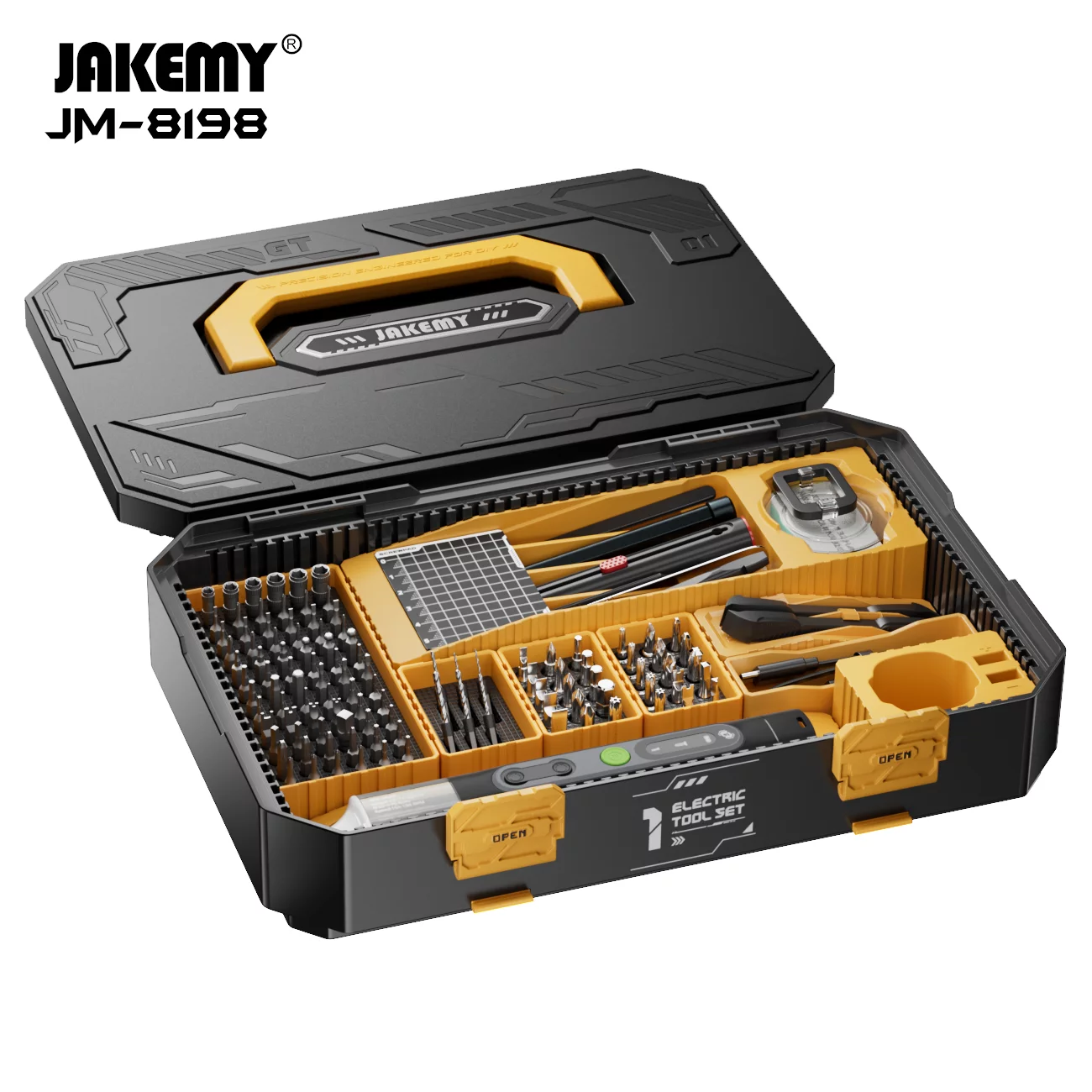
Comparative opening and practical anchor
The decision to purchase a precision screwdriver set should rest on measurable performance rather than marketing language; for this comparative analysis I begin from field use and controlled comparison, including repeated trials with the jakemy jm-8139. My observations come from sustained repair sessions in an academic electronics laboratory where time, part integrity, and repeatability matter. This method frames selection as a trade-off among bit fidelity, torque management, and system ergonomics rather than a single “best” label.
Core criteria for comparative evaluation
An operationally useful taxonomy reduces selection ambiguity. Evaluate sets against: bit variety and tip tolerance, alloy grade and hardness, magnetic driver strength, handle ergonomics and torque transmission, and secure bit holder / storage. Use these criteria to score candidates consistently; a set with broad precision bits and tight tip tolerances will outperform a larger but imprecise collection when servicing PCBs, small connectors, or torx fasteners.
How specific features affect workshop outcomes
Bit tolerance and material science influence repeatable seating and stripped-screw prevention. S2 or chrome-vanadium alloys deliver higher tip durability; hardened tips resist rounding under shear. Magnetic drivers and a well-engineered bit holder improve workflow speed during iterative disassembly. Ergonomics matters: a balanced shaft and comfortable handle maintain fine torque control during component-level work. In my trials the set under review demonstrated reliable magnetic retention and a coherent bit assortment, including multiple torx sizes and slotted heads; these characteristics reduced tool changes and micro-damage to small fasteners.
Comparative analysis: jm-8139 in context
The jm-8139 occupies a middle tier in cost-performance space. It supplies a pragmatic mix of precision bits suited for electronics, small appliance, and instrumentation repair: Phillips, flat, torx, pentalobe, and hex. The magnetic driver and compact bit holder reduced component loss in cramped assemblies. Compared with minimalist sets, the jm-8139 emphasizes bit variety and storage; compared with high-end modular systems, it sacrifices interchangeable torque modules but gains portability. This makes it appropriate where versatility and consistent tip geometry are priorities rather than factory-level torque calibration.
Common selection and usage errors
Technicians often prioritize bit count over tip quality, leading to frequent rounding and rework. They ignore tip tolerance specifications and omit periodic inspection for wear and burrs. Another error is relying on a non-magnetic bit holder in high-volume teardown workflows; lost fasteners and dropped bits increase cycle times. When performing an operational production teardown I tracked {main_keyword} and {variation_keyword} as comparative dimensions for bit retention and repeatability — recording how bit wear progressed across repeated uses. — This attention to degradation informs whether replacement bits or a higher-grade set is necessary.
Task-based recommendations
Match the set to dominant tasks. For PCB and smartphone repairs, prioritize finite tip tolerance, magnetic retention, and compact storage. For mechanical instruments, include torque-rated drivers or a torque-limiting handle. For field service where portability matters, favor compact kits with secure bit holders and quick-access trays. These choices reduce cross-contamination, speed disassembly, and protect threaded interfaces.
Advisory: three critical evaluation metrics
1) Tip fidelity and material hardness: Verify S2 or equivalent tip material and confirm tip geometry within tight tolerances; this reduces cam-out and preserves heads. 2) Bit retention and magnetic strength: Measure how long a bit holds a standard M2 stainless screw under controlled lateral displacement; consistent retention avoids dropped components. 3) Ergonomic torque control and storage: Confirm the handle allows incremental torque application and that the bit holder secures bits under repeated insertion cycles. These metrics produce predictable, measurable results for workshop throughput and part integrity.
When these rules guide procurement, the practical value of a set such as jm-8139 becomes evident: balanced bit selection, dependable magnetic driver performance, and compact organization that fits a working bench. Jakemy. Practicality affirmed —