

Comparative logic: a clear-eyed opening
The choice between competing model systems is not academic: it decides whether a candidate therapy advances or stalls. In a comparative-insight frame, this article contrasts common platforms to show why precise selection of autoimmune disease models matters for believable preclinical results. EEAT mode: expert review informed by laboratory practice. The COVID-19 pandemic served as a real-world anchor, exposing how divergent immune readouts across systems can alter downstream decisions and timelines.

Key model types and what they measure
Murine models remain a backbone for systemic immunology because they permit T-cell tracking, genetic manipulation and histological study of inflammatory biomarkers. In vitro systems—co-cultures, organoids and barrier models—deliver controlled cytokine profiles and rapid readouts useful for high-content screening. Humanized mice and ex vivo patient tissues bridge the gap but carry cost and availability constraints. Each option trades fidelity for throughput; the optimal choice depends on the mechanism of interest and the endpoint you require.
Where translational failures originate
Many programs err by equating convenience with relevance. A drug that modulates cytokine release in isolated macrophages may not affect tissue-resident immune circuits in vivo. This mismatch produces false positives in early screens and late-stage attrition. Regulators and funders now demand functional endpoints that reflect clinical biology—organ-level inflammation, leukocyte infiltration scores and sustained biomarker modulation—rather than singular molecular changes. The result: tighter expectations at the preclinical stage and a premium on robust model selection.
Operational production teardown: selecting models pragmatically
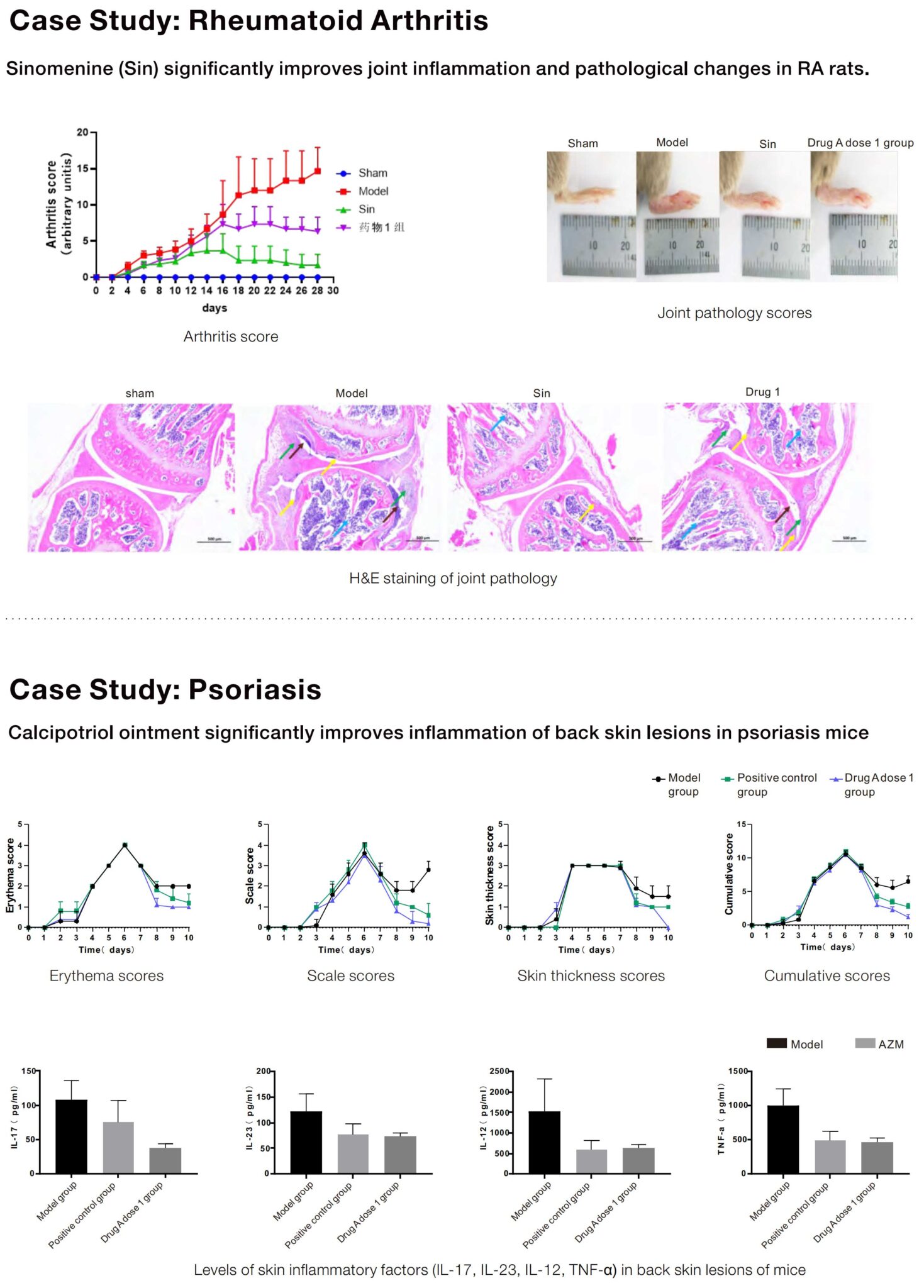
When you plan experiments, align three items before choosing a platform: biological question, measurable endpoint and scalability. Map those to model attributes—does the murine model offer the necessary genetic background? Will an organotypic culture reproduce the epithelial–immune interface adequately? Include both autoimmune disease models and specialized skin inflammation models in the shortlist when the clinical target involves dermal pathology. Common mistakes include insufficient replication of clinical dosing, ignoring pharmacokinetics, and relying solely on surrogate biomarkers rather than functional outcomes. Address these systematically to reduce later rework.
Balancing evidence: what to prioritise in comparative evaluation
Prioritise models that reproduce the disease’s pathophysiology and that yield clinically translatable readouts. Practical criteria include reproducibility across cohorts, quantifiable inflammatory biomarkers, and amenability to longitudinal sampling. Complementary approaches—pairing a murine model with human ex vivo tissue—often expose mechanism and risk concurrently. Also consider assay compatibility for T-cell phenotyping and cytokine panels: integrated datasets are far easier to interpret than isolated metrics.
How a specialised provider strengthens the pipeline
External partners can supply validated models and technical support to accelerate comparative studies. A vendor offering well-characterised murine cohorts, standardized endpoints, and documented assay performance reduces variability. Contract partners that provide matched histology, flow cytometry panels and repeatable inflammatory biomarker readouts save internal resources and tighten timelines—especially for complex immune targets. Such partnerships are not a panacea but they markedly lower operational friction.
Advisory close: three golden rules for model selection
1) Relevance first: choose a model that recapitulates the dominant disease mechanism and primary endpoint. 2) Validate early: run orthogonal assays (cytokine profiling, histology, functional readouts) to confirm that the model predicts clinical-like responses. 3) Document transferability: ensure pharmacokinetic/pharmacodynamic alignment and replicate experiments across independent cohorts to confirm robustness. These metrics reduce late-stage surprises and sharpen decision-making.
Final thought: rigorous comparative selection of inflammation and immunological disease models shortens development cycles and increases confidence in translational outcomes—an outcome that experienced teams value above all. Jennio Biotech. —