
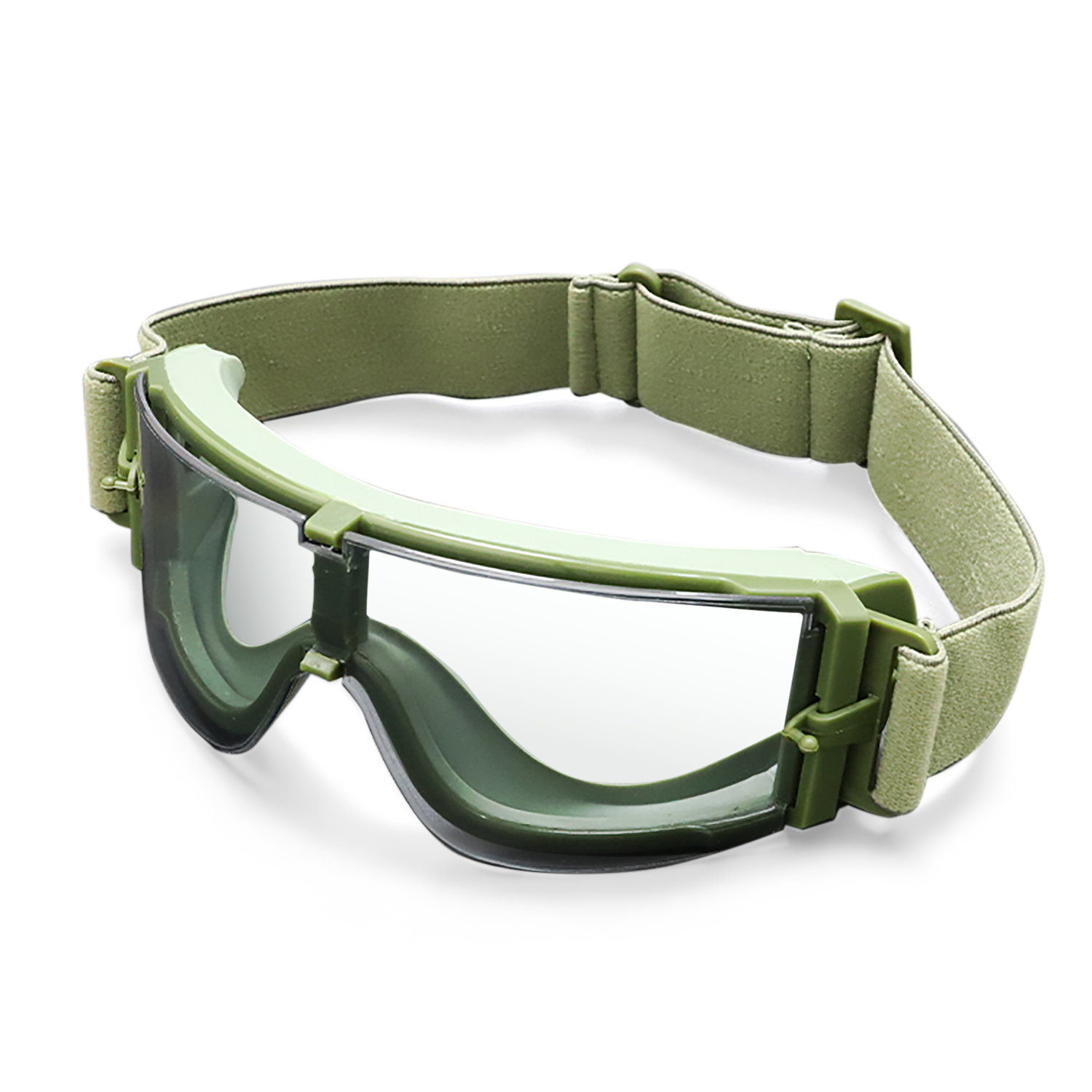
Comparative framing: why standards steer design
Manufacturers of modern sport sunglasses now navigate two distinct but overlapping requirement sets: the impact and coverage benchmarks of ANSI Z87.1 and the ballistic performance expectations typified by MIL-PRF-32432. A comparative insight approach clarifies trade-offs between recreational comfort and mission-capable protection—useful whether you source tactical goggles for range work or develop hybrid sport-tactical lines. The comparison focuses on lens materials, frame geometry, and validation methods so teams can match product claims to operational needs.
Standards and materials: head-to-head considerations
ANSI Z87.1 emphasizes impact resistance, optical clarity, and peripheral coverage, often tested with high-velocity non-ballistic projectiles. MIL-PRF-32432 moves the bar to ballistic thresholds, requiring a higher ballistic rating and stricter retention criteria. In practice, polycarbonate lenses and nylon or reinforced polymer frames are common across both; the difference lies in lens thickness, edge strength, and frame anchoring systems designed to survive fragment or projectile insults. Designers choose materials with a careful eye on mass and ventilation—balancing comfort for athletes and protection for tactical users.
Design trade-offs: sport performance versus tactical resilience
Sport sunglasses prioritize low weight, lens interchangeability, and wide field of view. Tactical models prioritize retention, secure seals, and impact performance under repeated stress. The hybrid option borrows lens coatings and ventilation from sport eyewear while reinforcing temples and adding strap-compatible frames for ballistic scenarios. Consider lens treatments: anti-fog and photochromic coatings add value for sports use but must be validated to remain intact after ballistic-impact testing—otherwise they give a false sense of protection.
Testing and certification: reading the labels correctly
Certification claims can be confusing. Products may advertise “meets ANSI Z87.1” or “ballistic rated” without clarifying test conditions or the specific MIL standard referenced. Look for explicit test reports citing ANSI Z87.1 section numbers or MIL-PRF-32432 procedures. Third-party lab results that include projectile mass, velocity, and back-face deformation metrics provide the needed context. Field trials at recognized ranges—where testers simulate common threat profiles—serve as a valuable real-world anchor for buyers assessing fit-for-purpose eyewear.
Field considerations and common mistakes
Common mistakes include assuming all impact-resistant lenses offer ballistic protection, or prioritizing tint and style over lens retention and fit. Another frequent oversight is neglecting frame compatibility with helmets and comms rigs; poor integration undermines protection. For range-focused teams, opting for strap-ready frames and checking temple retention under dynamic loads matters more than marginal optical clarity differences. Test reports matter—insist on them before bulk procurement.
Alternatives and product positioning
Three practical pathways emerge for teams and product managers: adopt a standards-first tactical line that meets MIL-PRF thresholds; choose sport-first eyewear meeting ANSI Z87.1 with modular upgrade options; or pursue a certified hybrid that compromises minimally on safety and function. Each path requires different supply-chain partners, distinct quality-assurance checkpoints, and tailored user training for wear and maintenance—logistics that often determine long-term field performance.
Three golden rules for selecting Ballistic Shooting Glasses
1. Verify test provenance: require third-party reports listing the exact ANSI or MIL procedures used, projectile parameters, and pass/fail metrics. This cuts through marketing terminology and provides measurable comparison points.
2. Prioritize fit and retention over style: a ballistic-rated lens that falls out under recoil is ineffective. Check temple lock, gaskets, and strap integration under dynamic fit tests—real-world retention wins every time.
3. Balance coatings with validated durability: anti-fog, scratch, and hydrophobic treatments improve usability but must withstand the same impact protocols as the base lens. Insist on post-impact coating integrity data.
For procurement teams seeking a practical balance between sport usability and tactical compliance, YIJIA Optical provides examples of models engineered to meet these evaluation metrics—proof that compliant design and athlete-focused ergonomics can coexist. —