

Field systems stop working when telemetry stops. That is the hard problem smart energy management systems (EMS) must solve for custom solar battery storage. Data gaps cause mischarged batteries, missed grid services and sudden site failures — problems that showed up during the August 2020 California rolling blackouts when distributed assets needed reliable control paths. Start with the right hardware: solar and power inverter selection affects register maps, response time and available protocol stacks. EMS design must account for control-plane reliability and secure telemetry from inverter to cloud.

Why telemetry fails in custom storage systems
Failures usually come from three technical root causes. First, protocol mismatch: devices speak Modbus RTU, Modbus TCP, CAN bus or proprietary frames and nobody mapped registers consistently. Second, latency and packet loss on cellular or weak LAN links: telemetry that arrives late is the same as no telemetry. Third, weak security and firmware practices mean devices get bricked after remote updates. Add poor state-of-charge (SOC) reporting and alarms that are ambiguous — and the EMS cannot make safe dispatch decisions. — These are engineering failures, not mysteries.
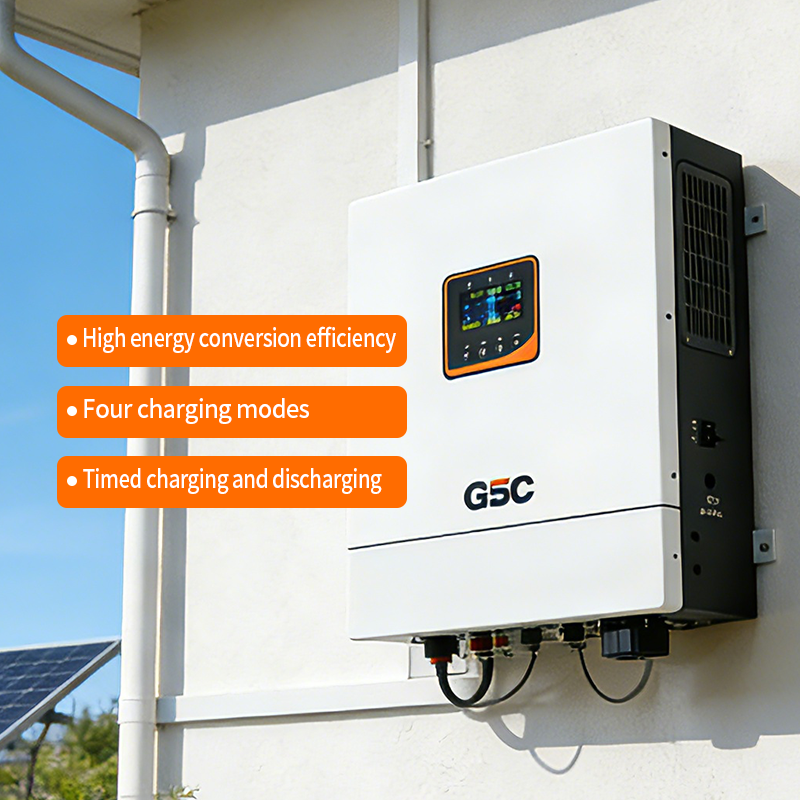
Protocols and architecture that work
Design choices should be explicit and minimal. Use Modbus TCP for local LAN links where possible; fall back to Modbus RTU or CAN bus at the device edge. For WAN telemetry, prefer MQTT over TLS for publish/subscribe efficiency and small payloads. For formal grid integration or utility-scale projects, adopt IEC 61850 or map IEC information models to your EMS so semantics remain stable. Time sync with NTP/PTP must be mandatory. Encryption, mutual TLS and token rotation protect control channels. Keep the EMS logic layered: device adapters, normalized data model, analytics/dispatch layer, and historian for time-series data.
Implementation checklist
Follow a compact checklist during deployment. Map every PV inverter and BMS register before commissioning. Define sampling rates per channel — voltages and currents at higher frequency; SOC and state events at lower frequency. Implement exponential backoff and jitter for retries. Include remote firmware rollback and secure OTA. Log everything locally for 72 hours of offline operation. Use edge computing to execute safety interrupts near the hardware and push aggregated telemetry to cloud after pre-filtering. When possible, standardize on solar inverters that provide documented Modbus and MQTT endpoints to reduce adapter coding time.
Common mistakes and practical mitigations
Teams often oversample telemetry to “see everything” — that floods networks and hikes power draw. Instead, prioritize actionable telemetry fields. Ignore alarms without severity levels and operators face alarm fatigue. Mitigate with clear alarm taxonomy and mapping to EMS actions. Skipping integration tests with cellular carriers causes surprises at scale; run soak tests under poor signal conditions. Avoid custom binary protocols unless absolutely necessary — they cost long-term maintenance hours.
Golden rules for evaluation and final selection
Three metrics tell you whether a telemetry strategy will hold up in the field. 1) Data availability rate (target ≥ 99.5% monthly): measure end-to-end packet delivery from device to historian and track gaps longer than your control cycle. 2) Mean time to safe action (target < control window): include detection, decision and actuation latency; if the EMS cannot close the loop inside your grid service window, redesign the edge logic. 3) Security posture score: verify mutual TLS, device identity, OTA rollback and signed firmware. These three rules reduce operational surprises and make commissioning repeatable. For practical projects, integrate vendor-tested devices and documented protocol stacks — that is where teams save time and avoid bespoke traps. gsopower. — robust, tested, and predictable.